Location and Geography
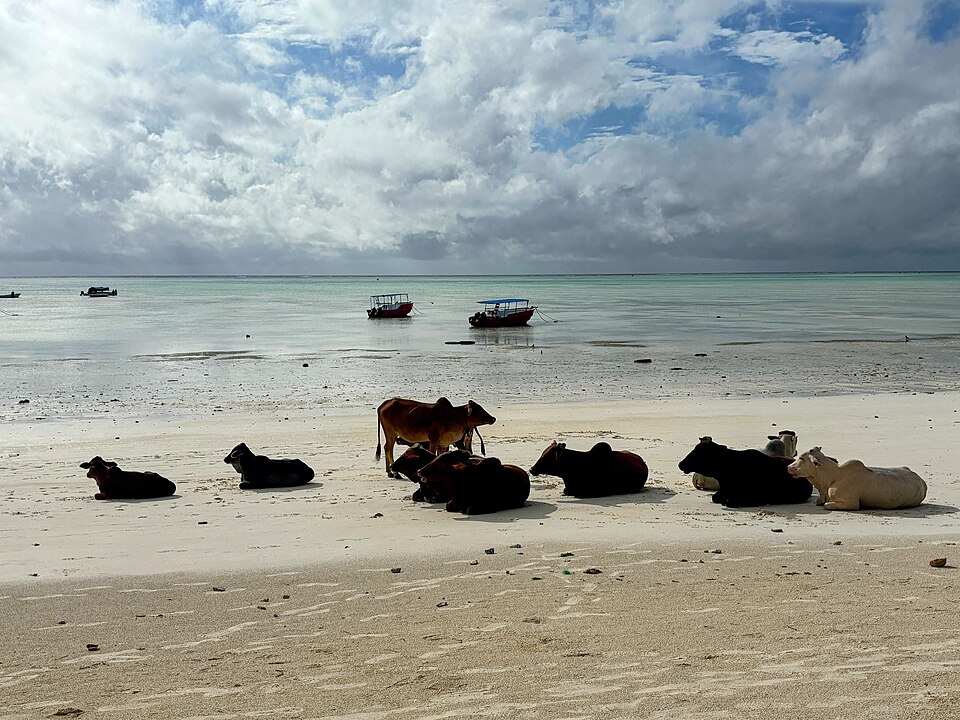
Zanzibar lies roughly 25 to 50 kilometers off the coast of mainland Tanzania, depending on which island you measure from. Unguja stretches about 85 kilometers long and 30 kilometers wide, while Pemba is smaller and sits farther to the north. The islands have a tropical climate with warm temperatures year-round, a long rainy season from March to May, and a shorter one in November and December. White sand beaches line much of the coastline, and coral reefs surround the islands, creating rich underwater habitats for fish, sea turtles, and other marine life.
History and Trade
For centuries, Zanzibar was one of the most important trading hubs in the Indian Ocean. Merchants from Arabia, Persia, India, and mainland Africa met on its shores to exchange spices, gold, ivory, and textiles. Sadly, Zanzibar was also a major center of the East African slave trade, with tens of thousands of enslaved people passing through its markets each year. The archipelago was controlled by the Sultanate of Oman for much of the 1800s and became an independent sultanate in 1963. In 1964, a revolution overthrew the sultan, and Zanzibar united with Tanganyika to form the modern nation of Tanzania.
The Spice Islands
Zanzibar is often called the “Spice Island” because of the many aromatic crops that grow in its fertile soil. Cloves are the most famous, and Zanzibar was once the world’s leading producer of this pungent spice. Farmers also grow nutmeg, cinnamon, black pepper, cardamom, and vanilla across the islands. Visitors can take spice tours through lush plantations to see, smell, and taste these crops growing on the vine or tree. The spice trade helped make Zanzibar wealthy and attracted traders from around the world for hundreds of years.
Stone Town
Stone Town is the historic heart of Zanzibar City and a UNESCO World Heritage Site. Its narrow, winding streets are lined with coral stone buildings that reflect a blend of Arab, Persian, Indian, and African architectural styles. One of Stone Town’s most distinctive features is its ornately carved wooden doors, many of which are decorated with brass studs and intricate geometric patterns. The neighborhood also contains former sultans’ palaces, old mosques, and a cathedral built on the site of the last open slave market. Freddie Mercury, the famous lead singer of the rock band Queen, was born in Stone Town in 1946.
Wildlife and Marine Life
The waters around Zanzibar are home to vibrant coral reefs teeming with tropical fish, octopuses, and sea turtles. Green sea turtles and hawksbill sea turtles nest on the islands’ beaches, and conservation programs work to protect their eggs and hatchlings. Pemba Island is surrounded by some of the healthiest coral reefs in the western Indian Ocean. The Jozani Chwaka Bay National Park on Unguja protects one of the last remaining populations of the Zanzibar red colobus monkey, a species found nowhere else on Earth. Dolphins are also common in the surrounding waters, and whale sharks visit seasonally.
Culture and Daily Life
Zanzibar’s culture is a rich blend of African, Arab, Indian, and European influences built up over centuries of trade. Most people speak Swahili, and Islam is the predominant religion on the islands. Traditional wooden sailing boats called dhows have been used for fishing and transport in these waters for over a thousand years. Music plays an important role in Zanzibari life, and the islands are known for taarab, a style that combines African rhythms with Arabic melodies and Indian instruments. Every year, Zanzibar hosts the Sauti za Busara music festival, which draws performers from across Africa.
Visiting Zanzibar Today
Today, tourism is one of Zanzibar’s most important industries, drawing visitors from around the world to its beaches, historic sites, and coral reefs. Travelers come to snorkel and dive along the reefs, explore Stone Town’s maze-like streets, and visit spice farms in the island’s interior. The archipelago also produces seaweed, which is farmed in shallow coastal waters and exported for use in food and cosmetics. Despite its growing tourism industry, Zanzibar faces challenges including coastal erosion, coral reef damage from warming oceans, and the need to balance development with conservation of its unique cultural and natural heritage.
 OtterKnow Kids Encyclopedia