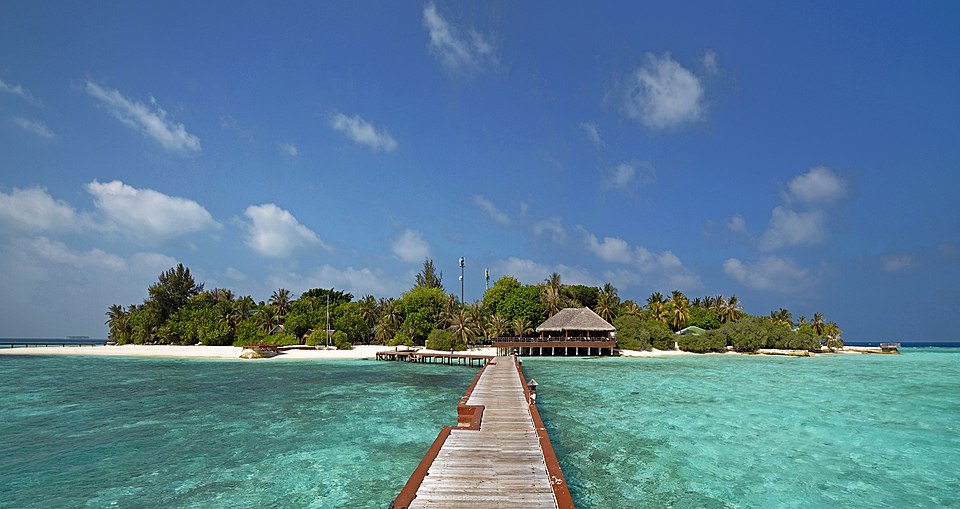
Geography and Atolls
An atoll is a ring-shaped coral reef that surrounds a shallow lagoon. The Maldives stretches across roughly 900 kilometers (560 miles) from north to south, but its total land area is only about 300 square kilometers (115 square miles). The capital city, Male, is one of the most densely populated cities in the world, with over 200,000 people living on an island just a few square kilometers in size. The islands are flat and low, with no hills or mountains anywhere in the country. Most of the land sits just one to two meters above the ocean surface.
The Lowest Country on Earth
The Maldives holds the distinction of being the world’s lowest-lying country. Its average ground elevation is just 1.5 meters (about 5 feet) above sea level. This makes the Maldives extremely vulnerable to rising sea levels caused by climate change. Scientists project that many of the islands could become uninhabitable by 2100 if ocean levels continue to rise at current rates. The Maldivian government has been one of the most vocal in the world about the need to address climate change, and it has even explored purchasing land in other countries as a potential refuge for its citizens.
Ocean Life and Coral Reefs
The waters surrounding the Maldives are home to a wide variety of marine life. Manta rays, whale sharks, sea turtles, dolphins, and hundreds of species of colorful fish swim through the coral reefs. The reefs themselves are built by tiny coral animals over thousands of years and provide food and shelter for countless ocean creatures. However, rising water temperatures have caused coral bleaching events, which weaken and sometimes kill the reefs. Protecting these reefs is vital not only for wildlife but also for the islands themselves, since coral reefs act as natural barriers against waves and storms.
People and Culture
The first people arrived in the Maldives about 2,500 years ago, likely from South Asia. The Maldivian people are predominantly Muslim, a tradition that has been part of their culture since the 12th century. The official language is Dhivehi, which is related to the Sinhalese language spoken in Sri Lanka. Maldivian culture reflects centuries of trade connections with Arab merchants, Indian kingdoms, and Southeast Asian seafarers. Traditional music, dance, and craftsmanship — including lacquerwork and mat weaving — remain important parts of daily life.
Economy and Tourism
Tourism is the backbone of the Maldivian economy. Luxury resorts, often built on private islands, attract visitors from all over the world who come to enjoy the clear water, snorkeling, and diving. Fishing, particularly tuna fishing, has been an important livelihood for Maldivians for centuries and remains a significant industry. The government has worked to develop the economy beyond tourism by investing in transportation, education, and technology. Because the Maldives imports most of its food and goods, the cost of living can be high compared to neighboring countries.
History and Independence
The Maldives has a long history as an independent sultanate, with rulers governing the islands for many centuries. The Portuguese briefly controlled the islands in the 1500s, and later the Maldives became a British protectorate, meaning Britain handled its foreign affairs while local leaders managed daily life. The Maldives gained full independence from Britain on July 26, 1965. In 1968, the country became a republic, replacing the centuries-old sultanate system with a president and constitution.
Facing the Future
The biggest challenge facing the Maldives is the threat of rising seas. The government has built seawalls, raised some islands with pumped sand, and created artificial islands to house growing populations. International attention on climate change has put the Maldives at the center of global conversations about environmental justice. Young Maldivians are increasingly involved in conservation efforts, working to protect their coral reefs, reduce plastic pollution, and find sustainable ways to preserve their island home for future generations.
 OtterKnow Kids Encyclopedia