A Land of Fire and Ice
Iceland earned its nickname “the Land of Fire and Ice” because of the striking contrast between its glaciers and its volcanoes. The island sits right on top of the Mid-Atlantic Ridge, the boundary where the North American and Eurasian tectonic plates are slowly pulling apart. This position gives Iceland intense geothermal and volcanic activity, with about 30 active volcanic systems scattered across the country. Eruptions happen regularly — the 2010 eruption of Eyjafjallajokull sent a massive ash cloud across Europe and disrupted air travel for weeks. Glaciers cover about 11 percent of the island, including Vatnajokull, the largest glacier in Europe by volume.
Geysers and Hot Springs
Iceland is one of the best places on Earth to see geothermal wonders in action. In fact, the English word “geyser” comes from Geysir, a famous hot spring in southwestern Iceland that has been erupting for centuries. Nearby Strokkur geyser erupts every few minutes, shooting a column of boiling water up to 30 meters into the air. Hot springs bubble up all across the country, and Icelanders have used this natural heat for centuries to warm their homes, cook food, and bathe outdoors. The famous Blue Lagoon, a geothermal spa surrounded by black lava fields, is one of Iceland’s most popular tourist attractions.
Renewable Energy
Iceland is a world leader in renewable energy, with about 85 percent of all its energy coming from geothermal and hydroelectric power. Geothermal plants tap into underground reservoirs of hot water and steam to generate electricity and heat buildings. Nearly every home and building in Reykjavik is heated by geothermal hot water piped directly from the ground. Hydroelectric dams on Iceland’s powerful glacial rivers provide most of the remaining electricity. Iceland’s success with renewable energy has made it a model for other countries looking to reduce their dependence on fossil fuels.
Viking History and Culture
Norse Vikings from Norway were the first permanent settlers of Iceland, arriving around 874 CE. In 930 CE, the settlers established the Althingi, one of the oldest parliaments in the world, where chieftains gathered each summer to make laws and settle disputes. The Icelandic sagas, written in the 1200s and 1300s, are famous literary works that tell dramatic stories of the early settlers, their feuds, voyages, and adventures. Iceland was also a stepping stone for further Viking exploration — it was from Iceland that Erik the Red sailed to Greenland, and his son Leif Erikson became one of the first Europeans to reach North America. In 1980, Icelanders elected Vigdis Finnbogadottir as president, making her the first woman in the world to be democratically elected as a head of state.
Northern Lights and Midnight Sun
Iceland’s location near the Arctic Circle creates two spectacular natural light shows depending on the season. From September through March, the northern lights (aurora borealis) dance across the dark winter sky in shimmering curtains of green, purple, and pink. These light displays are caused by charged particles from the sun colliding with gases in Earth’s atmosphere. In summer, the opposite happens — the sun barely sets at all, creating the phenomenon known as the midnight sun, when daylight lasts nearly 24 hours a day around the summer solstice in June. These extremes of light and darkness shape daily life in Iceland throughout the year.
Dramatic Landscapes
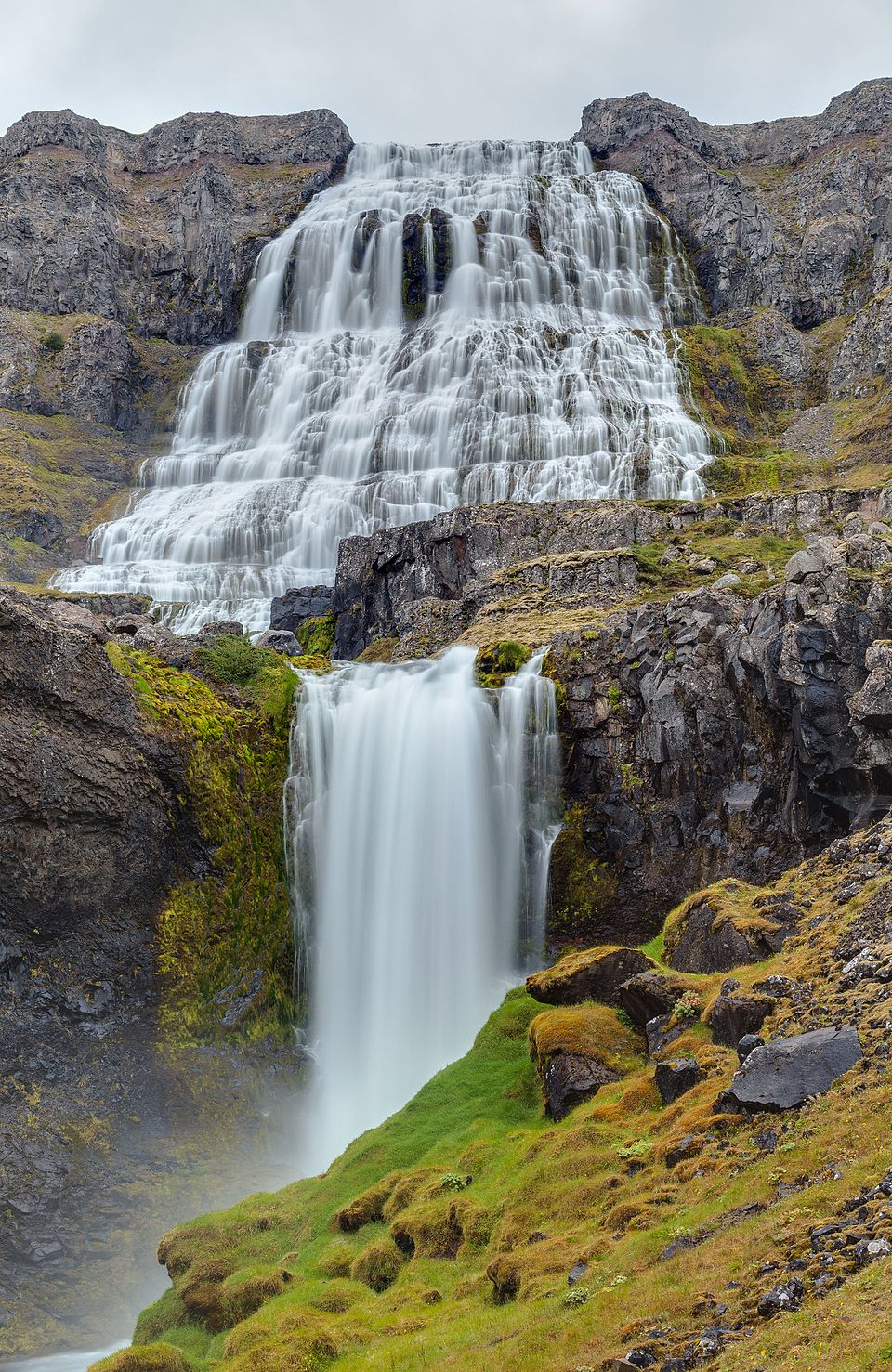
Iceland’s scenery is unlike almost anywhere else on the planet. Towering waterfalls like Gullfoss and Skogafoss plunge over ancient cliffs, fed by glacial meltwater and heavy rainfall. Black sand beaches stretch along the southern coast, created when hot lava met the cold Atlantic Ocean and shattered into fine dark grains. The interior highlands are a vast, uninhabited wilderness of lava fields, colorful geothermal areas, and rugged mountain ranges. Iceland is also home to numerous fjords — long, narrow inlets carved by glaciers — along its western and northern coasts.
Modern Iceland
Today, Iceland is known for having one of the world’s highest literacy rates and lowest crime rates, making it one of the safest and most educated countries on Earth. Fishing has been a cornerstone of the economy for centuries and remains important, though tourism has grown rapidly in recent years. Icelanders are proud of their language, which has changed remarkably little from Old Norse, meaning modern Icelanders can still read the medieval sagas with relative ease. The country also has a strong tradition of storytelling, music, and art, and Reykjavik has a lively cultural scene despite its small size. With its combination of natural wonders, rich history, and forward-thinking energy policies, Iceland draws interest from people around the world.
 OtterKnow Kids Encyclopedia