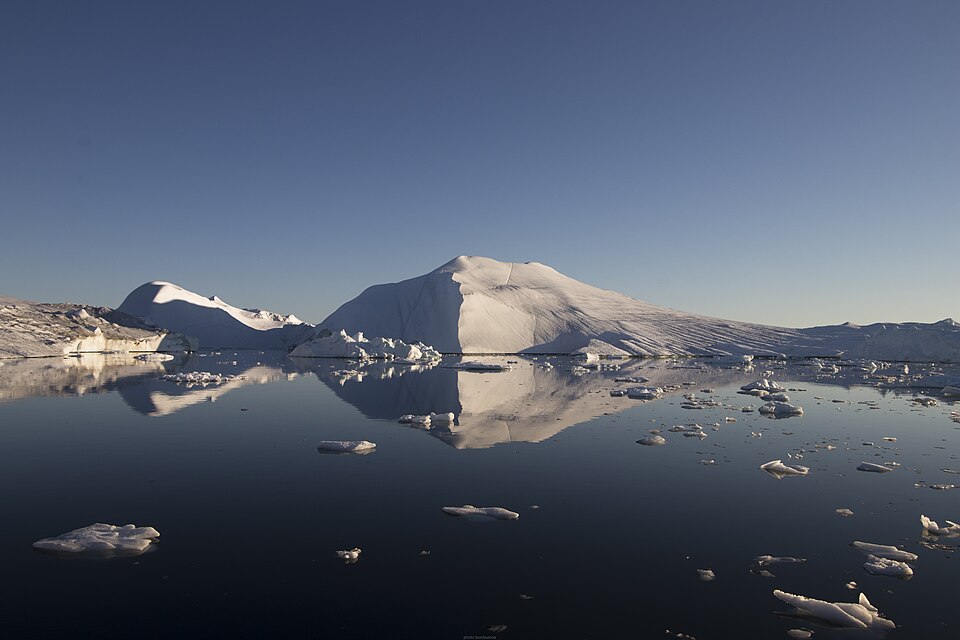
The Greenland Ice Sheet
About 80 percent of Greenland is covered by the Greenland Ice Sheet, the second-largest body of ice on the planet after Antarctica. In some places, this sheet of ice is more than three kilometers thick. If the entire ice sheet were to melt, global sea levels would rise by about seven meters, which would flood coastal cities around the world. The weight of the ice has actually pushed the central part of the island below sea level. Scientists study the ice sheet closely because it is one of the most important indicators of climate change on Earth.
A Land of Extremes
Greenland experiences some of the most dramatic seasonal changes anywhere on the planet. During summer in the far north, the sun never sets, creating a period of continuous daylight known as the midnight sun. In winter, the opposite occurs, and the sun stays below the horizon for weeks, plunging parts of the island into polar night. The northern lights, or aurora borealis, are frequently visible during the dark winter months, creating spectacular displays of green, purple, and pink light across the sky. Temperatures can drop below minus 30 degrees Celsius in winter, while summers along the coast can reach a mild 10 degrees Celsius.
The Inuit People of Greenland
The Greenlandic Inuit, known as the Kalaallit, have lived on the island for about 4,500 years. They originally migrated from northern Canada and developed specialized skills for surviving in one of the harshest environments on Earth. Traditional Inuit culture revolved around hunting seals, whales, and caribou, and traveling by dogsled and kayak. The kayak was actually invented by the Inuit people and the word itself comes from the Greenlandic language. Today, many Kalaallit blend traditional practices with modern life, and the Greenlandic language, Kalaallisut, is the official language.
Vikings and European History
The Norse Viking explorer Erik the Red arrived in Greenland around 985 CE after being exiled from Iceland. According to the sagas, he named the island “Greenland” to make it sound attractive and encourage other Vikings to settle there. Norse settlers established farms along the southwestern coast and built churches and communities that lasted for nearly 500 years. However, as the climate grew colder during the Little Ice Age, the Norse settlements struggled and eventually disappeared by the 1400s. Denmark later claimed Greenland as a colony, and today Greenland remains an autonomous territory of Denmark with its own government and parliament.
Wildlife and Nature
Despite its icy reputation, Greenland supports a surprising variety of wildlife. Polar bears roam the northern and eastern coasts, while musk oxen graze on the tundra with their thick, shaggy coats. Arctic foxes, Arctic hares, and caribou (called reindeer in Greenland) are common across the island. The surrounding seas are rich with marine life, including humpback whales, narwhals, walruses, and several species of seals. During summer, millions of seabirds nest on Greenland’s rocky cliffs, and the coastal waters teem with fish such as Arctic char, cod, and halibut.
Natural Resources and the Future
Greenland holds significant mineral resources, including rare earth metals, zinc, iron, and potentially large reserves of oil and natural gas beneath its continental shelf. As the ice sheet melts and exposes more land, access to these resources is increasing, which has drawn international attention and made Greenland geopolitically important. Mining and resource extraction could bring economic opportunities but also raise concerns about environmental damage in this fragile Arctic landscape. Greenland’s economy currently depends heavily on fishing, especially shrimp and halibut, along with an annual subsidy from Denmark. Many Greenlanders are working toward greater economic independence as the island’s role in global affairs continues to grow.
Climate Change and Greenland
Greenland is warming at roughly twice the rate of the global average, making it a frontline witness to climate change. The ice sheet is losing billions of tons of ice each year, contributing to rising sea levels worldwide. Glaciers that once crept slowly toward the coast are now retreating faster than scientists predicted just a decade ago. Melting ice is already changing life on the island, altering hunting seasons and making traditional dogsled routes unreliable. What happens to Greenland’s ice in the coming decades will have consequences not just for the island’s residents but for hundreds of millions of people living in coastal areas around the globe.
 OtterKnow Kids Encyclopedia