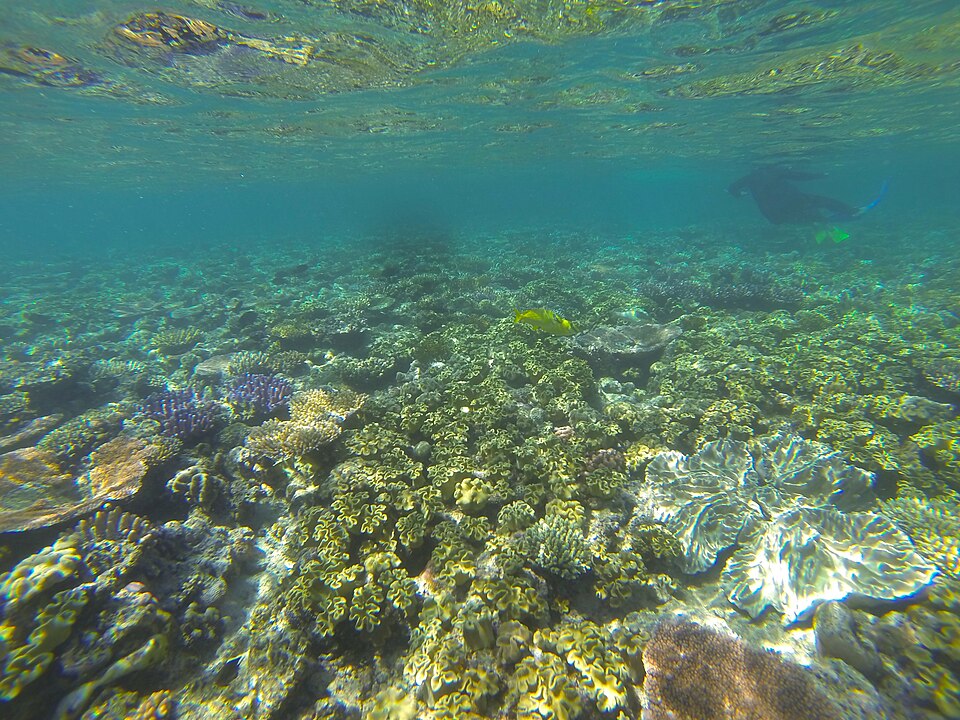
How Coral Reefs Are Built
Coral reefs are built by tiny animals called coral polyps, most of which are smaller than a thumbnail. Each polyp produces a hard outer skeleton made of calcium carbonate, which is the same mineral found in limestone and seashells. Over thousands of years, layer upon layer of these skeletons stack up to form the massive reef structures we see today. The Great Barrier Reef has existed in its current form for about 8,000 years, though coral has been growing in the region for roughly 500,000 years. Tiny algae called zooxanthellae live inside coral polyps and give them their brilliant colors while providing most of their food through photosynthesis.
What Lives on the Reef
The Great Barrier Reef is home to a huge variety of life. More than 1,500 species of fish swim through its waters, along with over 4,000 species of mollusks such as clams, snails, and octopuses. Around 240 species of birds nest on or visit the reef’s islands, and about 30 species of whales and dolphins travel through the area. Six of the world’s seven species of sea turtles can be found here, including the endangered green turtle and loggerhead turtle. Over 600 species of hard and soft corals form the backbone of this underwater world.
Life on the Reef
The reef works like an underwater city where every creature has a role to play. Clownfish shelter among the stinging tentacles of sea anemones, protected from predators while helping the anemone stay clean. Parrotfish crunch on coral with their beak-like teeth, breaking it down into the fine white sand that forms tropical beaches. Giant clams, some over a meter wide, filter water and provide shelter for smaller animals. Reef sharks patrol the waters as top predators, keeping fish populations in balance. At night, the reef transforms as nocturnal creatures like moray eels and lobsters emerge to hunt.
Threats to the Reef
Climate change is the single greatest threat facing the Great Barrier Reef today. When ocean temperatures rise even slightly, corals become stressed and expel the colorful algae living inside them in a process called coral bleaching. Without these algae, the corals turn white and can starve to death if conditions do not improve quickly. The reef has experienced severe mass bleaching events in 2016, 2017, 2020, 2022, and 2024, each one damaging large sections. Other threats include pollution from agricultural runoff, outbreaks of coral-eating crown-of-thorns starfish, and ocean acidification caused by rising carbon dioxide levels.
Protecting the Reef
The Great Barrier Reef Marine Park was established in 1975 to help manage and protect this natural wonder. The marine park covers nearly 345,000 square kilometers and is divided into zones that control what activities are allowed in different areas. Scientists monitor the reef’s health by studying water quality, coral cover, and animal populations. Conservation efforts include reducing agricultural pollution, controlling crown-of-thorns starfish outbreaks, and researching ways to help coral survive warmer waters. Governments and organizations around the world are also working to reduce greenhouse gas emissions to slow climate change.
Visiting the Reef
About two million tourists visit the Great Barrier Reef each year, contributing billions of dollars to Australia’s economy. Popular activities include snorkeling, scuba diving, glass-bottom boat tours, and helicopter flights over the reef. The city of Cairns and the town of Port Douglas are the main gateways for reef tours. Tourism operators must follow strict rules to minimize damage, such as teaching visitors not to touch or stand on coral. While tourism brings economic benefits, managing its impact on the fragile reef environment remains an ongoing challenge.
Why the Reef Matters
The Great Barrier Reef plays a vital role in our planet’s health. It protects the Australian coastline from storm waves and erosion, acting as a natural barrier. The reef supports the livelihoods of tens of thousands of people who work in fishing, tourism, and research. It also serves as a living laboratory where scientists study marine ecosystems, climate change, and the biology of thousands of species. Saving the Great Barrier Reef is one of the most important conservation challenges of our time, and the actions we take now will determine its future.
 OtterKnow Kids Encyclopedia