Building the Taj Mahal
Construction of the Taj Mahal began in 1632 and took about 22 years to complete. Roughly 20,000 workers were involved in the project, including architects, stonemasons, calligraphers, and artisans brought from across the Mughal Empire, Persia, and central Asia. The chief architect is believed to have been Ustad Ahmad Lahori, though many skilled craftspeople contributed to the design. Materials were transported from all over Asia, with white Makrana marble brought from quarries more than 300 kilometers away.
The Marble That Changes Color
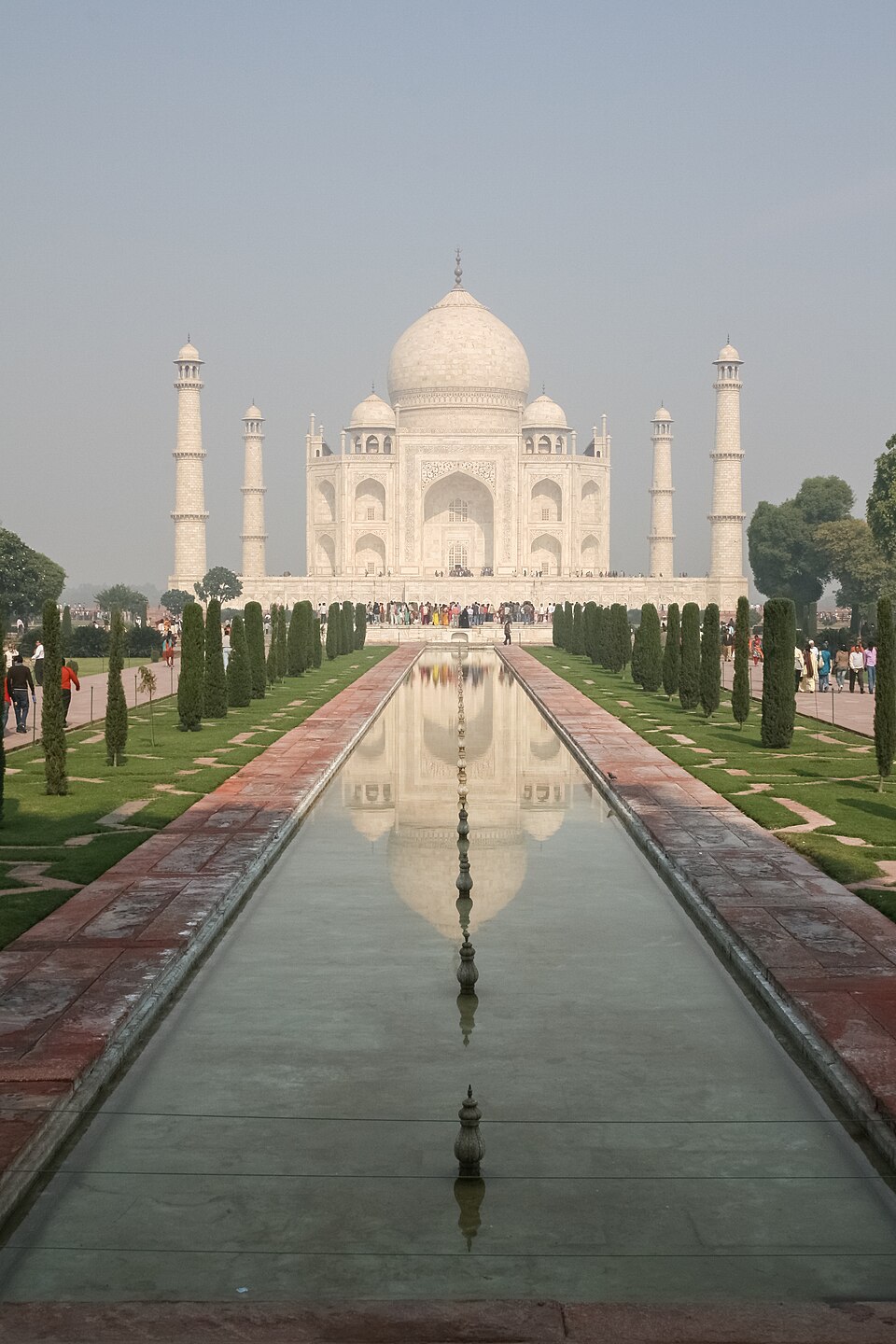
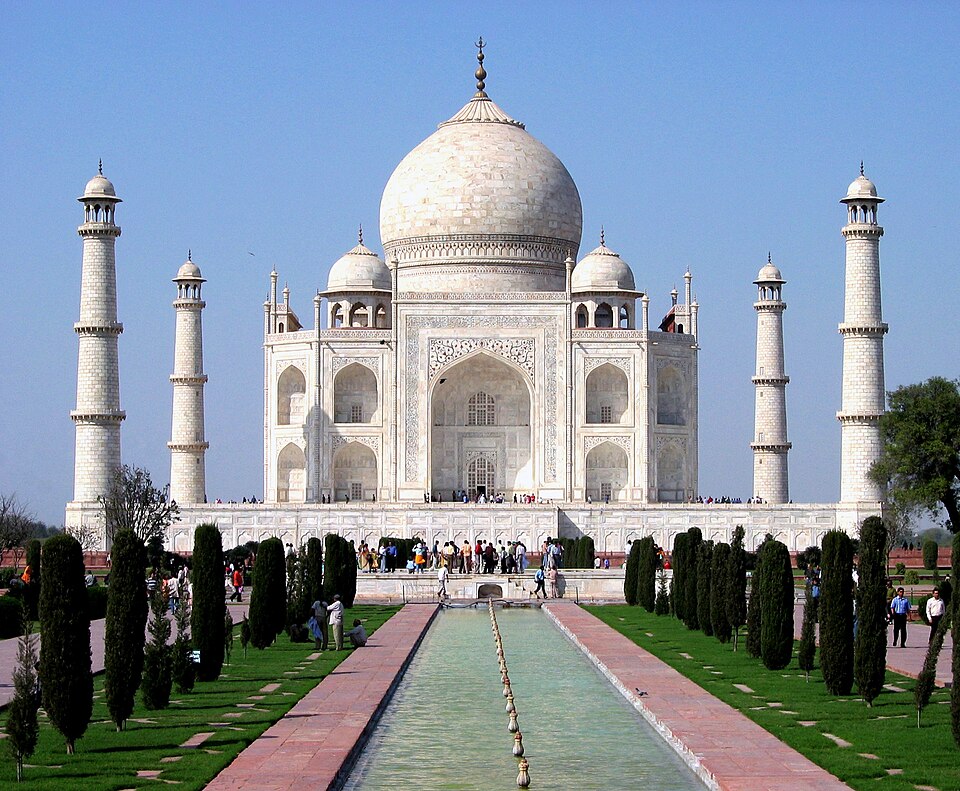
One of the most magical things about the Taj Mahal is that its white Makrana marble seems to change color throughout the day. In the early morning, the building glows with a soft pinkish hue as the sun rises. During the afternoon, it shines a brilliant white against the blue sky. At night under moonlight, the marble takes on a golden, almost glowing appearance. This effect happens because the smooth marble surface reflects and absorbs light differently depending on the angle and intensity of the sun.
Incredible Details and Decoration
The Taj Mahal is famous for its intricate decorative details. The marble walls are inlaid with semi-precious stones such as jade, turquoise, lapis lazuli, and amethyst, arranged in delicate floral and geometric patterns using a technique called pietra dura. Verses from the Quran are carved into the archways in beautiful calligraphy. The main dome rises to a height of 73 meters (240 feet) and is surrounded by four smaller domes and four tall minarets, one at each corner of the platform.
The Gardens and Grounds
The Taj Mahal sits within a large complex that covers about 17 hectares. In front of the mausoleum, a long reflecting pool stretches through a formal Mughal garden divided into four equal sections, symbolizing the four gardens of paradise described in Islamic tradition. The complex also includes a red sandstone mosque to the west and a matching guest house to the east. These surrounding structures frame the Taj Mahal and add to the sense of balance and symmetry that makes the site so impressive.
Shah Jahan’s Final Years
After building the Taj Mahal, Shah Jahan’s life took a sad turn. In 1658, his son Aurangzeb seized power and imprisoned Shah Jahan in nearby Agra Fort. From a window in the fort, Shah Jahan could gaze across the Yamuna River at the Taj Mahal, the monument he had built for his wife. He spent the last eight years of his life there before he died in 1666. Shah Jahan was buried inside the Taj Mahal beside Mumtaz Mahal, reunited with her at last.
Visiting the Taj Mahal Today
The Taj Mahal is India’s most visited tourist attraction, drawing about 7 to 8 million visitors each year from all around the world. Tourists can walk through the gardens, admire the reflecting pool, and enter the mausoleum to see the tombs of Shah Jahan and Mumtaz Mahal. Over the years, air pollution and acid rain have threatened the marble, so the Indian government and conservation groups have worked to protect and restore the building. Vehicles are not allowed near the monument to reduce pollution, and visitors must walk or take electric buses to reach the entrance.
Why It Matters
The Taj Mahal is considered one of the finest examples of Mughal architecture, which blends Indian, Persian, and Islamic styles. It represents not only an incredible feat of engineering and artistry but also a powerful symbol of love and devotion. The monument reminds us of the skill and creativity of the thousands of workers who brought Shah Jahan’s vision to life. For people around the world, the Taj Mahal stands as proof that human beings can create things of great beauty.
 OtterKnow Kids Encyclopedia