A Bold Design
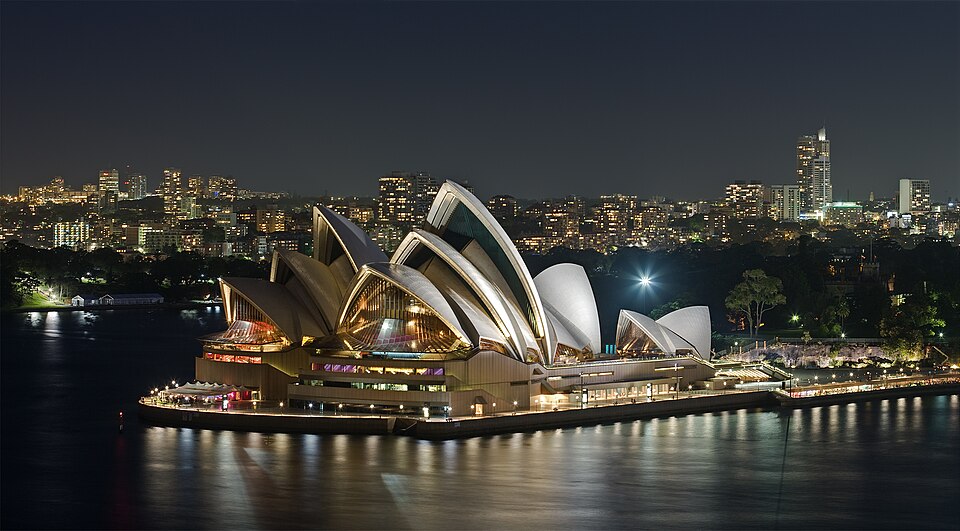
In 1956, the government of New South Wales held an international competition to design a new performing arts center for Sydney. A Danish architect named Jorn Utzon submitted a design featuring a series of interlocking shell-shaped roofs, and his entry was chosen from 233 submissions. At the time, many engineers doubted that Utzon’s dramatic design could actually be built. The soaring roof shells were unlike anything that had been constructed before, and solving the engineering challenges took years of research. Utzon’s vision was so original that it changed the way people around the world thought about architecture.
Building the Opera House
Construction began in 1959 and was originally expected to take four years and cost about 7 million Australian dollars. Instead, the project took 14 years to complete and the final cost ballooned to 102 million dollars, more than fourteen times the original budget. The biggest challenge was figuring out how to build the curved roof shells, which required inventing new construction techniques. Utzon eventually solved the problem by designing all the shells as sections of a single sphere, allowing them to be prefabricated in pieces. The Opera House was officially opened by Queen Elizabeth II on October 20, 1973.
The Roof and Its Tiles
The roof of the Sydney Opera House is its most striking feature, made up of a series of interlocking shells that resemble billowing sails or giant seashells. The shells are covered with over one million specially made ceramic tiles, which were manufactured in Sweden. These tiles are designed to be self-cleaning, so rain washes away dirt and keeps the roof gleaming white. From a distance the tiles appear pure white, but up close they have a subtle cream and matte finish that changes appearance depending on the light. The roof structure weighs about 27,000 tonnes and rises to a height of 67 meters above sea level.
Inside the Opera House
The Sydney Opera House contains more than 1,000 rooms, including multiple performance venues, rehearsal studios, restaurants, and bars. The two largest venues are the Concert Hall, which seats about 2,679 people, and the Joan Sutherland Theatre, which seats about 1,507 people. The Concert Hall houses a grand organ with nearly 10,000 pipes, one of the largest mechanical tracker organs in the world. Smaller venues include the Drama Theatre, the Playhouse, and the Studio, each designed for different types of performances. Behind the scenes, the building is like a small city, with its own power station, water treatment system, and loading docks.
Jorn Utzon’s Legacy
Jorn Utzon faced many difficulties during the construction of the Opera House, including disagreements with the government over costs and design changes. In 1966, frustrated by the conflicts, Utzon resigned from the project and left Australia. He never returned to see his masterpiece in person. In 1999, however, the Sydney Opera House Trust invited Utzon back as a design consultant, and he contributed new interior designs from Denmark. In 2003, he was awarded the Pritzker Architecture Prize, often called the highest honor in architecture, largely for his work on the Opera House.
A Cultural Icon
The Sydney Opera House is far more than just a building where performances take place. About 10.9 million people visit the site each year, and more than 1.2 million attend performances inside its halls. The building has become a symbol of both Sydney and Australia as a whole, appearing on postcards, stamps, and travel guides around the world. Its location on the harbour, next to the Sydney Harbour Bridge, creates one of the most photographed skylines on the planet. The Opera House is also used for major public events, with its roof shells serving as a giant screen for light shows and projections during celebrations like New Year’s Eve.
Visiting the Opera House
Visitors to the Sydney Opera House can take guided tours that explore the building’s architecture, history, and backstage areas. The tours explain how the roof shells were engineered and let visitors peek inside the performance venues. Many people also enjoy dining at the restaurants along the waterfront, which offer views of Sydney Harbour. Attending a live performance is one of the best ways to experience the building, with shows ranging from classical music and opera to contemporary dance and children’s theater. The Opera House remains one of the great wonders of modern architecture.
 OtterKnow Kids Encyclopedia