How Old Is Stonehenge?
Stonehenge was not built all at once. It was constructed in several stages over a period of about 1,500 years, from roughly 3000 BCE to 1500 BCE. That means the oldest parts of Stonehenge are about 5,000 years old, making it older than the Great Pyramid of Giza in Egypt. The earliest phase was a circular ditch and bank, and the massive stones that visitors see today were added in later stages. Because writing had not yet been invented in Britain during this time, no written records explain why or how Stonehenge was built.
The Enormous Stones
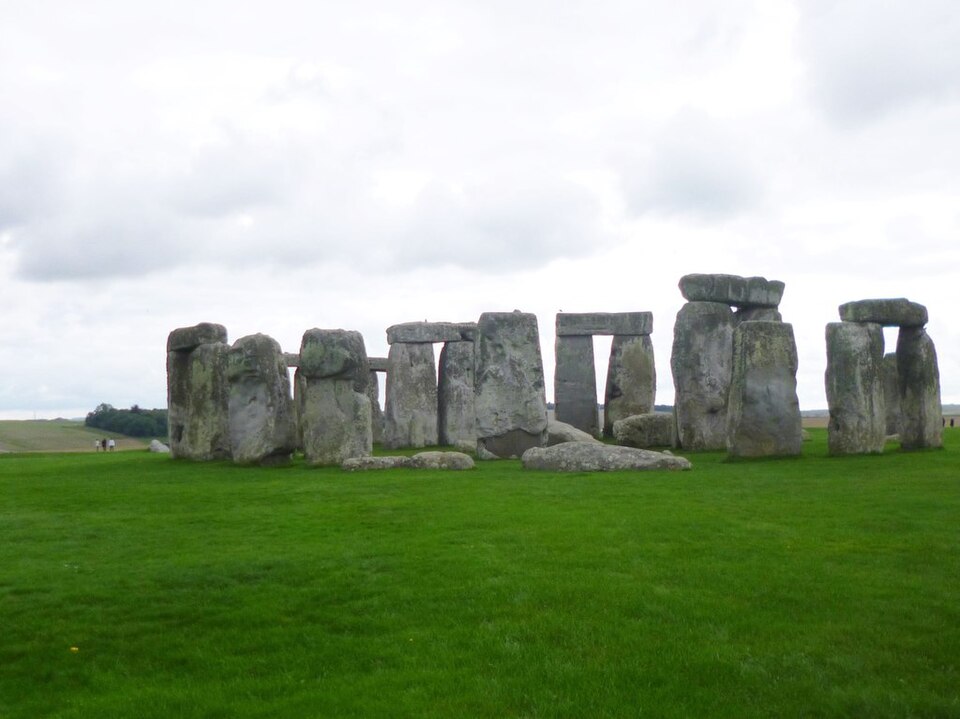
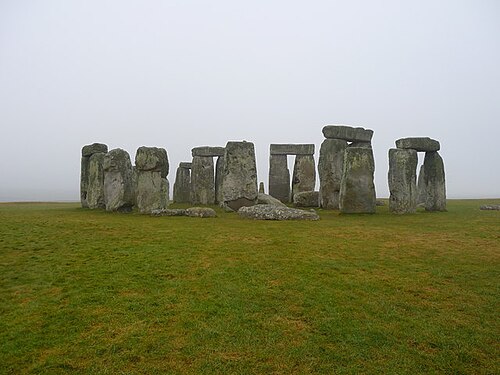
Stonehenge is made up of two main types of stone. The largest stones, called sarsens, weigh up to 25 tonnes each and stand about 4 meters tall. These sarsens were transported from Marlborough Downs, about 25 kilometers away. The smaller stones, known as bluestones, weigh between 2 and 5 tonnes and were brought from the Preseli Hills in Wales, roughly 240 kilometers away. Moving these heavy stones over such long distances without wheels, engines, or cranes was an enormous achievement for ancient people.
How Were the Stones Moved?
Scientists and historians have long debated how prehistoric people transported the massive stones to Salisbury Plain. Some researchers believe the bluestones were dragged on wooden sledges and rafted along rivers and coastlines from Wales. Others have suggested that glaciers may have carried some stones partway during the Ice Age. For the larger sarsen stones, experiments show that teams of hundreds of people could have hauled them using ropes and wooden rollers. Whatever methods were used, the effort required careful planning and cooperation among large groups of people.
What Was Stonehenge Used For?
The true purpose of Stonehenge remains one of history’s great mysteries. The monument is carefully aligned with the sunrise on the summer solstice, the longest day of the year, and the sunset on the winter solstice, the shortest day. This alignment suggests that Stonehenge may have served as a calendar or an observatory for tracking the seasons. Many researchers believe it was also a place for religious ceremonies, healing rituals, or honoring the dead. Burial sites found nearby show that the area was important to ancient communities for thousands of years.
Who Built Stonehenge?
Stonehenge was built by Neolithic and Bronze Age peoples who lived in Britain long before the Romans arrived. These ancient builders did not have metal tools when construction first began, relying instead on stone and bone implements. Despite this, they shaped and fitted the stones with great precision, using techniques like mortise-and-tenon joints to lock the lintels in place. The effort required to build Stonehenge suggests that the surrounding area supported a large and well-organized community. Archaeological finds nearby, including the ancient settlement of Durrington Walls, give clues about the people who lived and worked there.
New Discoveries
Scientists continue to uncover new information about Stonehenge using modern technology. Ground-penetrating radar has revealed buried pits, wooden posts, and other ancient structures hidden beneath the ground near the monument. In recent years, researchers discovered that the sarsen stones likely came from a specific area called West Woods near Marlborough. Chemical analysis of the bluestones has confirmed their origin in the Preseli Hills of Wales. Each new discovery helps archaeologists piece together the story of how and why Stonehenge was created.
Visiting Stonehenge Today
Stonehenge is one of the most popular tourist destinations in England, welcoming about 1.5 million visitors each year. A modern visitor center nearby features exhibits with artifacts found at the site, including tools, pottery, and human remains. Visitors walk along a path around the stones but are not usually allowed to touch them, in order to protect the monument. On the summer solstice, however, thousands of people are allowed inside the stone circle to watch the sunrise. Stonehenge continues to inspire wonder and curiosity about the people who built it so long ago.
 OtterKnow Kids Encyclopedia