Who Made Them?
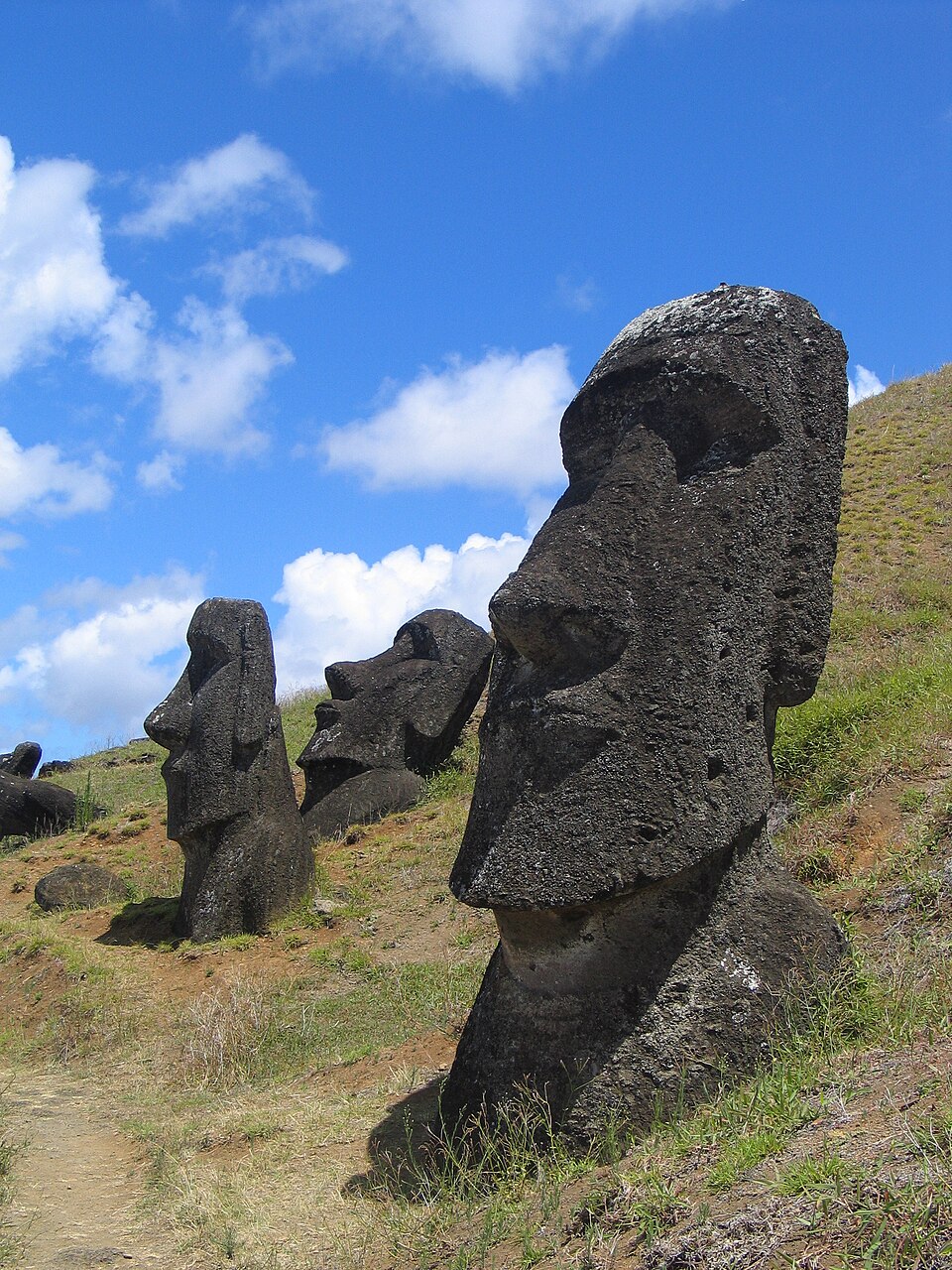
The moai were created by the Rapa Nui people, Polynesian settlers who reached the island around 1200 CE after sailing thousands of kilometers across the open Pacific. The statues represented the faces of important ancestors who had died. The Rapa Nui believed the moai could channel the spiritual power, or mana, of these ancestors to protect and watch over the living. That is why nearly all of the moai face inland toward the island’s villages rather than out toward the sea.
How Big Are They?
The moai vary greatly in size, but the average statue stands about 4 meters (13 feet) tall and weighs around 12.5 tonnes — roughly as heavy as two full-grown elephants. The largest completed moai, known as Paro, stands about 10 meters (33 feet) tall and weighs about 75 tonnes. An even bigger moai was started but never finished — if completed, it would have stood 21 meters (69 feet) tall. Some moai also wore large red stone cylinders called pukao on their heads, which may represent headdresses or topknots of hair.
How Were They Carved?
All of the moai were carved from the volcanic rock of a quarry called Rano Raraku, a crater on the eastern side of the island. Workers chipped away at the soft volcanic tuff using harder basalt hand picks. A single statue could take a team of carvers a year or more to complete. About 400 moai still remain in or around the Rano Raraku quarry in various stages of completion — some are only partly carved out of the rock, giving scientists important clues about the carving process.
How Were They Moved?
Moving statues that weigh as much as 75 tonnes across the island — sometimes up to 18 kilometers — without wheels, cranes, or draft animals is one of archaeology’s great mysteries. Rapa Nui oral tradition says the moai “walked” to their platforms. Modern experiments suggest the islanders may have rocked the statues from side to side using ropes, tipping them forward in a motion that really does look like walking. Other researchers think wooden sleds or log rollers were used, but no single explanation has been proven beyond doubt.
The Rise and Fall of Rapa Nui
At its peak, the island may have supported a population of several thousand people. Beginning in the 1600s and 1700s, however, the population collapsed dramatically. Scientists believe a combination of factors caused the decline, including widespread deforestation, damage to crops by rats that arrived with the original settlers, and conflict between rival clans. Many moai were toppled during this period of unrest. European contact in 1722 and later slave raids further devastated the Rapa Nui people.
Easter Island Today
Easter Island was designated a UNESCO World Heritage Site in 1966, and much of the island is protected as Rapa Nui National Park. Archaeologists have worked to restore many moai to their stone platforms, called ahu. Tourism is an important part of the island’s economy, but it also brings challenges like waste, water shortages, and wear on the ancient sites. The Rapa Nui community is actively involved in managing the island and preserving its cultural heritage for future generations.
Why the Moai Still Matter
The moai are more than just impressive statues — they tell the story of a determined and creative people who built a complex civilization on a tiny, isolated island. Studying the moai helps scientists understand how ancient societies organized labor, practiced religion, and adapted to limited resources. The story of Easter Island also serves as a reminder of how human activity can change an environment. Today the moai stand as powerful symbols of Rapa Nui culture and one of humanity’s most impressive artistic achievements.
 OtterKnow Kids Encyclopedia