How It Was Built
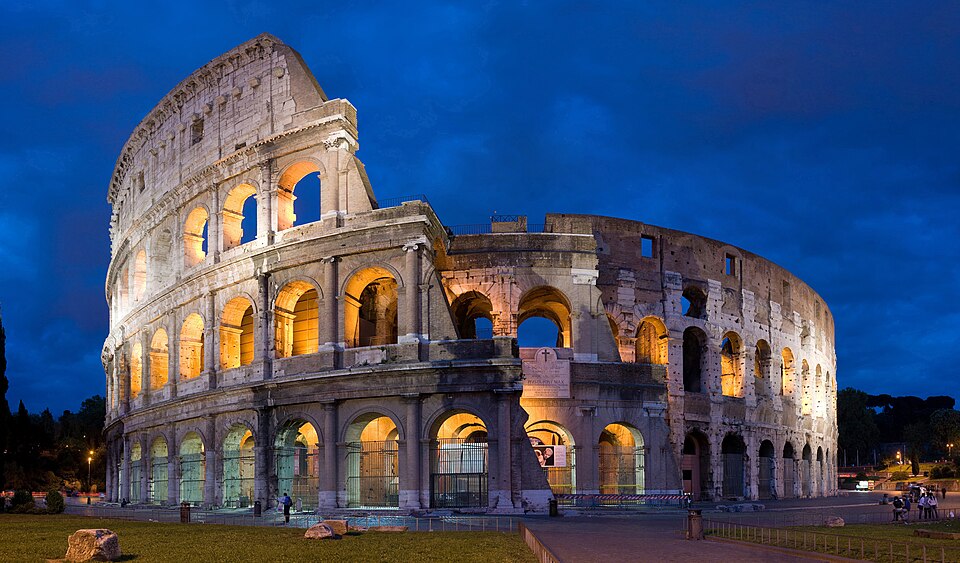
Construction of the Colosseum began in 70 CE under Emperor Vespasian and was completed in 80 CE under his son, Emperor Titus. Tens of thousands of workers, including enslaved people and prisoners of war, helped build the massive structure. The Romans used concrete, volcanic rock called tufa, and travertine limestone to create the walls and arches. The building features 80 arched entrances and a complex system of underground tunnels and rooms beneath the arena floor.
Size and Design
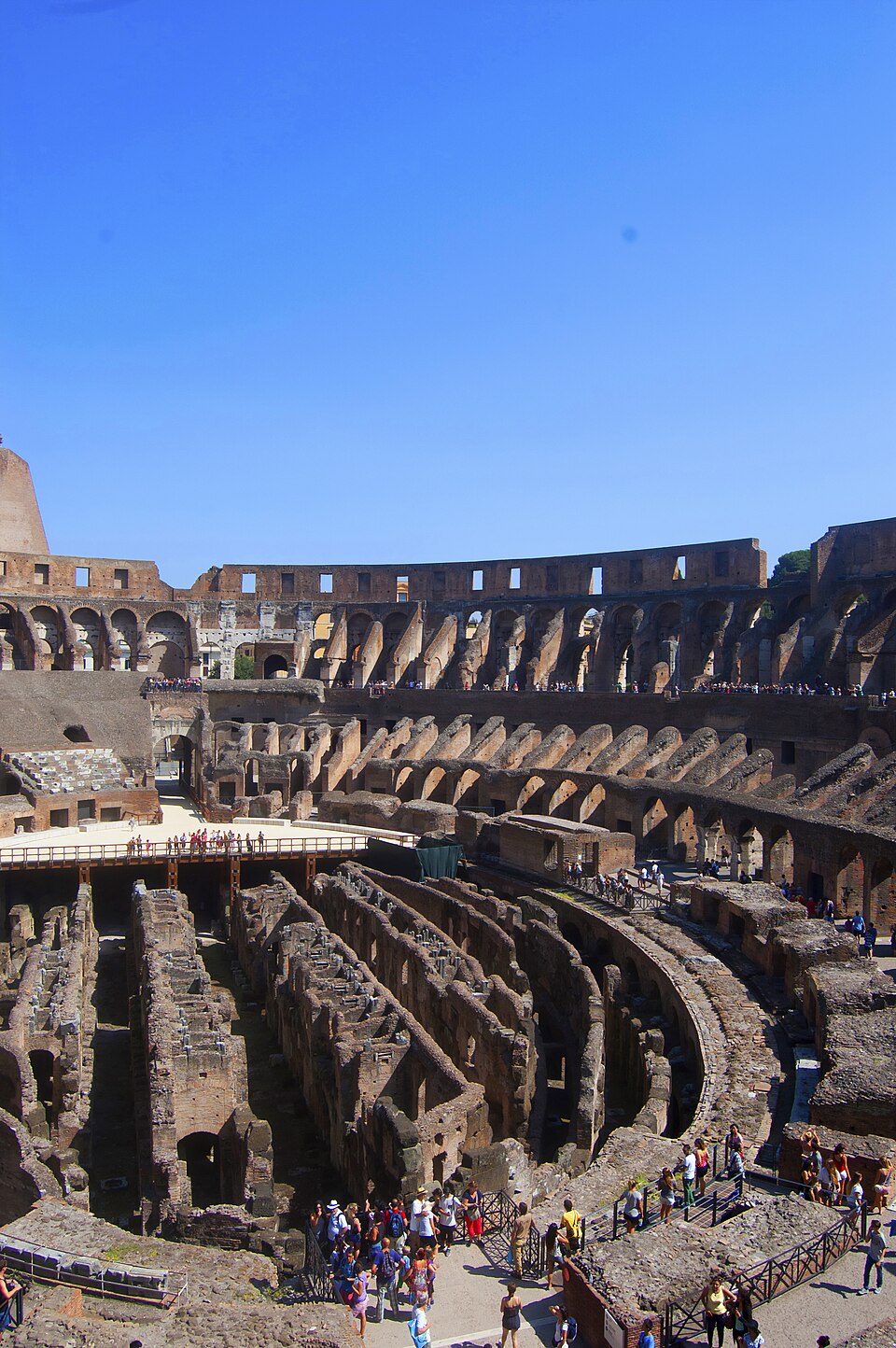
The Colosseum is an oval-shaped building that measures about 189 meters (620 feet) long and 156 meters (512 feet) wide. It could hold between 50,000 and 80,000 spectators, which is roughly the same as many modern sports stadiums. Seating was arranged by social class, with the emperor and senators sitting closest to the action and ordinary citizens higher up. A huge canvas awning called a velarium could be stretched over the top to shade the audience from the sun.
What Happened Inside
The Colosseum was used for dramatic and often violent public entertainment. Gladiators fought each other in combat, and animal hunts called venationes brought lions, elephants, and rhinos into the arena. The Romans even flooded the arena floor to stage mock sea battles known as naumachiae. Public executions and reenactments of famous battles were also held there. The Colosseum was actively used for these events for about 500 years before gradually falling out of use in the sixth century.
Damage Over the Centuries
About two-thirds of the original Colosseum has been destroyed over the centuries. Powerful earthquakes in 847 CE and 1231 CE caused large sections of the outer wall to collapse. Stone robbers also stripped marble and building materials from the structure to use in constructing churches, palaces, and other buildings across Rome. Fires and neglect further damaged the amphitheater. Despite all this destruction, the remaining structure still gives visitors a powerful sense of its original grandeur.
The Colosseum Today
The Colosseum is now a UNESCO World Heritage Site and one of the most visited tourist attractions in the world, drawing about 7 million visitors each year. In 2007, it was voted one of the New Seven Wonders of the World. The Italian government has invested in restoration projects to preserve and repair the ancient structure. Visitors can walk through the underground passages where gladiators and animals once waited before entering the arena.
Why It Matters
The Colosseum is an important piece of world history because it shows how advanced Roman engineering was nearly 2,000 years ago. Its design influenced the shape of modern stadiums and arenas around the world. Studying the Colosseum helps historians understand Roman society, including its values, entertainment, and social structure. It stands as a reminder of both the achievements and the cruelty of the ancient Roman world.
 OtterKnow Kids Encyclopedia