Ancient Beginnings
London was founded by the Romans around 47 CE, who called it Londinium. They built walls, roads, and a bridge across the Thames, creating a busy trading port. After the Romans left Britain around 410 CE, the settlement shrank but was later rebuilt by the Anglo-Saxons. Over the centuries, London grew into one of Europe’s most important cities. Traces of Roman London, including parts of the old city wall, can still be seen today.
Famous Landmarks
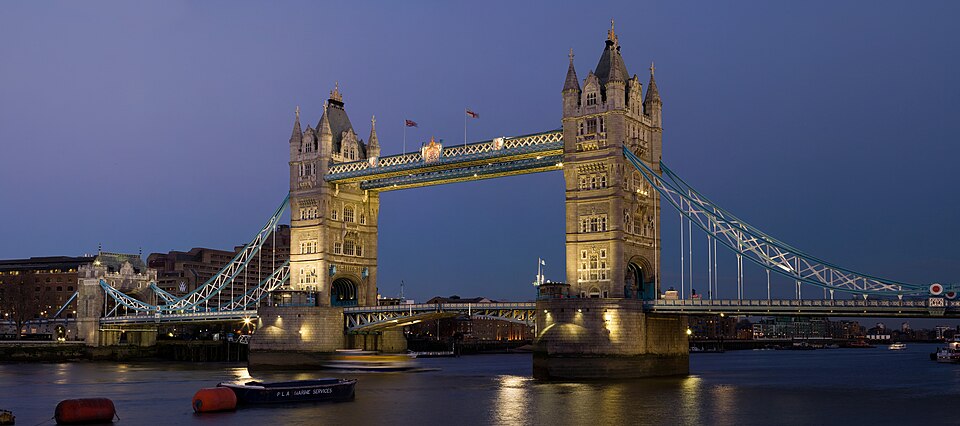
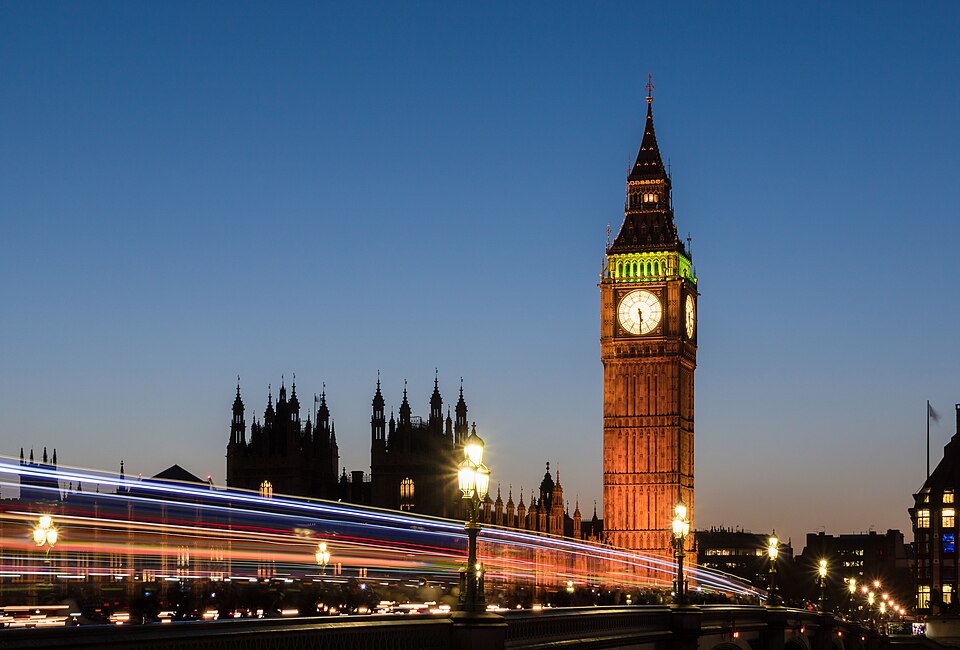
London is packed with world-famous landmarks. Buckingham Palace is the official residence of the British monarch and is known for its Changing of the Guard ceremony. The Tower of London is a historic fortress that has served as a royal palace, a prison, and a treasury — it still houses the Crown Jewels. The clock tower known as Big Ben stands next to the Houses of Parliament along the Thames. Tower Bridge, with its two tall towers and opening roadway, is one of the most photographed bridges in the world. The British Museum holds millions of artifacts from cultures across human history.
The London Underground
The London Underground, known as the Tube, opened in 1863 and is the oldest metro system in the world. Today it has 272 stations and carries millions of passengers every day across 11 lines. The famous roundel logo — a red circle crossed by a blue bar — is recognized around the globe. The Tube made it possible for London to spread outward, since people could live farther from the city center and still get to work. Riding the Underground is one of the fastest ways to travel across this enormous city.
Surviving Fire and War
London has faced devastating disasters and rebuilt itself each time. The Great Fire of London in 1666 destroyed much of the old medieval city over four days. Architect Sir Christopher Wren helped redesign the city afterward, including the famous St. Paul’s Cathedral. During World War II, London endured the Blitz — months of heavy bombing by German aircraft starting in 1940. Thousands of buildings were destroyed and many Londoners sheltered in Underground stations. The city’s determination to carry on during the Blitz became a symbol of British resilience.
Arts, Culture, and Sports
London has a long tradition in the arts. William Shakespeare’s Globe Theatre stood on the south bank of the Thames during the late 1500s, and a reconstruction of it welcomes audiences today. The city is home to world-class museums like the Natural History Museum, the Tate Modern, and the Victoria and Albert Museum — most of which are free to visit. London has also hosted the Summer Olympic Games three times, in 1908, 1948, and 2012, more than any other city in the world. The West End theater district rivals Broadway in New York City for the quality of its shows.
Parks and Green Spaces
Despite being a huge city, London has many beautiful parks and green spaces. Hyde Park covers 350 acres in the heart of the city and includes a lake called the Serpentine where people can swim and row boats. Regent’s Park is home to the London Zoo, one of the oldest scientific zoos in the world. Richmond Park, the largest royal park, is famous for its herds of free-roaming deer. These green spaces give Londoners and visitors a place to relax, exercise, and enjoy nature without leaving the city.
Why London Matters
London has shaped the world in countless ways over nearly two thousand years. It was the center of the British Empire, which at its height spanned a quarter of the globe. Today it remains one of the most important cities for international business, diplomacy, and culture. Its museums, theaters, and universities attract people from every corner of the Earth. London continues to evolve and grow while honoring the layers of history beneath its streets.
 OtterKnow Kids Encyclopedia