Geology and Landmarks
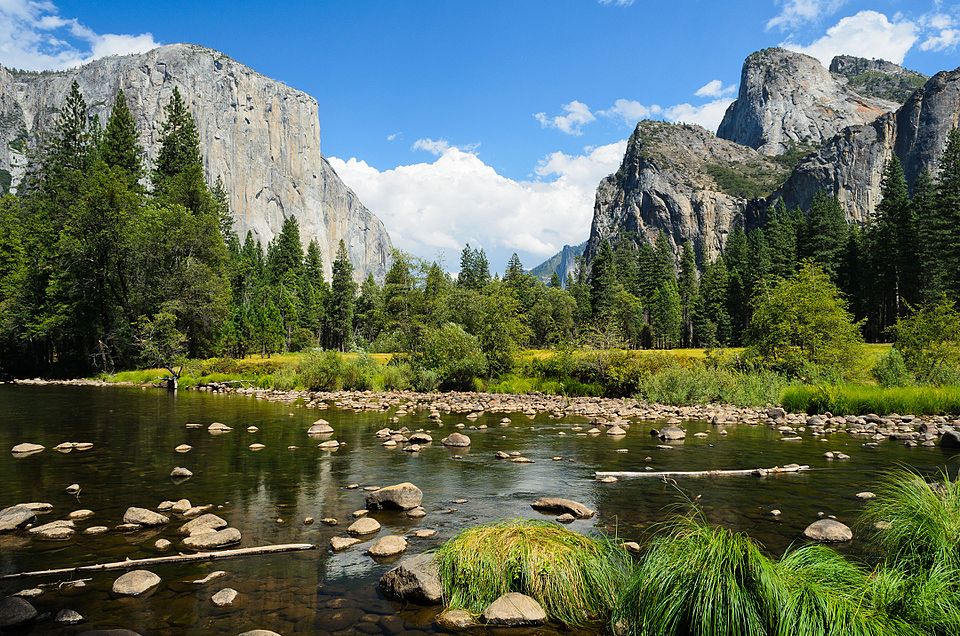
Yosemite’s landscape was shaped over millions of years. The granite that makes up the valley walls formed deep underground about 100 million years ago from cooling magma. Over time, glaciers carved the rock into the steep cliffs and U-shaped valley we see today. El Capitan rises 3,000 feet (914 meters) straight up from the valley floor and is one of the largest exposed granite monoliths in the world. Half Dome, standing at 8,839 feet (2,694 meters) above sea level, gets its name from its distinctive shape — it looks like a dome that has been sliced in half. Rock climbers travel from around the globe to scale these famous formations.
Waterfalls
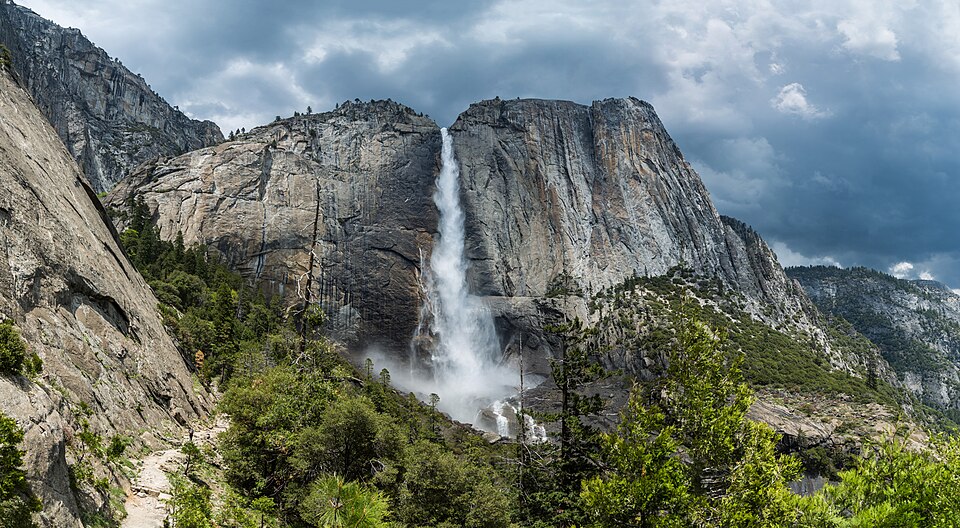
Yosemite is home to some of North America’s tallest waterfalls. Yosemite Falls is the park’s most famous, plunging a total of 2,425 feet (739 meters) in three sections — making it one of the tallest waterfalls on the continent. Bridalveil Fall, at 617 feet (188 meters), is often the first waterfall visitors see when entering Yosemite Valley. In February, Horsetail Fall on the eastern edge of El Capitan can appear to glow bright orange when the setting sun hits it at just the right angle. This natural event is sometimes called the “firefall” and attracts photographers from around the world.
Wildlife
Yosemite’s elevation ranges from about 2,127 feet (648 meters) to 13,114 feet (3,997 meters), creating a wide variety of habitats. The park is home to over 400 species of vertebrates, including black bears, mule deer, bobcats, and coyotes. More than 260 species of birds have been recorded in the park, from peregrine falcons soaring above the cliffs to great gray owls hunting in the meadows. The park’s rivers and streams support rainbow trout and other fish species. Yosemite also protects many rare and threatened species, including the Sierra Nevada bighorn sheep and the Sierra Nevada red fox.
Giant Sequoias
The Mariposa Grove, located near the park’s southern entrance, contains about 500 mature giant sequoia trees. These are some of the largest living things on Earth. The oldest tree in the grove, called the Grizzly Giant, is estimated to be about 2,700 years old and stands roughly 209 feet (64 meters) tall. Giant sequoias can grow to over 30 feet (9 meters) in diameter at their base. Their thick, reddish bark can be up to 2 feet (0.6 meters) thick, which protects them from fire and insects.
History
The Ahwahneechee people lived in Yosemite Valley for thousands of years before European Americans arrived. They called the valley “Ahwahnee,” meaning “place of the gaping mouth,” and used the land for hunting, fishing, and gathering acorns. In 1851, the Mariposa Battalion became the first group of non-Native people to enter the valley, and they forcibly removed the Ahwahneechee from their homeland. In 1864, President Abraham Lincoln signed the Yosemite Grant, protecting Yosemite Valley and the Mariposa Grove — the first time the U.S. government set aside land specifically for public enjoyment. Naturalist John Muir campaigned tirelessly for greater protection, and on October 1, 1890, Yosemite became a national park.
Visiting Today
Yosemite offers more than 800 miles (1,287 kilometers) of hiking trails, from easy walks along the valley floor to challenging climbs up Half Dome. Popular activities include rock climbing, horseback riding, photography, and camping. The park has 13 campgrounds and several lodges, including the historic Ahwahnee Hotel (now called The Majestic Yosemite Hotel). Visitors should be aware that the park can be very crowded during summer months, and reservations are often required for camping and sometimes for entry to the park itself.
 OtterKnow Kids Encyclopedia