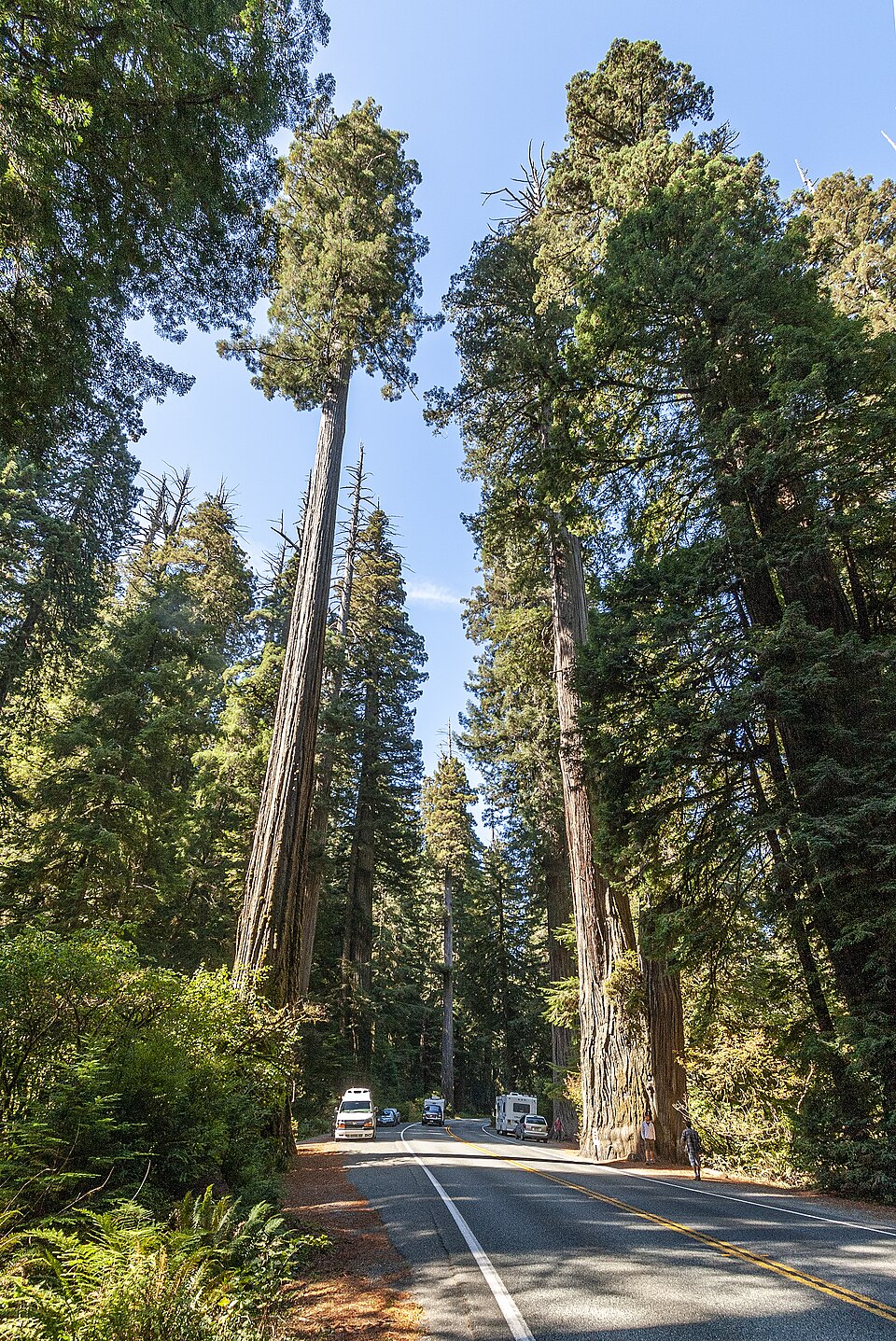
Coast Redwoods vs. Giant Sequoias
Coast redwoods and giant sequoias are related but quite different. Coast redwoods are the taller of the two, reaching heights over 380 feet (116 meters). They grow in a narrow strip along the Pacific coast from central California to southern Oregon. Giant sequoias are shorter, typically reaching about 250 to 275 feet (76 to 84 meters), but they are far wider and heavier. The General Sherman Tree, a giant sequoia in Sequoia National Park, has a trunk volume of about 52,500 cubic feet, making it the largest known living single-stem tree on Earth. Coast redwoods prefer cool, foggy coastal climates, while giant sequoias thrive at elevations between 5,000 and 7,000 feet (1,500 to 2,100 meters) in the Sierra Nevada.
The Role of Fog
One of the most important things about coast redwoods is their dependence on fog. California’s summers are dry, with very little rainfall from May through September. But along the coast, thick fog rolls in from the Pacific Ocean almost daily. The redwood needles are shaped to capture tiny water droplets from the fog, which then drip down to the forest floor. Scientists have found that fog drip can provide 25 to 40 percent of the water coast redwoods use during the dry season. Climate change could threaten these forests if fog patterns shift, which is an area of active scientific research.
Ecology and Wildlife
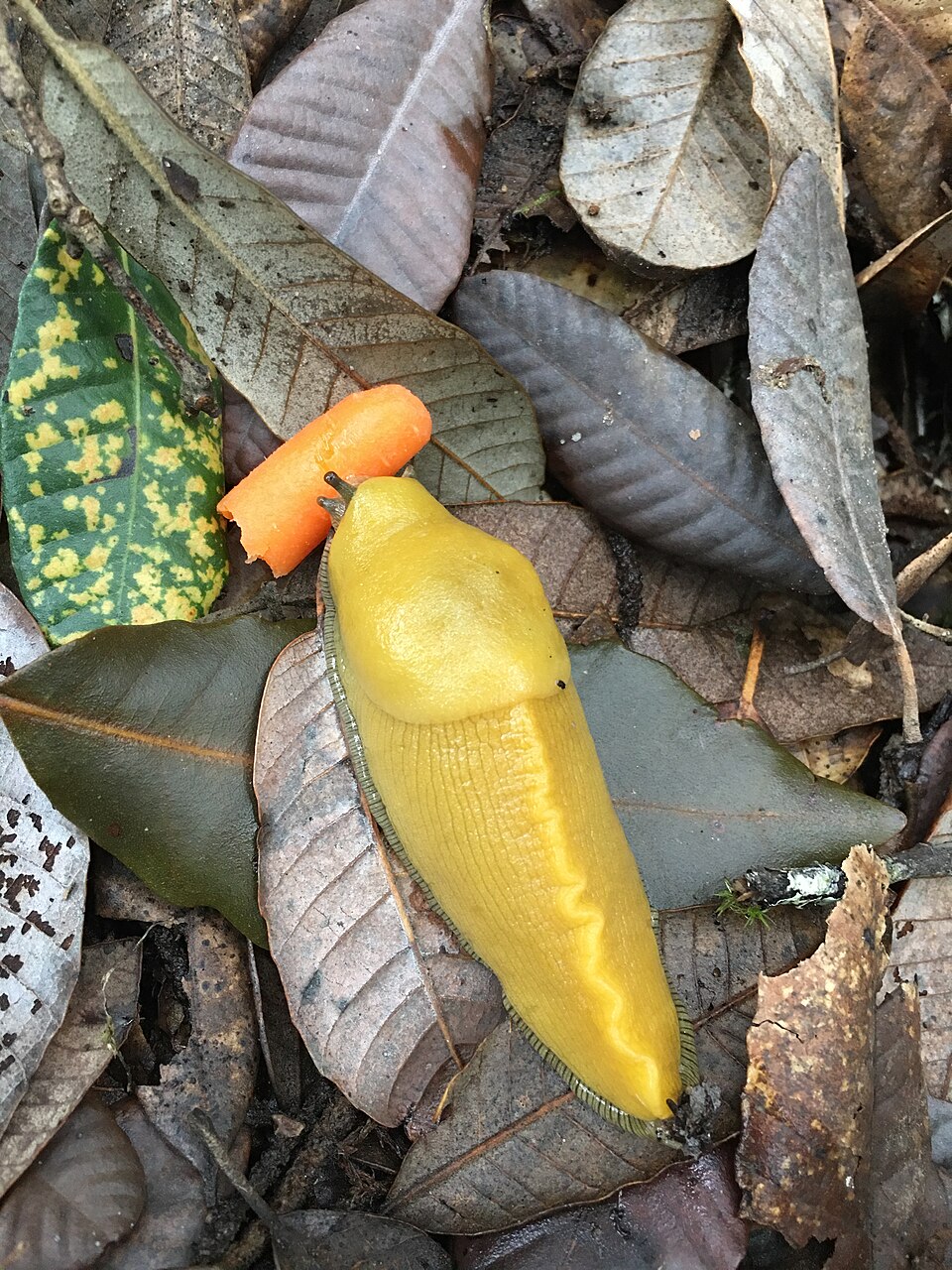
Redwood forests support rich and unique ecosystems. The towering canopy creates a cool, shaded environment where ferns, sorrel, mosses, and mushrooms flourish on the forest floor. Some coast redwoods are so tall that entire gardens of ferns and other plants grow on their upper branches, hundreds of feet above the ground. These are called canopy gardens.
The forests are home to black-tailed deer, black bears, gray foxes, river otters, and the famous banana slug, a bright yellow creature that can grow up to 10 inches long. The endangered marbled murrelet, a small seabird, nests in the high branches of old-growth redwoods, sometimes flying 50 miles inland from the ocean to reach its nest. Coho salmon and steelhead trout spawn in the cool streams that flow through these forests.
Logging History
Before the California Gold Rush in 1849, old-growth redwood forests covered approximately 2 million acres of the California coast. As settlers poured into the state, demand for lumber exploded. Redwood wood was prized because it resists rot and insects, making it ideal for building. By the early 1900s, intensive logging had cleared vast areas of ancient forest. By the time conservation efforts gained strength, roughly 95 percent of the original old-growth coast redwood forest had been cut down. Only about 100,000 acres of old-growth coast redwoods remain today, mostly in protected parks and reserves.
Conservation
The effort to save California’s redwoods began in the early 1900s. The Save the Redwoods League, founded in 1918, has helped protect more than 200,000 acres of redwood forest. Redwood National and State Parks, established in 1968 and expanded in 1978, protect 139,000 acres along the northern California coast, including some of the tallest trees on Earth. In the Sierra Nevada, Sequoia and Kings Canyon National Parks and Yosemite National Park protect groves of giant sequoias. Muir Woods National Monument near San Francisco preserves one of the last old-growth redwood stands in the Bay Area. Today, both coast redwoods and giant sequoias are listed as endangered on the IUCN Red List, and ongoing conservation work focuses on restoring logged areas and protecting remaining old-growth stands.
Visiting the Redwoods
California offers many places to experience redwood forests firsthand. Redwood National and State Parks in the far north contain the tallest known trees, including Hyperion, the world’s tallest tree at about 380 feet (116 meters). Visitors can drive through the famous Chandelier Tree in Leggett, hike among the giant sequoias in Yosemite’s Mariposa Grove, or walk the boardwalk trails at Muir Woods near San Francisco. Avenue of the Giants, a 31-mile scenic drive through Humboldt Redwoods State Park, passes through some of the most impressive old-growth groves remaining in the world.
 OtterKnow Kids Encyclopedia