The Redwood Trees
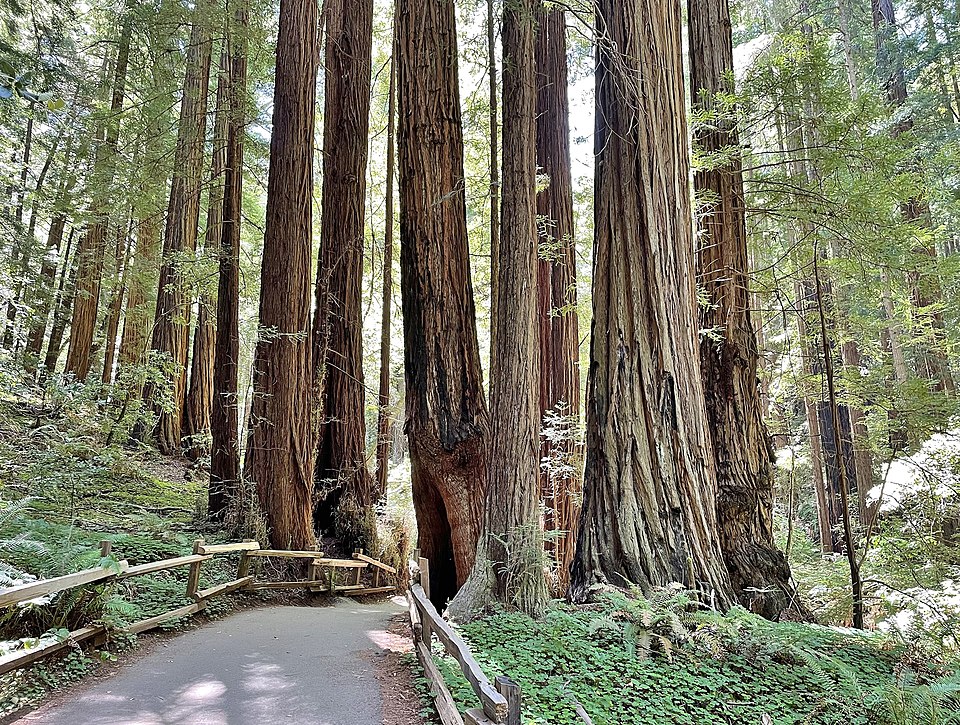
The coast redwoods (Sequoia sempervirens) in Muir Woods are among the tallest living things on Earth. The tallest tree in the park reaches 258 feet (79 meters), roughly the height of a 25-story building. The oldest trees in the forest are at least 1,200 years old, meaning they were already growing centuries before Christopher Columbus crossed the Atlantic. Unlike many trees, coast redwoods can reproduce by sprouting new trunks from their root systems. This is why you often see rings of younger trees growing around the base of an older stump, which are called “fairy rings” or “cathedral rings.”
Ecosystem and Wildlife
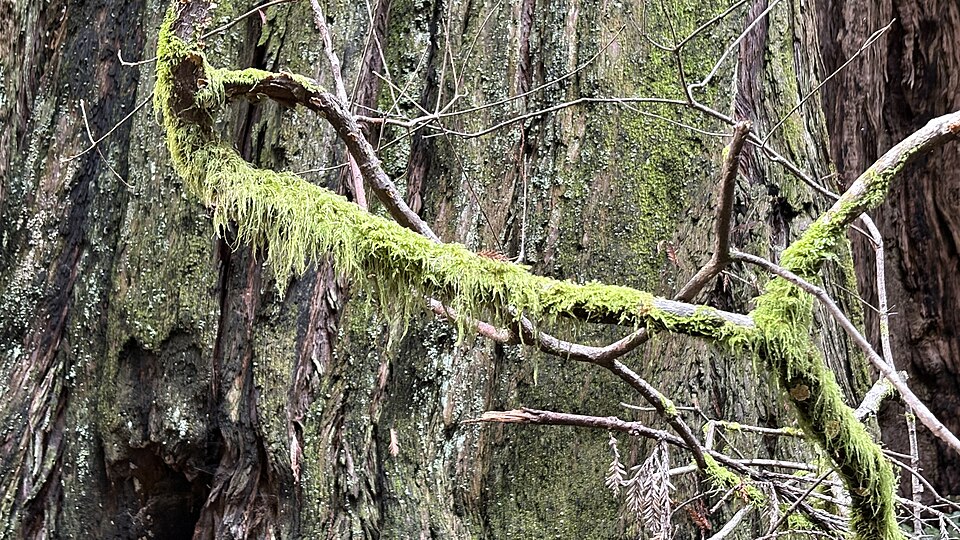
The redwood canopy creates a cool, shaded environment on the forest floor. Ferns, sorrel, and mosses thrive in the dim light beneath the towering trees. Redwood Creek flows through the heart of the forest and is one of the few streams in the Bay Area where endangered coho salmon still return to spawn each winter. The forest is also home to black-tailed deer, gray foxes, banana slugs, and the northern spotted owl. Over 50 species of birds have been recorded in the monument, including Steller’s jays and Pacific wrens.
The Role of Fog
One of the most important things about Muir Woods is how the trees depend on fog. During California’s dry summers, rain is scarce, but thick fog rolls in from the Pacific Ocean almost every day. The redwood needles are specially shaped to capture tiny water droplets from the fog, which then drip down to the forest floor. Scientists estimate that fog drip can provide up to 40 percent of the water these trees use during the summer months. This process also waters the ferns and other plants growing below.
History and Conservation
In the late 1800s, most of the old-growth redwood forests near San Francisco had been logged to build the growing city. A businessman named William Kent purchased 611 acres of redwood forest in 1905 to save it from a water company that planned to dam Redwood Creek and flood the canyon. In 1908, President Theodore Roosevelt used the Antiquities Act to declare it a national monument. Kent asked that the forest be named after John Muir, the famous naturalist and conservationist who co-founded the Sierra Club. Muir called the honor “the best tree-lover’s monument that could possibly be found in all the forests of the world.”
Visiting Muir Woods
Muir Woods has over 6 miles (9.7 kilometers) of trails, including boardwalk paths that are accessible for wheelchairs and strollers. The main trail follows Redwood Creek along the valley floor, passing through Cathedral Grove and Bohemian Grove, two of the most impressive stands of old-growth trees. Because the park is so popular, visitors are required to make parking or shuttle reservations in advance. The monument is open year-round, and the temperature inside the forest stays between 40 and 70 degrees Fahrenheit (4 to 21 degrees Celsius) throughout the year, so visitors should bring a jacket even in summer.
 OtterKnow Kids Encyclopedia