Ancient Plants and Trees
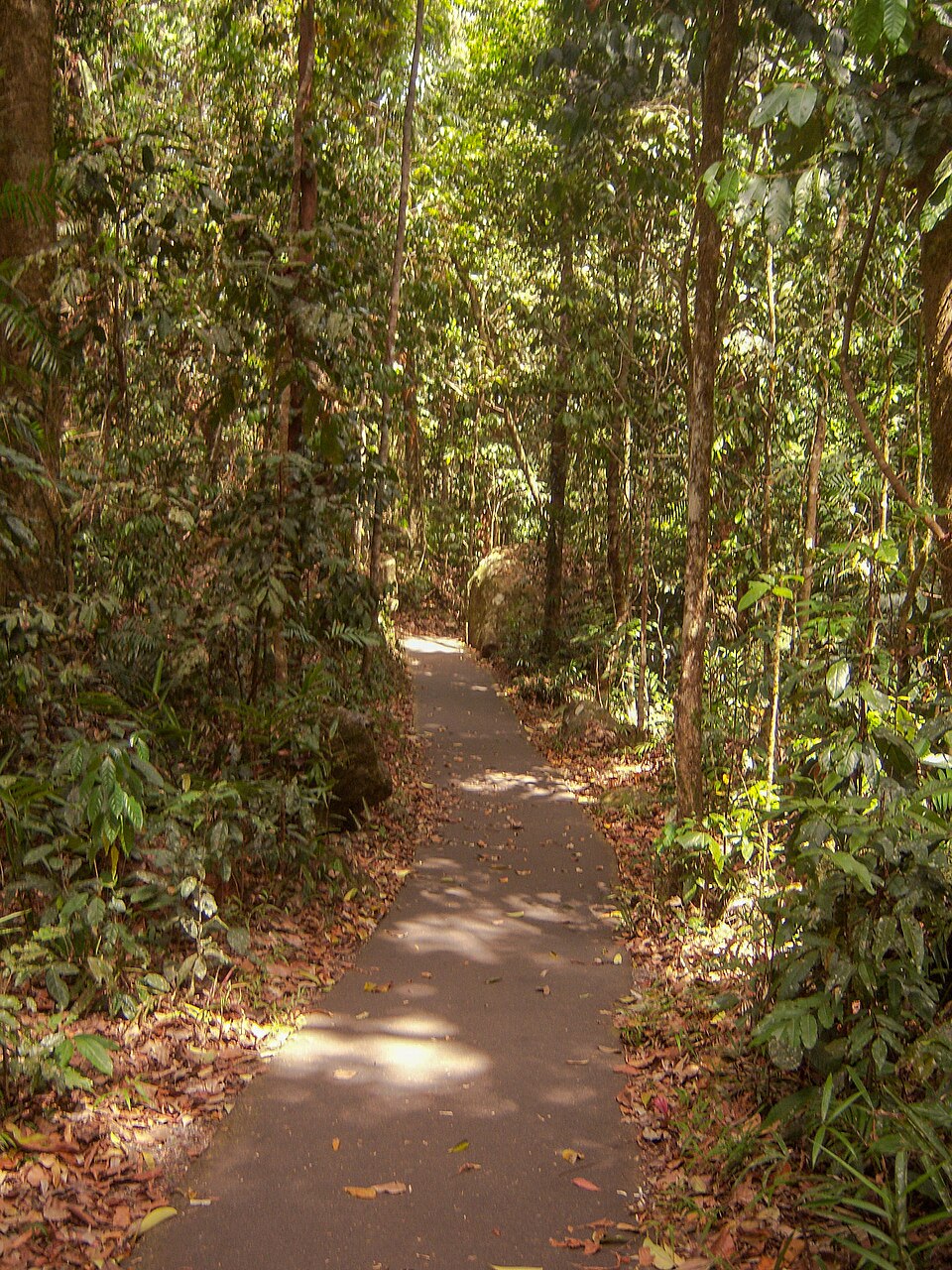
The Daintree is sometimes called a “living museum” because it contains plants related to species that grew alongside dinosaurs millions of years ago. Some of its trees and ferns belong to plant families that have existed since the age of the ancient supercontinent Gondwana. The forest is home to primitive flowering plants, including the Idiospermum, one of the rarest and most ancient flowering plants on Earth. Walking through the Daintree is like stepping back in time to see what forests looked like in the distant past.
Amazing Animals
The Daintree Rainforest is home to a huge variety of wildlife found nowhere else on the planet. The southern cassowary, a large flightless bird that can stand nearly two meters tall, roams the forest floor and plays a key role in spreading seeds. Bennett’s tree kangaroos live high in the canopy, gripping branches with their strong paws. The forest is also home to Boyd’s forest dragons, colorful lizards that sit motionless on tree trunks waiting for insects. Saltwater crocodiles, the largest living reptiles, inhabit the Daintree River and nearby coastal areas.
Where the Rainforest Meets the Reef
One of the most unusual features of the Daintree region is Cape Tribulation, where the rainforest reaches all the way down to the ocean shore. Just offshore lies the Great Barrier Reef, making this one of the only places on Earth where two UNESCO World Heritage Sites sit side by side. Visitors can stand on the beach with dense tropical forest behind them and a coral reef stretching out ahead. This meeting of ecosystems creates an unusually rich zone for both land and marine life.
Climate and Rainfall
The Daintree receives enormous amounts of rain, with the wettest areas getting up to 4,000 millimeters of rainfall per year. Most of this rain falls during the wet season from December to March, when heavy tropical downpours drench the forest almost daily. The warm, humid conditions are perfect for the dense growth of trees, vines, and ferns that make up the rainforest canopy. Even during the drier months, the forest stays green and moist thanks to mist and cloud cover rolling in from the coast.
The Kuku Yalanji People
The Daintree is also the ancestral homeland of the Kuku Yalanji Aboriginal people, who have lived in and around the rainforest for thousands of years. They hold deep knowledge of the forest’s plants, animals, and seasonal cycles, passed down through generations of storytelling and practice. The Kuku Yalanji use many rainforest plants for food, medicine, and tools. In 2021, a large section of the Daintree was formally returned to the Eastern Kuku Yalanji people, recognizing their role as traditional custodians of this ancient landscape.
The Daintree River
The Daintree River winds through the heart of the rainforest for about 140 kilometers before emptying into the Coral Sea. Its dark, still waters are home to large saltwater crocodiles, which can sometimes be spotted basking on the riverbanks. River cruises are a popular way for visitors to see wildlife, including kingfishers, herons, and water monitors. The river also supports mangrove forests along its lower stretches, adding yet another layer of ecological richness to the region.
Conservation and Threats
Protecting the Daintree Rainforest is an ongoing effort. Logging and land clearing in the 20th century destroyed parts of the forest before conservation campaigns helped establish national park protections in the 1980s. Today, threats include invasive species like feral pigs, which damage the forest floor, and climate change, which could alter rainfall patterns and temperatures. Scientists and conservation groups continue working to preserve this ancient forest so that future generations can experience this ancient forest.
 OtterKnow Kids Encyclopedia