Why It Is So Dry
The Atacama is extraordinarily dry because of a combination of geographic and atmospheric factors working together. The Andes Mountains to the east block wet air from the Amazon rainforest, while the coastal mountains to the west trap cool, dry air from the Pacific. A cold ocean current called the Humboldt Current runs along the coast, cooling the air and preventing rain clouds from forming. On top of all that, a persistent high-pressure weather system pushes clouds away from the region. In the driest parts of the desert, average rainfall is only about one to three millimeters per year, which is almost nothing compared to most places on Earth.
The Desert Landscape
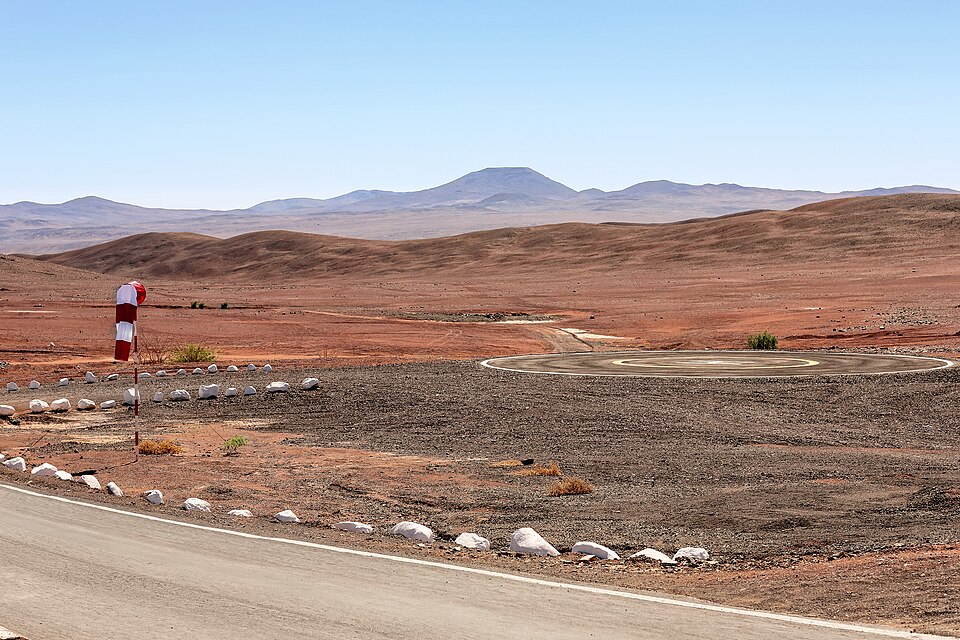
The Atacama’s landscape looks so alien that NASA has used it to test equipment designed for exploring Mars. Wide salt flats, called salares, shimmer white in the sun, and massive sand dunes shift slowly in the wind. At higher elevations above 4,000 meters (about 13,000 feet), volcanic peaks rise above the desert floor, and geysers shoot steam into the cold morning air. The Valle de la Luna, or Valley of the Moon, features dramatic rock formations shaped by millions of years of wind and occasional water. These surreal landscapes attract scientists, photographers, and adventurers from around the world.
Plants and Animals
Life in the Atacama Desert is rare but present. Along the coast, a thick fog called camanchaca rolls in from the Pacific Ocean, providing just enough moisture for certain plants and insects to survive. Some hardy cacti and shrubs have evolved to collect water from fog droplets on their leaves and spines. Flamingos gather at the edges of salty highland lagoons, feeding on tiny shrimp and algae in the mineral-rich water. Viscachas, which look like long-tailed rabbits, hop among the rocks at higher elevations, and foxes and lizards have adapted to the desert’s extreme temperature swings between day and night.
The Desert in Bloom
One of the Atacama’s most astonishing events happens when rare rainfall soaks the desert floor. Seeds that have lain dormant in the dry soil for years suddenly sprout, covering the normally barren ground with carpets of colorful wildflowers. This event, known as the desierto florido or “flowering desert,” can turn vast stretches of brown earth into fields of pink, purple, yellow, and white blossoms. The blooms attract insects, birds, and visitors who travel from far away to witness the spectacle. These blooming events do not happen every year, making them even more special when they occur.
Stargazing Capital of the World
The Atacama’s extremely dry air, high altitude, and distance from city lights make it one of the best places on Earth for observing the night sky. The ALMA Observatory, one of the world’s most powerful radio telescope arrays, was built in the Atacama at over 5,000 meters (16,500 feet) above sea level. Astronomers chose this location because the dry atmosphere allows radio waves from distant galaxies to reach the telescopes with very little interference. Several other major observatories also operate in the Atacama, and Chile now hosts more telescope capacity than any other country. On a clear night, the Milky Way stretches across the sky in sharp detail visible to the naked eye.
People of the Atacama
Humans have lived in and around the Atacama Desert for thousands of years, finding clever ways to survive in one of Earth’s harshest environments. The Atacameno people, also known as the Lickan Antay, developed irrigation systems to grow crops using snowmelt from the Andes. Ancient inhabitants also created the Chinchorro mummies, some of the oldest deliberately preserved human remains ever found, dating back about 7,000 years. Today, mining is a major industry in the Atacama, especially the extraction of copper and lithium, minerals used in electronics and batteries. Towns like San Pedro de Atacama serve as bases for tourists exploring the desert’s natural wonders.
Protecting the Atacama
The Atacama Desert faces growing pressures from mining, tourism, and climate change. Lithium mining, which requires large amounts of water, threatens the already scarce water supply that local communities and wildlife depend on. Increased tourism can damage fragile desert ecosystems where even footprints may last for years in the dry soil. Scientists are working to understand how climate change might alter the fog patterns that many coastal plants and animals rely on for survival. Balancing economic development with the protection of this unique landscape is an ongoing challenge for Chile and the communities that call the Atacama home.
 OtterKnow Kids Encyclopedia