Geography and Climate
India is shaped like a giant triangle that stretches southward into the Indian Ocean. The mighty Himalaya mountains form a natural wall along the northern border, including parts of Mount Everest and K2, two of the tallest peaks on Earth. Major rivers like the Ganges and the Brahmaputra flow across wide, fertile plains where millions of people live and farm. Southern India is a large plateau surrounded by coastal mountains called the Western and Eastern Ghats. The climate ranges from snowy mountain peaks in the north to tropical beaches in the south, with a rainy monsoon season that arrives each summer.
Ancient History and Civilization
India is home to one of the world’s oldest civilizations. The Indus Valley Civilization flourished around 3000 BCE in what is now northwestern India and Pakistan, with advanced cities that had planned streets and drainage systems. Over thousands of years, powerful empires rose and fell across the subcontinent, including the Maurya and Gupta empires. India is the birthplace of four major world religions: Hinduism, Buddhism, Jainism, and Sikhism. Ancient Indian scholars made important contributions to mathematics, including the number zero and the decimal system that we all use today.
Language and Culture
India has 22 officially recognized languages, with Hindi and English being the most widely used across the country. Many regions have their own local language, script, and literary traditions, so a person from southern India might speak Tamil or Telugu while someone from the east might speak Bengali. Indian culture is famous for its colorful festivals, such as Diwali (the festival of lights) and Holi (the festival of colors). Bollywood, the Hindi-language film industry based in Mumbai, produces more movies each year than Hollywood. Music, dance, and storytelling have been central to Indian life for thousands of years.
Famous Landmarks
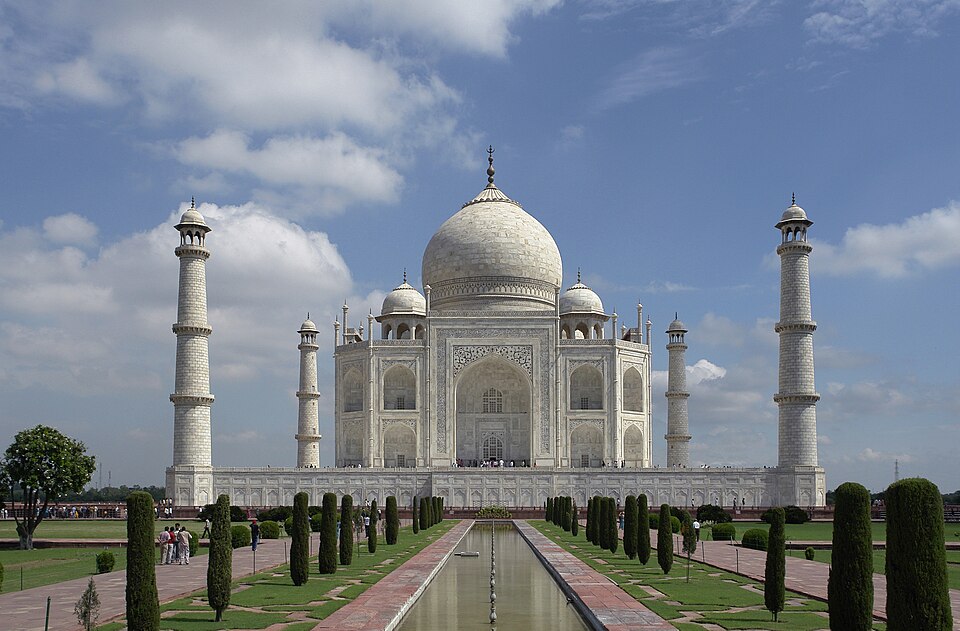
The Taj Mahal in Agra is one of the most recognized buildings in the world, a white marble mausoleum built in the 1600s by Emperor Shah Jahan in memory of his wife. The Ganges River, which flows over 2,500 kilometers across northern India, is considered sacred by Hindus, and millions of people visit its banks for prayer and ceremony. Other remarkable landmarks include the ancient cave temples of Ajanta and Ellora, the grand forts of Rajasthan, and the golden Harmandir Sahib (Golden Temple) in Amritsar. India also has many national parks that protect its diverse wildlife. These sites attract visitors from around the globe every year.
Wildlife and Nature
India is one of the most biodiverse countries in the world, home to tigers, Asian elephants, rhinoceroses, and thousands of bird species. The Bengal tiger is India’s national animal, and the country has set up dozens of tiger reserves to protect this endangered cat. The Indian peacock, with its spectacular blue and green tail feathers, is the national bird. India’s forests range from dense tropical jungles in the northeast to dry scrublands in the west. Conservation efforts like Project Tiger, started in 1973, have helped increase tiger numbers after decades of decline.
Food and Daily Life
Indian cuisine is famous worldwide for its rich use of spices like turmeric, cumin, cardamom, and chili peppers. Dishes vary greatly by region: northern India is known for tandoori breads and creamy curries, while southern India favors rice, lentil stews, and coconut-based dishes. Cricket is by far the most popular sport in India, and major matches can bring the entire country to a standstill. Many families are closely knit, with grandparents, parents, and children often living together. Traditional clothing includes the sari for women and the kurta for men, though Western-style clothing is also common in cities.
Modern India
India gained independence from British rule on August 15, 1947, led by figures like Mahatma Gandhi, who championed nonviolent resistance. Today India has one of the fastest-growing economies in the world, with major industries in technology, pharmaceuticals, and manufacturing. Cities like Bangalore have become global centers for software and information technology. India also has a growing space program and has successfully sent missions to the Moon and Mars. With its young population and expanding education system, India continues to play an increasingly important role on the world stage.
 OtterKnow Kids Encyclopedia