Geography and Landscape
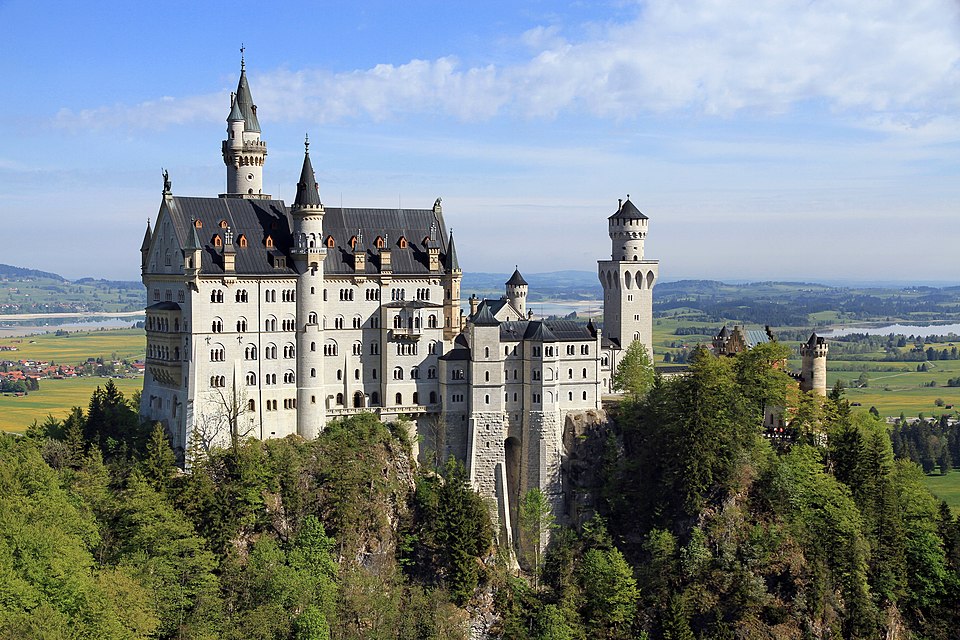
Germany’s landscape changes dramatically from north to south. The northern part of the country is flat, with wide plains, sandy coastlines along the North Sea and Baltic Sea, and many small islands. In the central region, rolling hills and dense forests cover the land, including the famous Black Forest in the southwest, known for its tall evergreen trees and charming villages. The Rhine River, one of Europe’s most important waterways, flows through western Germany past steep vineyards and medieval castles. In the far south, the Bavarian Alps rise sharply along the border with Austria, offering dramatic mountain scenery and outdoor adventures.
History
Germany’s history stretches back to ancient times when Germanic tribes lived across the region. In the 1400s, Johannes Gutenberg invented the movable-type printing press in the city of Mainz, a breakthrough that changed the way knowledge spread around the world. Germany went through enormous changes in the 20th century, including two world wars that reshaped the country and all of Europe. After World War II, Germany was divided into East and West, and the Berlin Wall was built in 1961 to separate East and West Berlin. The wall finally came down in 1989, and Germany officially reunified as one nation on October 3, 1990, a date still celebrated as German Unity Day.
Famous People
Germany has produced many people who changed the world through music, science, and literature. Ludwig van Beethoven, born in Bonn, composed some of the most powerful and well-known music ever written, and Johann Sebastian Bach created masterpieces that are still performed in concert halls today. Albert Einstein, one of the greatest scientists in history, was born in the German city of Ulm and developed ideas that transformed our understanding of the universe. The writer Johann Wolfgang von Goethe is considered one of the greatest authors in the German language. The Brothers Grimm, Jacob and Wilhelm, collected fairy tales like Cinderella, Rapunzel, and Hansel and Gretel that children around the world still enjoy.
Engineering and Industry
Germany is world-famous for its engineering and manufacturing, especially in the automobile industry. Companies like BMW, Mercedes-Benz, and Volkswagen were all founded in Germany and are known for building high-quality cars driven in countries around the globe. The country also has an extensive network of highways called the Autobahn, parts of which have no speed limit at all. Germany is a leader in renewable energy, with thousands of wind turbines and solar panels generating electricity across the country. German engineers and inventors have contributed to advances in everything from medicine and chemistry to space exploration.
Culture and Traditions
German culture includes a love of music, festivals, and outdoor activities. Oktoberfest, held every autumn in the Bavarian city of Munich, is one of the largest festivals in the world, attracting millions of visitors who come to enjoy traditional food, music, and dancing. Christmas markets, called Weihnachtsmarkts, pop up in town squares across Germany each December, selling handmade ornaments, gingerbread, and warm drinks. Germans enjoy hiking, cycling, and skiing, and the country has well-marked trails that wind through forests and mountains. Soccer is by far the most popular sport, and the German national team has won the FIFA World Cup four times.
Food
German food is hearty and filling, with many dishes built around bread, meat, and potatoes. The country is famous for its many varieties of sausage, called Wurst, including bratwurst, currywurst, and weisswurst. Germany is also known as the land of bread, with bakeries offering more than 300 different types of bread and rolls. Pretzels, called Brezeln, are a beloved snack found at bakeries, street stands, and festivals throughout the country. Each region has its own specialties, from Black Forest cake in the southwest to marzipan treats in the northern city of Lubeck.
Germany Today
Modern Germany is one of the most important countries in Europe and plays a key role in international politics and trade. As a founding member of the European Union, Germany works closely with its neighbors to promote peace, cooperation, and economic growth. The country is a global leader in environmental protection and has invested heavily in clean energy and recycling programs. Berlin, the capital, is known as a center for art, technology, and startup companies, drawing young people from around the world. With its strong economy, rich cultural heritage, and commitment to innovation, Germany continues to shape the future of Europe and beyond.
 OtterKnow Kids Encyclopedia