Drowning Is Often Silent
In movies and on TV, drowning people usually scream and wave their arms, but real drowning looks very different. In real life, drowning is often silent because the person is using all of their energy just to keep their mouth above water to breathe. A drowning person typically cannot call for help or wave because their body is focused entirely on the instinct to stay afloat. This means drowning can happen right next to other swimmers without anyone noticing. That is why it is so important to always have a responsible adult watching whenever children are in or near the water.
The Buddy System
The most important rule of water safety is simple: never swim alone. Always swim with a buddy so that if something goes wrong, there is someone who can get help. Swim only in designated areas where a lifeguard is on duty, because lifeguards are trained to spot drowning and rescue swimmers. If there is no lifeguard, make sure a responsible adult is always watching from the water’s edge — not reading a book or looking at a phone. The buddy system works because having another person nearby means help is always just seconds away.
Life Jackets and Personal Flotation Devices
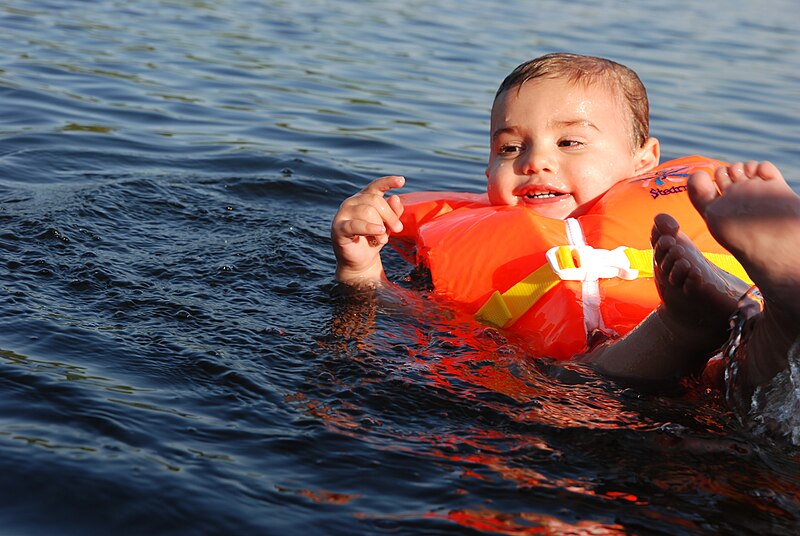
Life jackets, also called personal flotation devices (PFDs), are one of the most effective tools for preventing drowning. A properly fitted life jacket reduces the risk of drowning by 83 percent, making it an essential piece of safety equipment. Life jackets should always be worn on boats, while water-skiing, when kayaking, and in open water like lakes and rivers. Make sure your life jacket is the right size — it should fit snugly and not ride up over your chin or ears when you lift your arms. Inflatable pool toys like water wings and noodles are fun, but they are not safety devices and should never be used instead of a real life jacket.
Learning to Swim
Swimming lessons are one of the best investments any family can make in water safety. Research shows that children who learn to swim are 88 percent less likely to drown than children who have not had formal swimming lessons. Many community pools, YMCAs, and recreation centers offer swimming classes for all ages and skill levels. Even strong swimmers should continue to practice and improve their skills throughout their lives. In addition to the basic strokes, swimming lessons teach important survival skills like floating on your back, treading water, and how to call for help.
Rip Currents and Ocean Safety
If you swim in the ocean, you need to know about rip currents — powerful, narrow channels of water that flow quickly away from the shore. Rip currents cause about 80 percent of all lifeguard rescues at ocean beaches and can pull even the strongest swimmers out to sea. If you get caught in a rip current, do not try to swim directly back to shore because you will exhaust yourself fighting the current. Instead, swim parallel to the shoreline until you feel the current release you, and then swim back to shore at an angle. You can sometimes spot rip currents by looking for areas of choppy, discolored water or gaps in the breaking waves.
Pool Safety at Home
Backyard pools are a major drowning risk for young children, and proper safety measures can prevent tragedies. Every pool should be surrounded by a fence at least 4 feet tall with a self-closing, self-latching gate to keep unsupervised children out. Never leave toys or floats in the pool when it is not in use, because they can attract young children to the water. Pool drains can create powerful suction — never sit on or play near a drain, and make sure your pool’s drain covers meet current safety standards. Always have a phone near the pool so you can call 911 quickly if there is an emergency.
Water Safety Beyond Swimming
Water safety rules apply in many situations beyond just swimming pools and beaches. Be careful around rivers and streams, where currents can be much stronger than they look and rocks can be slippery. Never dive into water unless you know it is deep enough — diving into shallow water causes thousands of spinal cord injuries each year. During floods, never walk or drive through floodwater because just 6 inches of moving water can knock you down, and 2 feet can float a car. Even at home, young children can drown in bathtubs, buckets, and toilets, so always supervise small children around any amount of water.
 OtterKnow Kids Encyclopedia