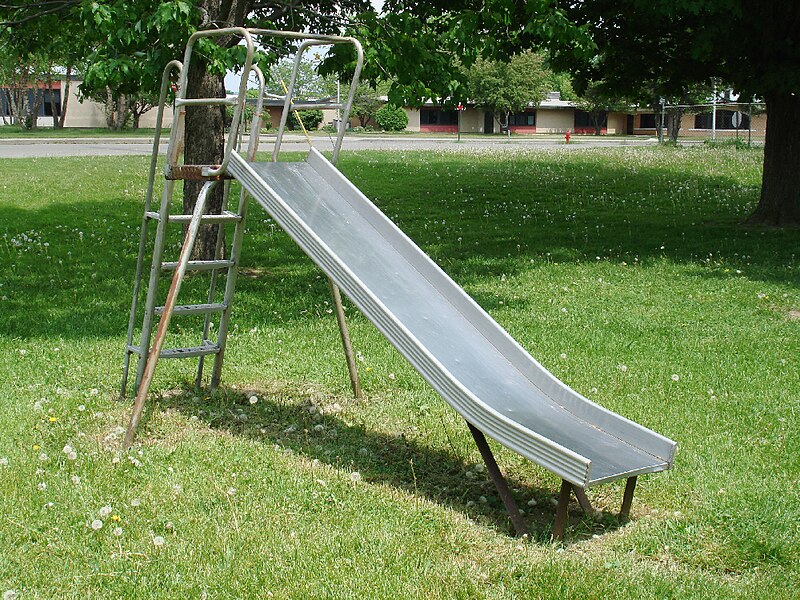
Safe Playground Surfaces
The ground surface under playground equipment makes a huge difference in how serious a fall injury can be. Impact-absorbing surfaces like wood chips, rubber matting, pea gravel, or shredded rubber can reduce the chance of serious injury from a fall by about 70%. Hard surfaces like concrete, asphalt, packed dirt, or grass over hard ground do not cushion falls and lead to much worse injuries. Before playing, take a quick look at the ground under the equipment to make sure there is a soft, cushioning surface.
Playground Equipment Safety
Always use playground equipment that is designed for your age group, because equipment built for older children can be too tall or too challenging for younger kids. Before playing, look for hazards like broken parts, loose bolts sticking out, splintered wood, or sharp edges that could cut you. Follow the rules posted at the playground, go down slides feet first, hold on with both hands while climbing, and wait your turn so you do not crowd the equipment. Never push or roughhouse on playground equipment, especially at the top of slides, climbing walls, or ladders.
Understanding Concussions
A concussion is a type of traumatic brain injury caused by a bump, blow, or jolt to the head that makes the brain move quickly inside the skull. Symptoms can include headache, confusion, dizziness, nausea, blurry vision, memory problems, and sensitivity to light or noise. Concussions are serious even if the person does not lose consciousness, because the brain needs time to heal properly. The CDC endorses the rule “When in Doubt, Sit it Out,” meaning anyone with a suspected concussion should stop playing immediately and see a doctor before returning to activity.
Sports Safety Gear
Wearing the right protective gear for your sport is one of the easiest ways to prevent injuries. Helmets are essential for cycling, skateboarding, baseball, football, hockey, and skiing, and they must fit correctly to work properly. Mouthguards protect teeth and reduce concussion risk in contact sports like football, basketball, hockey, and lacrosse. Shin guards, pads, and proper athletic shoes designed for your specific sport all play a role in keeping your body safe during competition and practice.
Preventing Overuse Injuries
Overuse injuries happen when the same motion is repeated too many times without giving the body enough rest to recover. Common overuse injuries in young athletes include stress fractures, tendinitis, and a condition called Little League elbow that affects young baseball pitchers. Taking at least one or two rest days per week and playing different sports throughout the year (called cross-training) helps prevent these injuries. If you feel pain that gets worse during activity or does not go away with rest, tell a parent or coach right away so it does not become a bigger problem.
Warming Up and Cooling Down
A proper warm-up before activity gets your muscles, joints, and heart ready for action and reduces the risk of strains and sprains. Spend 5 to 10 minutes doing light activity like jogging or jumping jacks, followed by gentle stretching of the muscles you will use most. After activity, cooling down with light movement and stretching helps your body recover and reduces muscle soreness. Skipping warm-ups and cool-downs is one of the most common reasons young athletes get injured.
Playing by the Rules
The rules of every sport exist not just for fairness but also for safety. Following the rules means playing with proper technique, which protects both you and the other players from unnecessary injuries. Coaches and referees enforce rules to keep the game safe, so listen to their instructions and respect their decisions. Good sportsmanship, including playing fair and controlling your temper, is also a safety skill because angry or reckless behavior leads to more injuries.
 OtterKnow Kids Encyclopedia