Three Types of Muscle
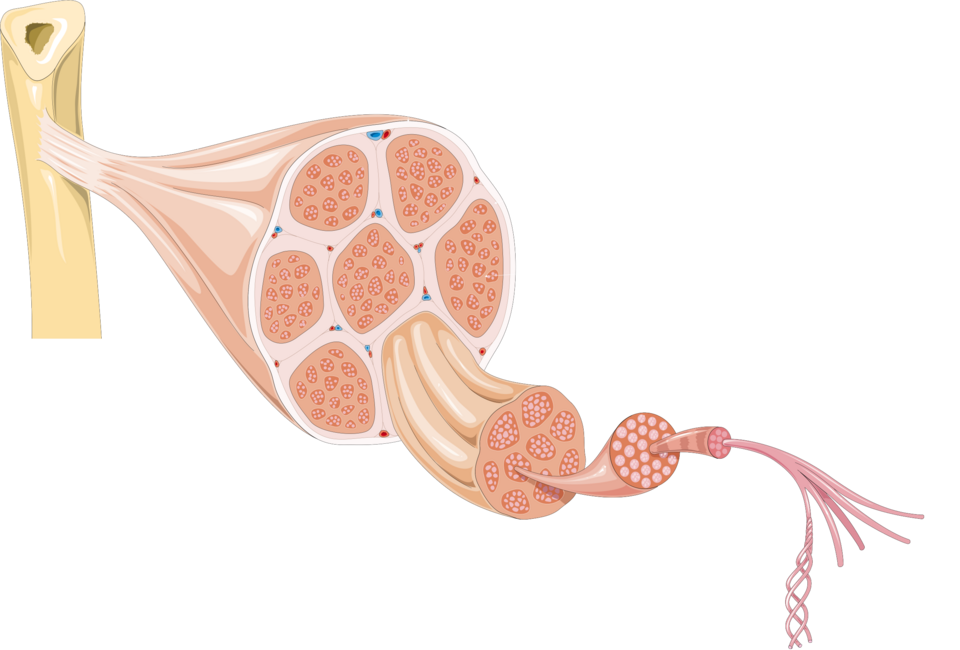
Your body has three distinct types of muscle tissue, each with its own structure and job. Skeletal muscles are the ones you can control voluntarily — they are attached to your bones and pull on them to create movement when you decide to walk, throw, or wave. Smooth muscles are found in the walls of organs like your stomach, intestines, and blood vessels, and they work automatically without you thinking about it. Cardiac muscle is a special type found only in the heart — it contracts rhythmically on its own to keep blood pumping throughout your life. Both smooth and cardiac muscles are involuntary, meaning your brain controls them without you having to think about it.
Muscles Work in Pairs
One of the most important things to know about muscles is that they can only pull — they can never push. Because of this, muscles almost always work in pairs, with one muscle doing the opposite job of the other. When you bend your arm, the bicep on the front of your upper arm contracts and shortens, pulling your forearm up. At the same time, the tricep on the back of your arm relaxes and lengthens to allow the movement. When you straighten your arm, the tricep contracts while the bicep relaxes. This teamwork between opposing muscles is how your body produces smooth, controlled movements.
The Biggest and Smallest Muscles
Just like bones, muscles come in all different sizes depending on the job they need to do. The gluteus maximus, the large muscle in your buttocks, is the biggest muscle in the body — it is powerful enough to keep you upright and helps you climb stairs, run, and jump. The smallest muscle is the stapedius, found deep inside your ear, measuring only about 1 millimeter long. The stapedius helps protect your hearing by dampening loud vibrations before they reach the inner ear. Your tongue is actually made up of eight separate muscles working together, which is what makes it so flexible for speaking and eating.
How Muscles Get Energy
Muscles need fuel to work, and they get it from oxygen and a sugar called glucose that travels to them through the blood. During normal activity, muscles use aerobic respiration, which combines oxygen and glucose to produce energy efficiently. But during intense exercise — like sprinting or lifting something heavy — your muscles need energy faster than oxygen can be delivered. In those moments, muscles switch to anaerobic respiration, which produces energy without oxygen but creates a byproduct called lactic acid. Lactic acid is what causes that burning, tired feeling in your muscles during hard exercise.
Muscle Growth and Repair
When you exercise, you actually create tiny tears in your muscle fibers — and that is a good thing. During rest, your body repairs these small tears and builds the muscle fibers back thicker and stronger than before. This is why rest days between workouts are just as important as the exercise itself. Your muscles need protein from foods like chicken, fish, beans, eggs, and nuts to carry out these repairs. Sleep is also critical for muscle recovery because your body releases growth hormone during deep sleep, which helps rebuild and strengthen muscle tissue.
Muscles You Do Not Think About
While you might focus on the muscles you use to run and play, many muscles in your body work automatically without any conscious effort. Your diaphragm contracts and relaxes about 20,000 times a day to keep you breathing. The smooth muscles in your digestive tract squeeze food along in rhythmic waves, a process that continues even while you sleep. Your heart muscle beats about 100,000 times every day, pumping blood to every corner of your body. Even the tiny muscles attached to your hair follicles can contract to make your hair stand on end when you feel cold or scared — that is what gives you goosebumps.
Keeping Your Muscles Healthy
Strong, healthy muscles are built through regular physical activity and good nutrition. Aim for at least 60 minutes of physical activity every day, including activities that strengthen muscles like climbing, push-ups, or carrying heavy things. Stretching before and after exercise helps keep muscles flexible and reduces the chance of injury. Eating a balanced diet with enough protein, along with fruits, vegetables, and whole grains, provides muscles with the building blocks and vitamins they need. Staying hydrated is also important because muscles are about 75% water, and even mild dehydration can make them tire more quickly.
 OtterKnow Kids Encyclopedia