Early Life
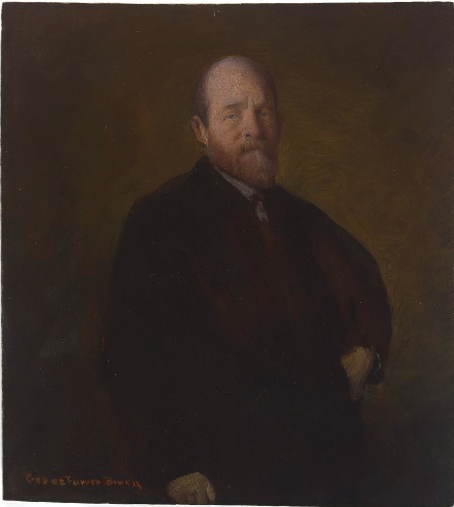
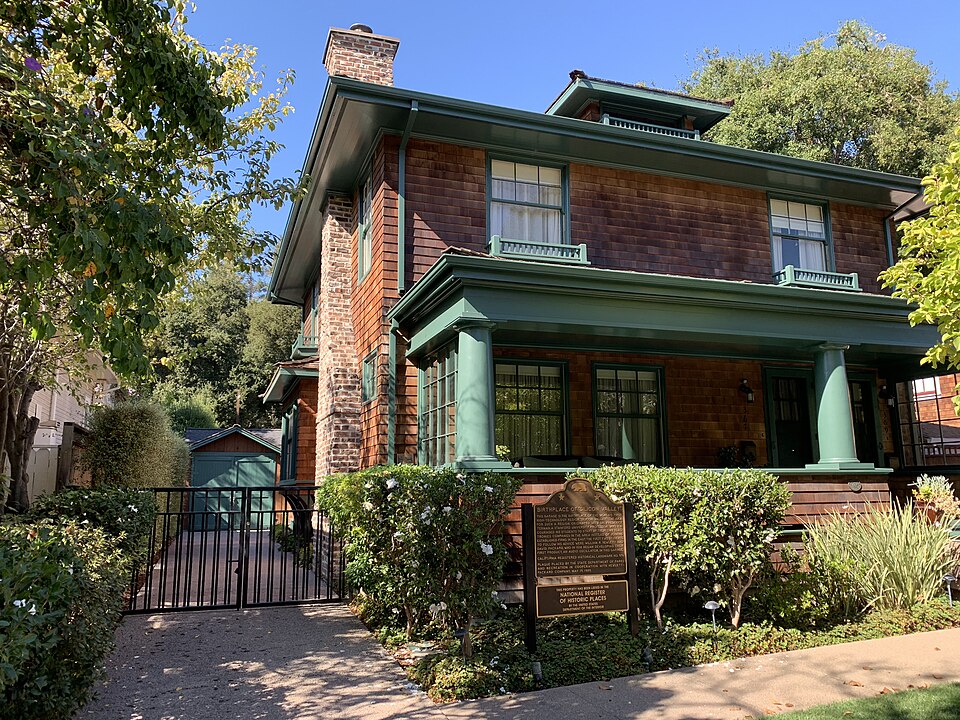
Henry George was born into a working-class family in Philadelphia on September 2, 1839. His father was a publisher of religious books, and the family had enough to get by but not much more. George was a curious and restless student who left school at the age of 13 to help support his family. He worked as an errand boy and a typesetter before signing on as a sailor at 14, voyaging across the Atlantic and eventually sailing to India and Australia.
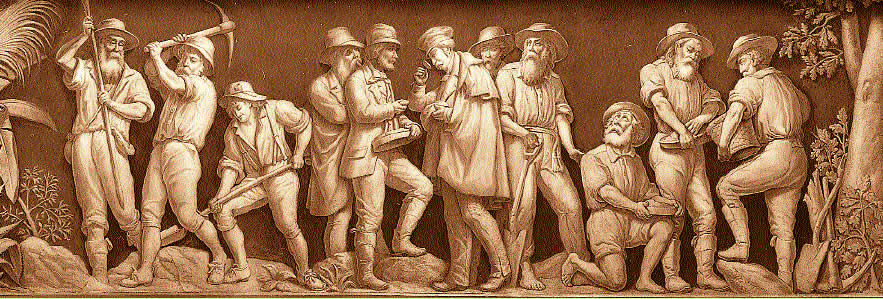
In 1857, when George was 17, he sailed to California during the tail end of the Gold Rush era. He arrived in San Francisco nearly broke and spent the next decade bouncing between poverty and modest success as a newspaper printer and writer. He sometimes went hungry. He once stopped a stranger on the street and asked for money to buy food for his newborn son. These experiences of poverty amid plenty left a permanent mark on his thinking.
Progress and Poverty
The idea that became Progress and Poverty came to Henry George in a moment of revelation. While riding on horseback in the hills outside Oakland, he asked a passing teamster about land prices in the area. The man pointed out that a nearby piece of land was selling for $1,000 an acre. George later wrote that in that instant, he understood the puzzle he had been trying to solve: as California grew and prospered, the value of land shot up — and the people who happened to own that land captured that wealth without doing any extra work. Meanwhile, workers and small business owners had to pay more and more just to live and operate in the growing cities.
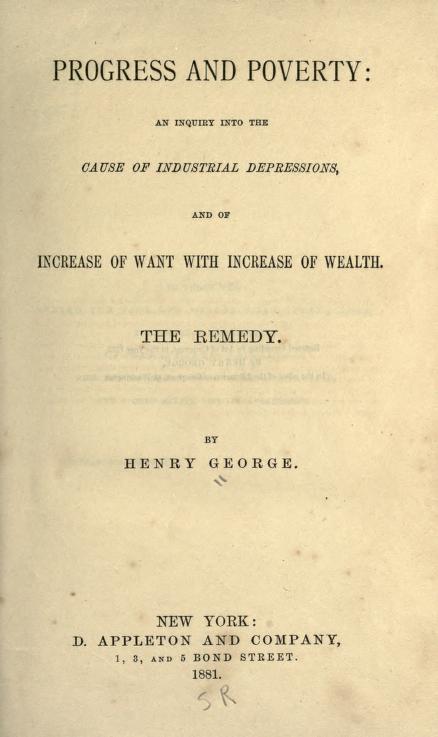
George spent years researching and writing. Progress and Poverty, published in 1879, presented his central argument: the reason poverty persists alongside growing wealth is that landowners collect the rising value of land — value created not by their own effort but by the growth of the surrounding community. His solution was elegantly simple: tax the value of land, not buildings or labor, so that the windfall from rising land values flows to everyone through public services rather than to private landowners.
The Single Tax
George called his proposed policy the “single tax.” The idea was that governments should raise most or all of their revenue from a tax on the unimproved value of land — the value of the location itself, without counting any buildings or improvements on it. By taxing land value heavily, you would discourage landowners from holding idle land and waiting for prices to rise. At the same time, because the tax would fall on the land rather than on buildings or work, it would not punish people for building, investing, or working hard.
Many people found this argument powerfully convincing. Others disagreed, arguing that it was too simple, or unfair to landowners, or impractical. The debate was fierce and serious. George himself was clear that he saw the single tax not just as a revenue policy but as a moral principle: the earth belongs to everyone, and no one person has an exclusive right to the natural value of a piece of land.
His Influence
George’s ideas spread far beyond economics textbooks. He ran for mayor of New York City in 1886 — one of the most dramatic political campaigns of the era. He finished second, ahead of a young candidate named Theodore Roosevelt who would later become president. George ran again for mayor in 1897 but died of a stroke four days before the election. An estimated 100,000 people lined the streets of New York City for his funeral procession.
His influence crossed national borders and political lines. Leo Tolstoy, the great Russian novelist, became a devoted follower and introduced George’s ideas to audiences in Europe. Sun Yat-sen, the founder of modern China, credited George as a major influence on his thinking about land reform. A young Winston Churchill, who later became Britain’s Prime Minister during World War II, gave passionate speeches in favor of land value taxation in the early 1900s.
The “Georgist” movement he inspired continues today. Land value taxes are used in parts of Australia, Estonia, and several American cities. Economists across the political spectrum — from free-market thinkers to progressive reformers — acknowledge that taxing land value is economically efficient in ways that other taxes are not. Henry George remains one of the few self-educated, working-class thinkers to have profoundly shaped the way the world thinks about land, wealth, and fairness.
Fun Facts
- Progress and Poverty outsold every book in the United States except the Bible in the years after it was published.
- Henry George had almost no formal education after age 13, yet his writing influenced some of the most educated thinkers of his era.
- When George ran for NYC mayor in 1886, the Republican candidate who finished behind him was 28-year-old Theodore Roosevelt.
- George’s ideas directly influenced the design of the board game Monopoly — the game’s original version, called “The Landlord’s Game,” was invented in 1903 to illustrate his theories.
- Land value taxes inspired by George are still used today in cities like Harrisburg, Pennsylvania, and in parts of Australia and Estonia.
 OtterKnow Kids Encyclopedia