Education and Athletics
At Amherst College, Drew was an outstanding athlete who starred in football, basketball, baseball, and track. He won the Mossman Trophy as the player who contributed the most to athletics during his time there. After graduating in 1926, he worked as a biology teacher and sports coach for two years to save money for medical school. He then enrolled at McGill University in Montreal, Canada, where he earned his medical degree in 1933. At McGill, he graduated second in his class and won a prize for his work in medical research.
Groundbreaking Blood Research
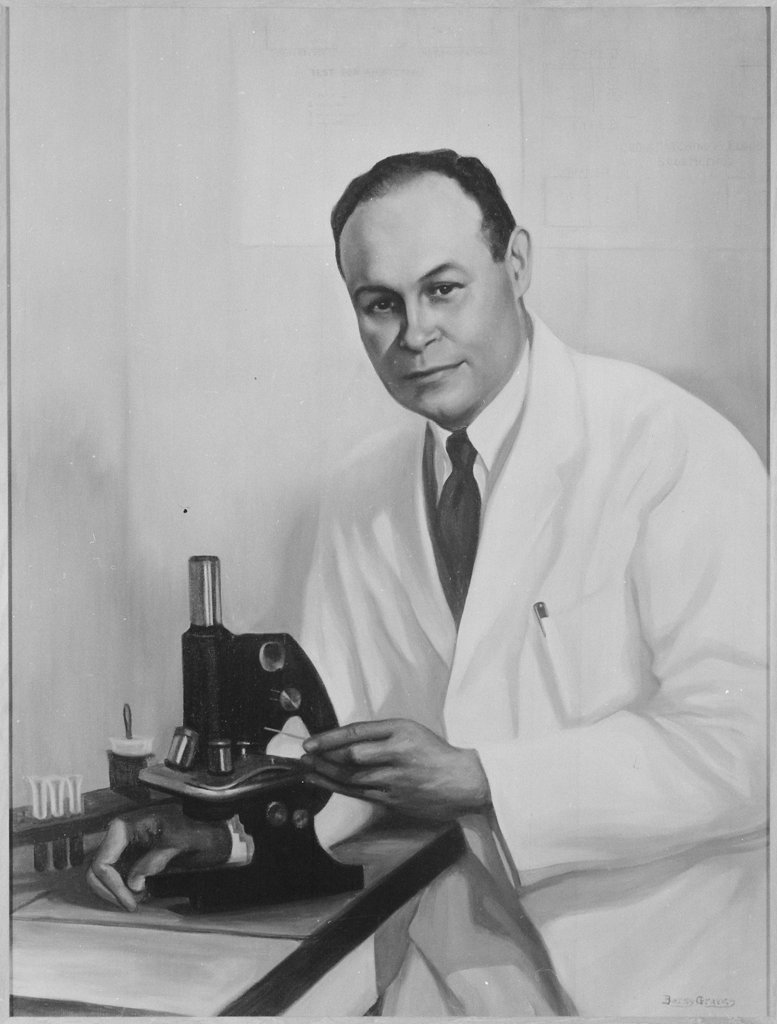
In the late 1930s, Drew began studying blood at Columbia University in New York City, and his research led to a major medical breakthrough. He discovered that plasma — the liquid part of blood without the red and white cells — could be separated from whole blood and stored for much longer periods. This was a huge breakthrough because whole blood spoiled quickly and was difficult to transport. Drew also found that plasma could be given to patients with any blood type, making emergency transfusions much simpler. His doctoral thesis on blood banking became one of the most important medical papers of the twentieth century.
Blood for Britain
When World War II broke out in Europe, Britain desperately needed blood to treat wounded soldiers. In 1940, Drew was asked to organize “Blood for Britain,” the first large-scale blood bank program in history. He set up a system to collect, process, and ship dried plasma across the Atlantic Ocean to British hospitals. The program saved thousands of lives and proved that large blood banks could work on a massive scale. Drew’s organizational genius made him the perfect person to run such a complex and urgent project.
The American Red Cross
Based on the success of the British program, the American Red Cross asked Drew to direct their new blood bank program in 1941. He set up collection centers across the United States and created standard procedures for storing and shipping blood safely. However, the US military ordered that blood donations be separated by the race of the donor — a policy that had no scientific basis whatsoever. Drew publicly spoke out against this racist policy and eventually resigned from the Red Cross in protest. His courage in standing up against injustice inspired many people, even though the segregation policy continued for years.
A Historic Achievement
Charles Drew made history by becoming the first African American to earn a Doctor of Science in Medicine from Columbia University. This was a groundbreaking achievement at a time when Black doctors faced widespread discrimination in hospitals, universities, and medical organizations. After leaving the Red Cross, Drew returned to Howard University in Washington, D.C., where he trained a new generation of African American surgeons. He became the head of the surgery department and pushed his students to meet the highest standards of medical excellence. Many of his students went on to become leaders in medicine.
Teaching and Mentoring
At Howard University, Drew was known as a demanding but inspiring professor. He believed that his students needed to be twice as good to overcome the racial barriers they would face in their careers. He trained dozens of surgeons who went on to serve at hospitals across the country. Drew also worked to get African American doctors accepted into the American Medical Association, which had long excluded them. His dedication to mentoring young doctors was just as important as his scientific discoveries.
His Legacy
Tragically, Charles Drew died on April 1, 1950, in a car accident in Burlington, North Carolina. He was only 45 years old. His pioneering work on blood plasma and blood banking continues to save millions of lives every year around the world. Today, every time someone receives a blood transfusion in a hospital, they benefit from the systems Drew created. Schools, hospitals, and research centers across the country bear his name, honoring a man whose brilliance and bravery made the world a healthier and more just place.
 OtterKnow Kids Encyclopedia