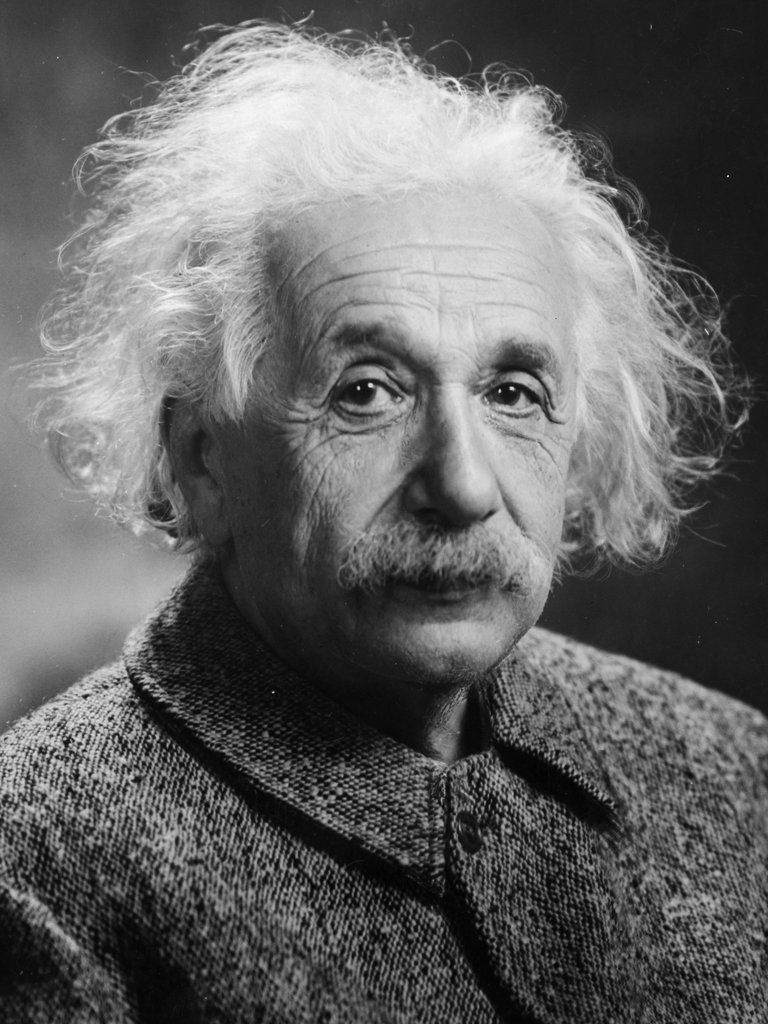
School Days
Einstein did not have an easy time in school. He disliked the strict rules and memorization that German schools demanded, and he often clashed with his teachers. When he was sixteen, he tried to get into the Swiss Federal Polytechnic in Zurich but failed the entrance exam on his first attempt. He had to spend an extra year studying at a school in the town of Aarau, Switzerland, before he finally passed. Once he got in, he studied physics and mathematics and graduated in 1900.
The Miracle Year
In 1905, Einstein had an amazing year that scientists now call the “miracle year,” or Annus Mirabilis in Latin. While working as a clerk at a patent office in Bern, Switzerland, he published four groundbreaking scientific papers. One of those papers introduced his Special Theory of Relativity, which changed how we understand space and time. That same year, he wrote down the most famous equation in all of science: E=mc², which showed that mass and energy are two forms of the same thing.
General Relativity
Ten years later, in 1915, Einstein published his General Theory of Relativity. This theory completely reimagined gravity — instead of being a simple pulling force, Einstein showed that massive objects like the Sun actually bend the fabric of space and time around them. Imagine placing a bowling ball on a stretched-out bedsheet and watching it create a dip — that is similar to how planets curve the space around them. Scientists tested this idea during a solar eclipse in 1919, and the results matched Einstein’s predictions perfectly. Overnight, Einstein became the most famous scientist in the world.
The Nobel Prize
In 1921, Einstein won the Nobel Prize in Physics, but not for his famous relativity theories. He received the prize for explaining the photoelectric effect, which helped prove that light is made up of tiny packets of energy called photons. This discovery was important because it laid the foundation for quantum physics, an entirely new branch of science. The photoelectric effect also led to practical inventions like solar panels, which turn light into electricity. Einstein’s Nobel Prize medal is now one of the most valuable scientific awards ever given.
Life in America
When Adolf Hitler and the Nazi Party rose to power in Germany, life became very dangerous for Jewish people like Einstein. In 1933, Einstein left Germany and moved to the United States, settling in Princeton, New Jersey. He took a position at the Institute for Advanced Study, where he worked for the rest of his life. In 1940, he became a proud American citizen. Einstein used his fame to speak out against racism, war, and injustice, and he was a strong supporter of civil rights.
How He Changed Science
Einstein’s ideas transformed almost every area of physics. His equation E=mc² helped scientists understand nuclear energy, which powers the Sun and the stars. General relativity made it possible to study black holes, the Big Bang, and the expansion of the universe. Without Einstein’s work, we would not have GPS satellites, which rely on his equations to keep accurate time. He is widely considered one of the greatest scientists who ever lived.
His Legacy
Albert Einstein died on April 18, 1955, at the age of 76 in Princeton, New Jersey. After his death, a doctor preserved his brain for scientific study, hoping to learn what made him so brilliant. His name has become a synonym for genius — when someone is really smart, people often call them “an Einstein.” His four miracle-year papers from 1905 are still studied by physics students around the world. Einstein once said that imagination is more important than knowledge, and his life proved just how far curiosity and imagination can take a person.
 OtterKnow Kids Encyclopedia