Becoming Queen at 18
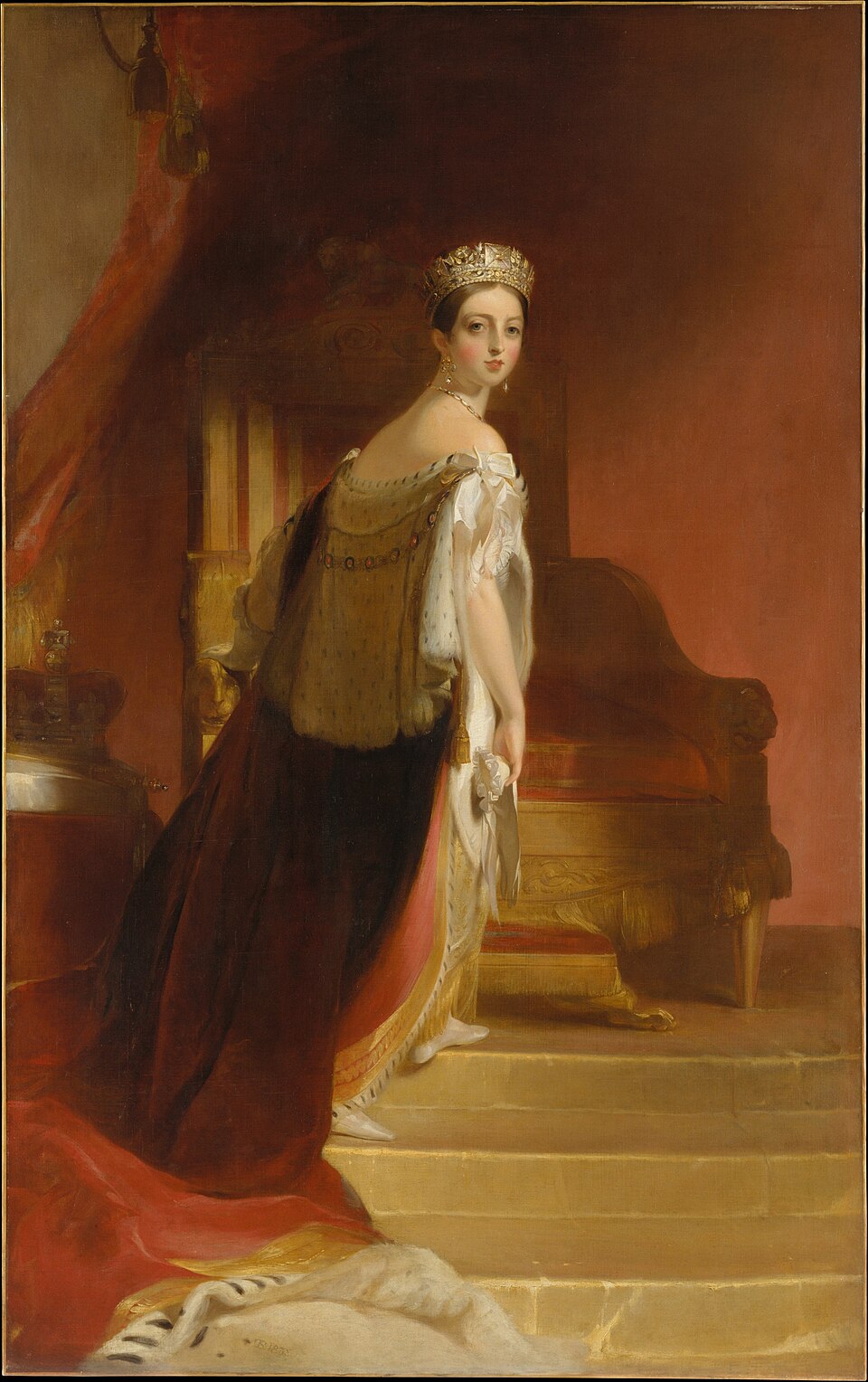
Victoria became queen on June 20, 1837, when her uncle King William IV died without any surviving children of his own. At just 18 years old, she was one of the youngest people ever to take the British throne. One of her very first acts as queen was to move her bed out of her mother’s room, something she had never been allowed to do before. Her coronation ceremony took place on June 28, 1838, at Westminster Abbey in London, with huge crowds lining the streets to celebrate. The young queen impressed many people with her calm confidence and determination to rule well.
Marriage to Prince Albert
In 1840, Victoria married her cousin Prince Albert of Saxe-Coburg and Gotha in a grand ceremony at the Chapel Royal in London. Because she was the queen, Victoria was the one who proposed to Albert, not the other way around. Their marriage was a true love match, and Albert became her most trusted advisor on matters of government and public life. Together they had nine children — four sons and five daughters — who would grow up to marry into royal families across Europe. This earned Victoria the famous nickname “the grandmother of Europe,” because so many future kings and queens were her descendants.
The Victorian Era
The period of Victoria’s reign is known as the Victorian Era, and it was a time of incredible change in Britain and the world. The Industrial Revolution transformed the country as new factories, railways, and machines changed how people lived and worked. Britain built the world’s first underground railway in London in 1863, and new inventions like the telegraph and telephone connected people like never before. The Great Exhibition of 1851, organized by Prince Albert, showcased inventions and goods from around the world inside a massive glass building called the Crystal Palace. The Victorian Era also brought important social reforms, including laws to protect children from dangerous factory work and to give more men the right to vote.
The British Empire
During Victoria’s reign, the British Empire grew to become the largest empire in history, covering about one-quarter of the world’s land and ruling over roughly 400 million people. The empire stretched across every continent, including large parts of Africa, India, Australia, Canada, and the Caribbean. In 1876, Victoria was given the additional title of Empress of India, which made her extremely proud. The growth of the empire brought great wealth to Britain through trade in goods like tea, cotton, spices, and diamonds. However, the empire also caused suffering for many of the people who were colonized, as their lands and resources were taken.
Life After Prince Albert
Prince Albert died on December 14, 1861, at just 42 years old, likely from typhoid fever. Victoria was absolutely devastated by his death and fell into a deep period of mourning that would last for decades. She wore black mourning clothes for the remaining 40 years of her life and rarely appeared in public for many years. The queen kept Albert’s rooms exactly as they were, even having his clothes laid out each day as if he were still alive. Her long absence from public life made her unpopular for a time, but she eventually returned to her duties and regained the affection of her people.
Surviving Danger
Queen Victoria survived an astonishing eight assassination attempts during her long reign, more than almost any other monarch in history. The first attempt came in 1840, just months after her wedding, when a man named Edward Oxford fired two pistol shots at her open carriage. Remarkably, Victoria often responded to these attacks with bravery rather than fear, and she continued to ride in open carriages. The attempts actually increased public sympathy for the queen and made her more popular with ordinary people. Parliament eventually passed a law making it a crime to alarm or frighten the queen, even without intent to harm her.
Legacy and Death
Queen Victoria died on January 22, 1901, at Osborne House on the Isle of Wight at the age of 81. She had reigned for 63 years and 7 months, which was the longest reign of any British monarch until her great-great-granddaughter Queen Elizabeth II broke the record in 2015. Her death marked the end of an era that had seen Britain transform from a rural nation into the world’s leading industrial and imperial power. Victoria requested a military funeral rather than a traditional royal one, reflecting her strong personality even in death. Her influence lives on today in the many places named after her, including the state of Victoria in Australia, Victoria Falls in Africa, and the Victoria and Albert Museum in London.
 OtterKnow Kids Encyclopedia