Education and Early Career
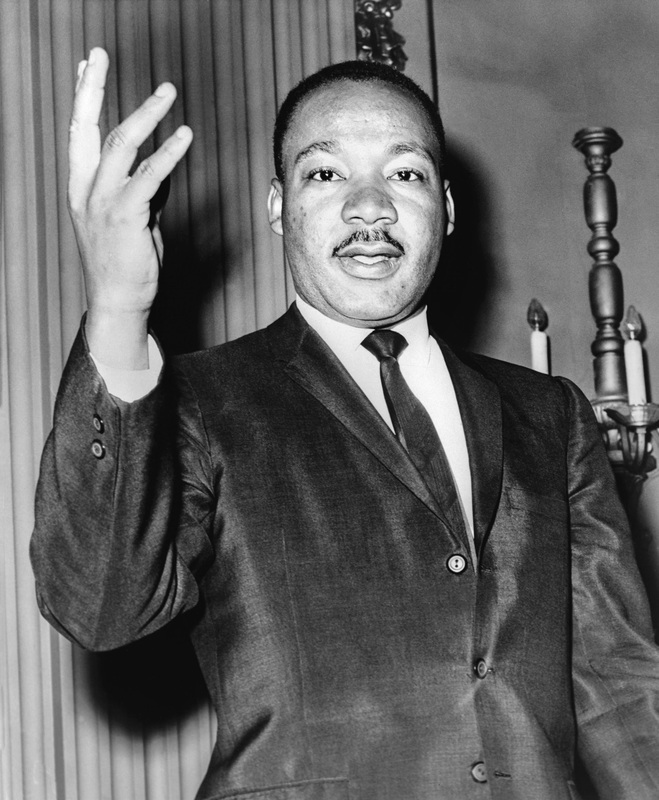
King was an outstanding student who earned degrees from some of the best universities in the country. He graduated from Morehouse College in 1948, then studied at Crozer Theological Seminary in Pennsylvania. In 1955, at just 26 years old, he earned a PhD in systematic theology from Boston University. While studying in Boston, he met Coretta Scott, and the two married in 1953. King became the pastor of Dexter Avenue Baptist Church in Montgomery, Alabama, where his activism would soon begin.
The Montgomery Bus Boycott
In December 1955, Rosa Parks was arrested for refusing to give up her bus seat to a white passenger in Montgomery, Alabama. King helped organize a boycott of the city’s buses, asking Black residents to stop riding until the rules changed. The Montgomery Bus Boycott lasted an incredible 381 days, with people walking, carpooling, and finding other ways to get around. King’s powerful speeches and calm leadership during the boycott made him a national figure. In 1956, the Supreme Court ruled that bus segregation was unconstitutional, giving the movement a major victory.
Leading the Civil Rights Movement
After Montgomery, King became the most recognized leader of the civil rights movement. He co-founded the Southern Christian Leadership Conference (SCLC) in 1957 to organize nonviolent protests across the South. King believed deeply in peaceful protest, inspired by the teachings of Mahatma Gandhi in India. He led sit-ins, marches, and demonstrations in cities like Birmingham, Alabama, where protesters faced fire hoses and police dogs. Despite the danger, King never wavered in his belief that love and nonviolence were more powerful than hatred.
The March on Washington
On August 28, 1963, King stood before a crowd of about 250,000 people at the Lincoln Memorial in Washington, D.C. He delivered his famous speech during the March on Washington for Jobs and Freedom, calling for an end to racism and inequality. The speech is remembered as one of the greatest in American history and was broadcast on television across the nation. People of all races and backgrounds came together that day to demand change. The march helped build support for new civil rights laws that were being debated in Congress.
Major Achievements and the Nobel Prize
King’s leadership helped bring about two of the most important laws in American history. The Civil Rights Act of 1964 made it illegal to discriminate against people because of their race, color, religion, or national origin. The Voting Rights Act of 1965 protected the right of all citizens to vote, removing barriers that had kept many Black Americans from the polls. In 1964, King became the youngest person at that time to win the Nobel Peace Prize — he was only 35 years old. He donated the entire $54,123 prize money to the civil rights movement.
His Message of Peace and Justice
King believed that people should be judged by their character, not the color of their skin. He spoke out not only against racial injustice but also against poverty and war, calling them connected problems that hurt all of society. King organized the Poor People’s Campaign in 1968 to fight for economic justice for Americans of every race. He often reminded people that injustice anywhere was a threat to justice everywhere. His words continue to inspire movements for equality and human rights around the world today.
Legacy and Remembrance
On April 4, 1968, Martin Luther King Jr. was assassinated in Memphis, Tennessee, where he had gone to support striking sanitation workers. He was only 39 years old. In 1983, President Ronald Reagan signed a law creating a national holiday in King’s honor, celebrated on the third Monday of January each year. The Martin Luther King Jr. Memorial on the National Mall in Washington, D.C., was dedicated in 2011. King’s work lives on through the laws he helped pass and the people who continue to march, organize, and speak out for equality in communities across the country.
 OtterKnow Kids Encyclopedia