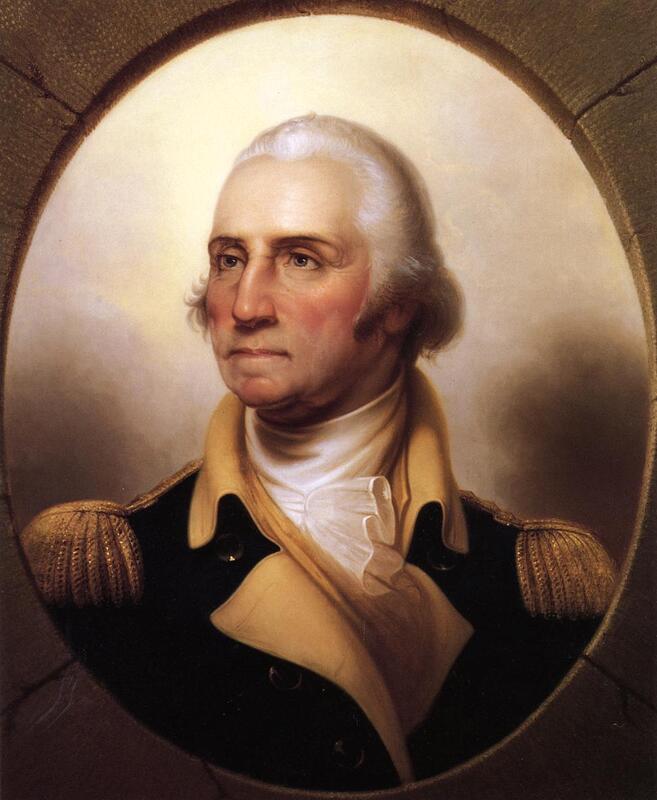
Young Soldier on the Frontier
Before the Revolutionary War, Washington gained military experience as a young officer in the Virginia militia during the French and Indian War. In 1754, at just 22 years old, he led troops into battle at Fort Necessity in present-day Pennsylvania, one of the first skirmishes that sparked the larger conflict between Britain and France. Although he lost that battle, Washington earned a reputation for bravery and leadership under fire. He survived multiple close calls, including a battle where two horses were shot out from under him and four bullets tore through his coat without hitting him. These experiences on the frontier taught Washington valuable lessons about military strategy, patience, and the challenges of commanding soldiers in difficult conditions.
Commander of the Continental Army
When the American colonies decided to fight for independence from Britain, the Continental Congress chose Washington as Commander-in-Chief of the Continental Army in June 1775. He faced enormous challenges: his soldiers were poorly trained, lacked supplies, and often went months without pay. Washington held the army together through sheer determination, leading by example and sharing the hardships his troops endured. One of his most famous moments came on Christmas night, 1776, when he led 2,400 soldiers across the icy Delaware River in a surprise attack on Hessian troops at Trenton, New Jersey. This daring victory, followed by another win at Princeton days later, revived American morale at a time when the revolution seemed close to failure.
The Difficult Winter at Valley Forge
The winter of 1777-1778 at Valley Forge, Pennsylvania, was one of the darkest periods of the Revolutionary War. Washington’s army of roughly 12,000 soldiers camped in freezing temperatures with limited food, clothing, and shelter, and about 2,000 men died from disease, cold, and starvation. Despite these terrible conditions, Washington refused to give up and worked tirelessly to keep his soldiers together. He brought in Baron Friedrich von Steuben, a Prussian military expert, who trained the ragged troops into a disciplined fighting force. The army that marched out of Valley Forge in the spring was transformed, and this turning point helped lead to the eventual American victory in the war.
The Constitutional Convention
After the war ended in 1783, Washington retired to his plantation at Mount Vernon, hoping to live as a peaceful farmer. However, the young nation was struggling under the Articles of Confederation, which created a weak central government that could not collect taxes or settle disputes between states. In 1787, delegates from across the country gathered in Philadelphia for the Constitutional Convention, and Washington was unanimously chosen to preside over the meetings. His steady presence and reputation helped keep the delegates working together through months of intense debate and compromise. The Constitution they created established the framework of American government that still functions today, more than 230 years later.
First President of the United States
On April 30, 1789, George Washington took the oath of office in New York City, becoming the first President of the United States. Almost everything he did set a precedent because no one had ever held the office before. He established the Cabinet system by appointing advisors like Thomas Jefferson as Secretary of State and Alexander Hamilton as Secretary of the Treasury. He insisted on being called “Mr. President” rather than a royal title, making clear that the leader of the United States was a citizen, not a king. Washington served two terms and then made one of his most important decisions: he voluntarily stepped down from power, establishing the tradition that presidents would not serve for life.
Giving Up Power
Washington’s decision to leave office after two terms was remarkable in a world where most leaders held power until they died. King George III of England reportedly said that if Washington truly gave up power voluntarily, he would be the greatest man in the world. By walking away from the presidency in 1797, Washington showed that the nation was bigger than any one person and that democratic leadership meant peacefully transferring power. His Farewell Address, published in newspapers across the country, warned Americans about the dangers of political division and urged them to stay united. This tradition of a two-term limit was followed by every president until Franklin Roosevelt and was eventually written into the Constitution as the 22nd Amendment in 1951.
Legacy and Remembering Washington
George Washington died on December 14, 1799, at his beloved Mount Vernon estate at the age of 67. The nation mourned deeply, and his friend Henry Lee described him as “first in war, first in peace, and first in the hearts of his countrymen.” Today, Washington’s face appears on the one-dollar bill and the quarter, and the nation’s capital, Washington, D.C., bears his name. The towering Washington Monument, standing 555 feet tall on the National Mall, honors his memory as the father of the country. Washington’s life teaches us that true leadership is not about seeking power for yourself but about serving others and building something that will last long after you are gone.
 OtterKnow Kids Encyclopedia