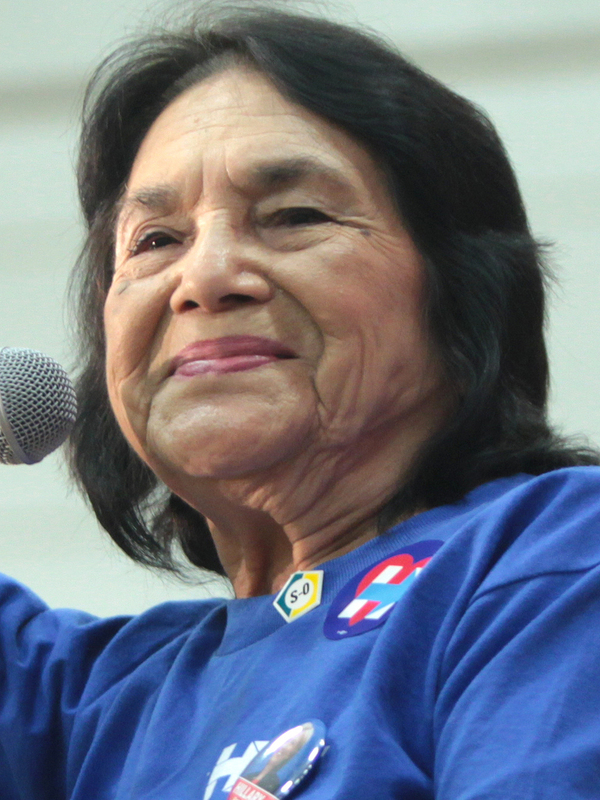
Becoming a Teacher and Activist
Dolores earned a teaching degree and began working in the schools of Stockton, California. She quickly noticed that many of her students came to school hungry, wore torn clothing, and had no shoes because their farmworker families earned so little money. Rather than just teaching in a classroom, she decided she could help more children by fighting to improve their families’ working conditions. In 1955, she co-founded the Stockton chapter of the Community Service Organization, where she organized voter registration drives and pushed for better neighborhood services. This work gave her the skills and confidence she would need for even bigger battles ahead.
Co-Founding the United Farm Workers
In 1962, Dolores Huerta joined forces with Cesar Chavez to create the National Farm Workers Association, which later became the United Farm Workers (UFW) union. At that time, farmworkers across the country earned extremely low wages, had no clean drinking water in the fields, and could be fired without any reason. The UFW gave these workers a voice and a way to stand together for better treatment. Dolores served as the union’s chief negotiator and lobbyist, using her sharp mind and fearless spirit to demand change. Together, she and Chavez built one of the most important labor movements in American history.
The Delano Grape Strike and Boycott
In 1965, Filipino and Mexican American grape workers in Delano, California, walked off the job to protest wages as low as 90 cents per hour. Dolores and the UFW joined the strike, which would last an incredible five years until 1970. She organized a nationwide boycott, asking millions of Americans to stop buying grapes until the workers received fair pay. The boycott worked because ordinary people in cities across the country refused to purchase grapes at their grocery stores. By the end, Dolores had negotiated the first collective bargaining agreements for agricultural workers in United States history, a groundbreaking achievement that changed the lives of thousands of families.
“Si, Se Puede”
During a 1972 campaign against anti-union laws in Arizona, Dolores Huerta coined one of the most famous phrases in American activism: “Si, se puede,” which means “Yes, we can” in Spanish. She said these words to inspire farmworkers who felt discouraged and powerless in their fight for better conditions. The phrase became the rallying cry of the UFW and spread far beyond the farmworker movement. Decades later, it was adopted by politicians, students, and activists around the world as a symbol of hope and determination. Those three simple words reminded people everywhere that ordinary citizens have the power to create extraordinary change.
Fighting for Rights Through Her Whole Life
Dolores Huerta has been arrested more than 20 times for her participation in nonviolent protests, strikes, and acts of civil disobedience. In 1988, she was severely beaten by police officers during a peaceful protest in San Francisco, suffering broken ribs and a ruptured spleen. Rather than giving up, she recovered and returned to her activism with even greater determination. She has fought not only for farmworkers but also for women’s rights, immigrant rights, and environmental justice. As a mother of 11 children, she balanced her family responsibilities with her tireless work for social change, showing that one person’s determination can make a real difference.
Honors and Recognition
In 2012, President Barack Obama awarded Dolores Huerta the Presidential Medal of Freedom, the highest civilian honor in the United States. Schools, parks, and streets across the country have been named after her, and the state of California declared April 10 as Dolores Huerta Day. She has received dozens of other awards, including induction into the National Women’s Hall of Fame in 1993. In 2017, a documentary film called “Dolores” brought her story to an even wider audience. Despite all of these honors, Dolores has always said that the real reward is seeing working families treated with dignity and respect.
Her Legacy Today
Now in her nineties, Dolores Huerta continues to fight for justice through the Dolores Huerta Foundation, which she established in 2002 to train community organizers. She travels across the country giving speeches, meeting with young activists, and encouraging people to get involved in their communities. Her work helped inspire a new generation of leaders who believe that everyone deserves fair treatment, no matter where they come from or what job they do. Dolores proved that when people work together and refuse to give up, they can change laws, change minds, and change the world. Her life reminds us that courage, compassion, and persistence are some of the most powerful tools any person can have.
 OtterKnow Kids Encyclopedia