What We Know About Her Life
Historical records about Sarah Boone’s life are limited, which is unfortunately common for many African Americans who lived during the 1800s. She was born around 1832, and census records indicate she lived in New Haven, Connecticut, where she worked as a dressmaker. Her experience making and caring for clothing likely gave her a deep understanding of the challenges of ironing different types of garments. She passed away around 1904, and much of what we know about her comes from the patent records she left behind.
Her Invention
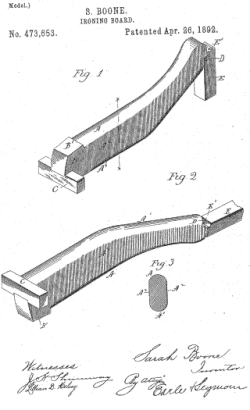
Before Sarah Boone’s invention, people ironed their clothes on flat wooden boards that made it very difficult to press sleeves, collars, and the curved parts of dresses and shirts. Sarah designed a narrower, curved ironing board that fit inside a sleeve, making it possible to iron both sides of a garment without creating new wrinkles. Her patent, numbered 473,653, was granted by the United States Patent Office on April 26, 1892. The design included padded covers and collapsible legs, features that can still be found on ironing boards today.
Why She Matters
Sarah Boone’s patent is an important milestone in the history of both African American achievement and women’s contributions to technology. During the late 1800s, it was extremely difficult for Black women to receive recognition for their ideas, and many inventions by people of color were never documented. Boone’s success in navigating the patent system shows her determination and intelligence. Her story reminds us that everyday inventions, the kind we might take for granted, were often created by people whose names history nearly forgot.
 OtterKnow Kids Encyclopedia