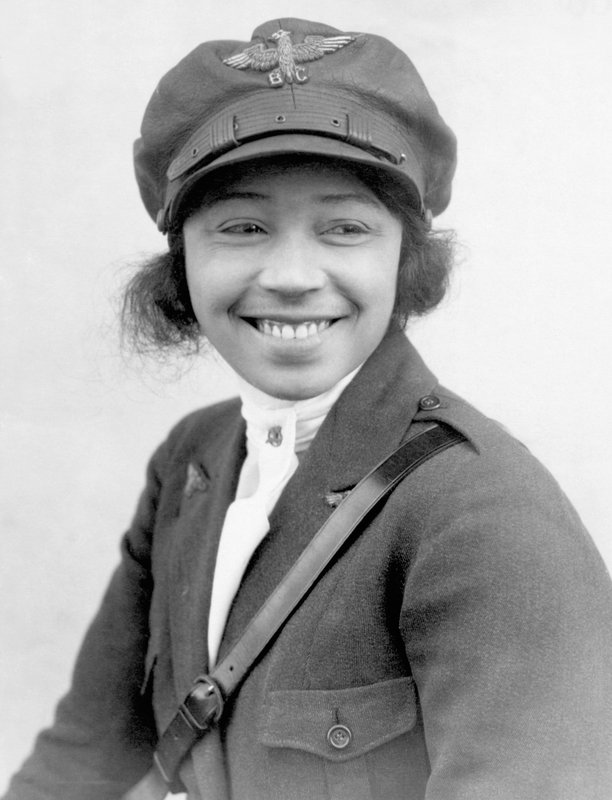
Early Life
Bessie Coleman was born on January 26, 1892, in Atlanta, Texas, the tenth of thirteen children. Her mother, Susan Coleman, was African American, and her father, George Coleman, was of African American and Cherokee descent. The family was poor, and Bessie picked cotton as a child to help support them. Despite these hardships, her mother encouraged education, and Bessie walked four miles each day to attend a segregated one-room schoolhouse. She was an excellent student who loved to read and was especially good at math.
The Dream of Flight
After moving to Chicago in 1915, Bessie worked as a manicurist in a barbershop, where she listened to stories from pilots returning from World War I. She became fascinated with flying, but every flight school in the United States refused to accept her because she was both Black and a woman. Robert Abbott, the founder of the Chicago Defender newspaper, encouraged her to learn French and apply to flight schools in France, where racial barriers were less rigid. Bessie studied French and saved every penny she could for the journey across the Atlantic.
Earning Her Wings
In November 1920, Bessie traveled to Paris, France, and enrolled at the Caudron Brothers’ School of Aviation. She trained for seven months, learning to fly a Nieuport Type 82 biplane, a tricky aircraft that was known for being difficult to handle. On June 15, 1921, she earned her pilot’s license from the Fédération Aéronautique Internationale, making history as the first Black woman in the world to do so. She then returned to the United States as a celebrity, with newspapers across the country reporting on her achievement.
Barnstorming Career
Back in America, Bessie became a barnstormer, performing thrilling aerial stunts like figure eights, loops, and near-ground dives at airshows across the country. Huge crowds came to watch “Queen Bess” fly, and she quickly became one of the most popular barnstormers of her era. Bessie refused to perform at any event that did not allow Black spectators to enter through the same gates as white spectators. She used her fame to speak out against racial discrimination and to encourage African Americans to take an interest in aviation.
Standing Up for What Was Right
Bessie dreamed of opening a flight school where African Americans could learn to fly without facing the prejudice she had experienced. She gave speeches at churches, schools, and theaters, urging Black communities to pursue aviation. When a movie studio offered her a role but wanted her to act out demeaning stereotypes, she walked off the set and refused the part. Bessie believed that her dignity and the dignity of her community were more important than money or fame.
Tragic Death and Lasting Legacy
On April 30, 1926, while preparing for an airshow in Jacksonville, Florida, Bessie’s plane malfunctioned during a practice flight, and she fell to her death at the age of 34. Thousands of people attended her funeral in Chicago, mourning the loss of a true trailblazer. In the years after her death, Bessie’s dream came true when other Black aviators, inspired by her example, earned their pilot’s licenses and opened flying clubs. The state of Illinois designated Bessie Coleman Day, and in 2023, the U.S. quarter featured her image as part of the American Women Quarters Program. Her courage in the face of racism and sexism made her a lasting symbol of determination and hope.
 OtterKnow Kids Encyclopedia