Early Life
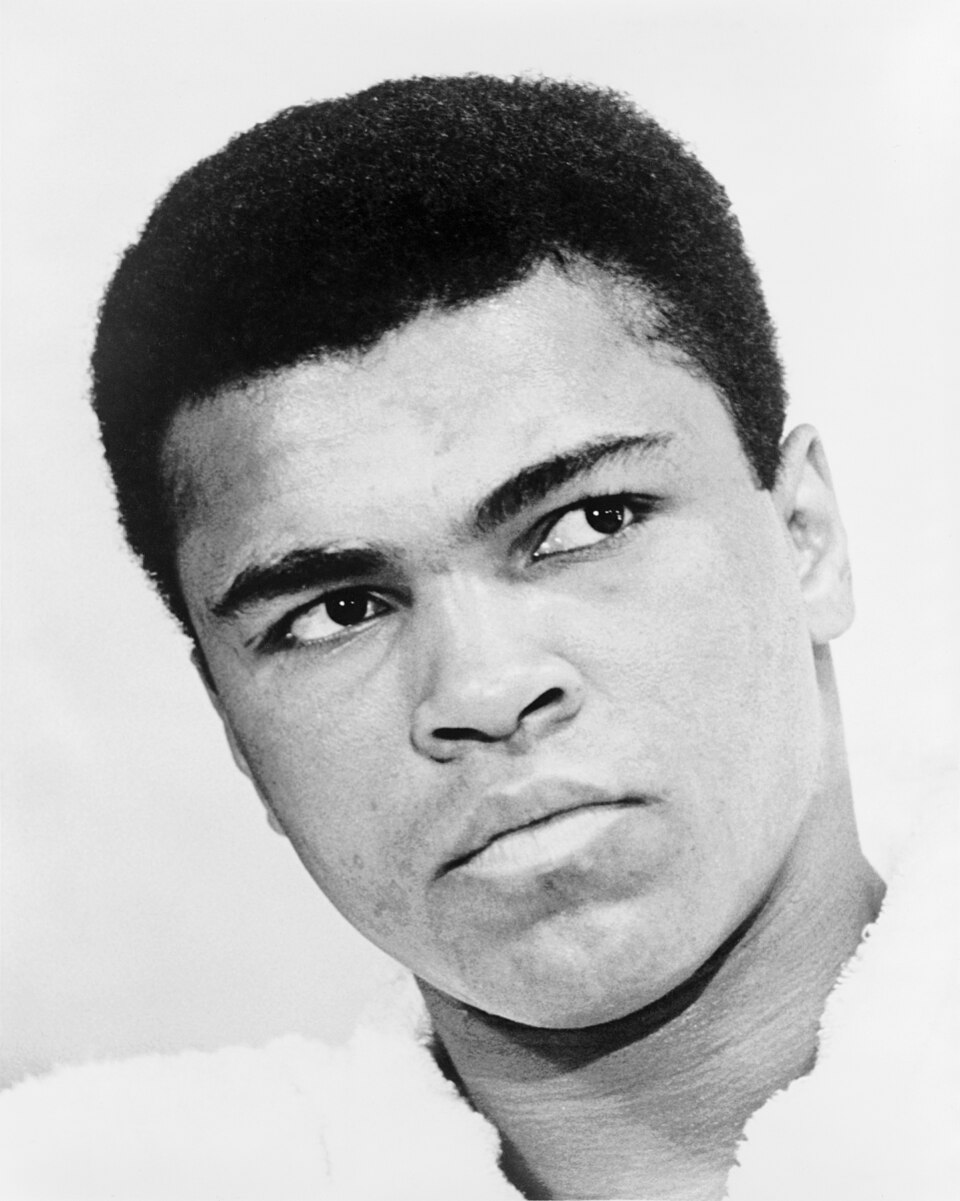
Ali was born Cassius Marcellus Clay Jr. on January 17, 1942, in Louisville, Kentucky. He started boxing at age 12 after a police officer named Joe Martin suggested he learn to fight instead of just being angry about his stolen bicycle. Young Cassius trained hard and showed natural speed and talent that set him apart from other fighters. By the time he was 18, he had won 100 of his 108 amateur bouts and earned a spot on the 1960 United States Olympic team.
Olympic Gold and Rising Fame
At the 1960 Summer Olympics in Rome, Italy, Clay won the gold medal in the light heavyweight division. He turned professional shortly after and quickly became famous for his lightning-fast hands, footwork, and bold predictions about which round he would knock out his opponents. In 1964, at just 22 years old, he shocked the boxing world by defeating the heavily favored Sonny Liston to become the heavyweight champion for the first time. Soon after, he converted to Islam and changed his name from Cassius Clay to Muhammad Ali.
Standing Up for His Beliefs
In 1967, Ali refused to be drafted into the U.S. military during the Vietnam War, saying his religious beliefs would not allow him to fight. The government convicted him of draft evasion, and boxing authorities stripped him of his championship title and banned him from fighting for more than three years. Ali gave up millions of dollars and the prime years of his boxing career rather than go against his conscience. In 1971, the United States Supreme Court overturned his conviction, and he was free to box again.
Greatest Fights
Ali’s comeback produced some of the most famous boxing matches in history. In 1974, he fought George Foreman in Zaire, Africa, in a bout called the “Rumble in the Jungle,” where he used a clever strategy called the rope-a-dope to tire out the powerful Foreman before knocking him out. The following year, he faced Joe Frazier in the Philippines in the brutal “Thrilla in Manila,” which many consider the greatest boxing match ever fought. These legendary fights cemented Ali’s reputation as the greatest heavyweight of all time.
Later Life and Legacy
After retiring from boxing in 1981, Ali was diagnosed with Parkinson’s disease, a condition that gradually affected his movement and speech. Despite his illness, he continued to travel the world promoting peace and humanitarian causes. In 1996, he inspired billions of viewers when he lit the Olympic cauldron at the Atlanta Games with trembling but determined hands. He received the Presidential Medal of Freedom in 2005 and passed away on June 3, 2016, at the age of 74, leaving behind a legacy as both a champion athlete and a courageous human being.
 OtterKnow Kids Encyclopedia