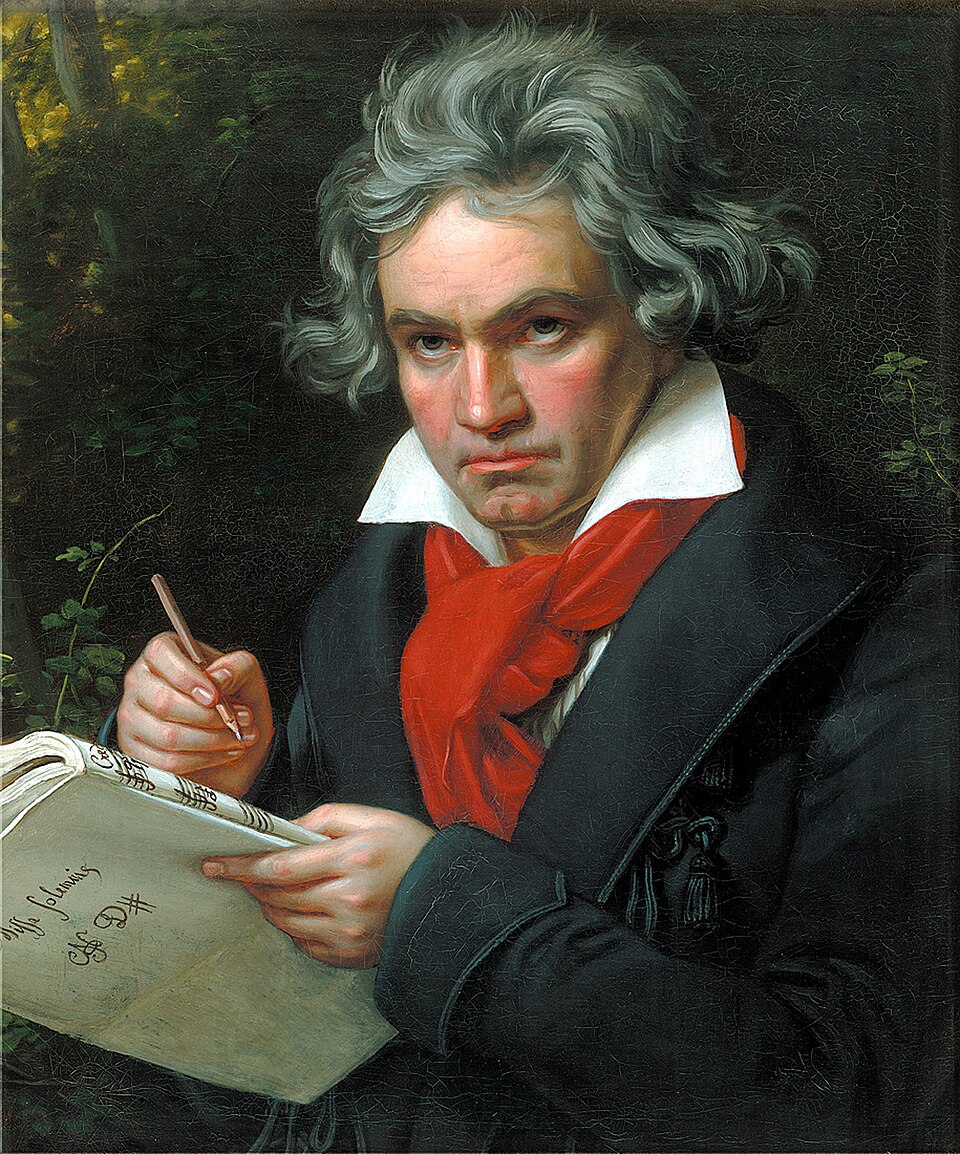
Early Life and Musical Training
Beethoven showed musical talent at a very young age, and his father, who was also a musician, pushed him hard to practice. By the time he was a teenager, Beethoven was already working as a court musician in Bonn. At age 21, he moved to Vienna, which was the center of European music at the time. In Vienna, he studied briefly with the famous composer Joseph Haydn and quickly made a name for himself as a brilliant pianist and composer.
Losing His Hearing
In his late twenties, Beethoven began to notice that his hearing was fading. For a musician, this was a devastating blow, and he wrote about his despair in a famous letter known as the Heiligenstadt Testament. Over the next several years, his hearing continued to worsen, and by around 1816, he was completely deaf. Despite this enormous challenge, Beethoven refused to stop composing and found ways to keep creating music by feeling vibrations and using his deep knowledge of how instruments and notes work together.
His Greatest Works
Beethoven’s music is often described as a bridge between the Classical period and the Romantic period of Western music. His Symphony No. 5, with its famous four-note opening, is one of the most recognized pieces of music in the world. His Symphony No. 9, which includes the joyful melody known as “Ode to Joy,” was composed and conducted when Beethoven was completely deaf. At the first performance in 1824, he could not hear the audience’s thunderous applause and had to be turned around by a fellow musician to see the crowd cheering.
His Legacy
Beethoven passed away on March 26, 1827, in Vienna at the age of 56. Thousands of people lined the streets for his funeral, showing how deeply his music had touched the world. His compositions continue to be performed by orchestras, pianists, and musicians everywhere, more than two hundred years later. Beethoven’s story of creating beauty through determination and courage, even in the face of profound loss, inspires people of all ages to this day.
 OtterKnow Kids Encyclopedia