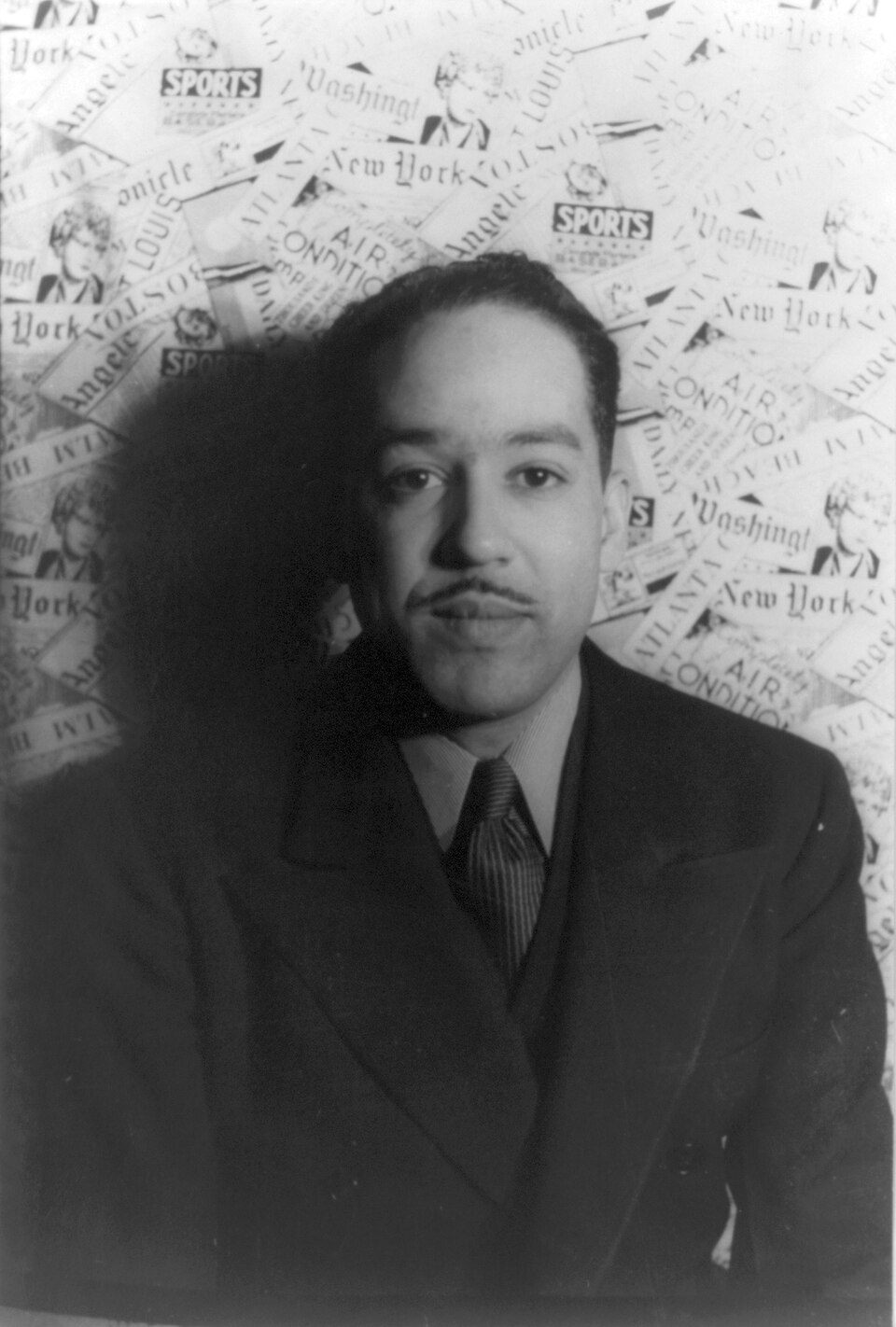
Early Life and Education
Hughes was raised mostly by his grandmother in Lawrence, Kansas, after his parents separated when he was young. His grandmother told him stories about people who had fought for freedom and justice, which inspired him deeply. He began writing poetry in the eighth grade and was elected class poet at his school. In 1920, he moved to live with his father in Mexico for a year, and it was during that trip, at just 17 years old, that he wrote one of his most famous poems, “The Negro Speaks of Rivers,” while crossing the Mississippi River by train.
His Writing and Career
Hughes pioneered a style called jazz poetry, which blended the rhythms and feelings of jazz and blues music with the written word. He wrote more than 60 books during his lifetime, including poetry collections, novels, short stories, and plays. One of his most celebrated poems, “Harlem” (also known as “A Dream Deferred”), asks powerful questions about what happens when people’s hopes are put on hold. He also edited African American newspapers, helping to share the voices and stories of Black communities across the country.
Life Beyond Writing
Before becoming a famous writer, Hughes worked many different jobs to support himself, including as a seaman on cargo ships, a doorman, and a busboy in a hotel restaurant. These experiences took him around the world and gave him a deep understanding of working people’s lives. He traveled to Africa, Europe, and the Caribbean, and the people and places he encountered shaped his writing in powerful ways. Hughes never stopped believing that art should speak to ordinary people and reflect their real experiences.
His Legacy
Langston Hughes passed away on May 22, 1967, in New York City, but his words continue to inspire people today. His poems and stories are read in schools across the country and around the world. He showed that Black life, culture, and history deserved to be at the center of American literature. Hughes once wrote that he wanted to capture the meaning of Black life in America, and through his work, he did exactly that for millions of readers.
 OtterKnow Kids Encyclopedia