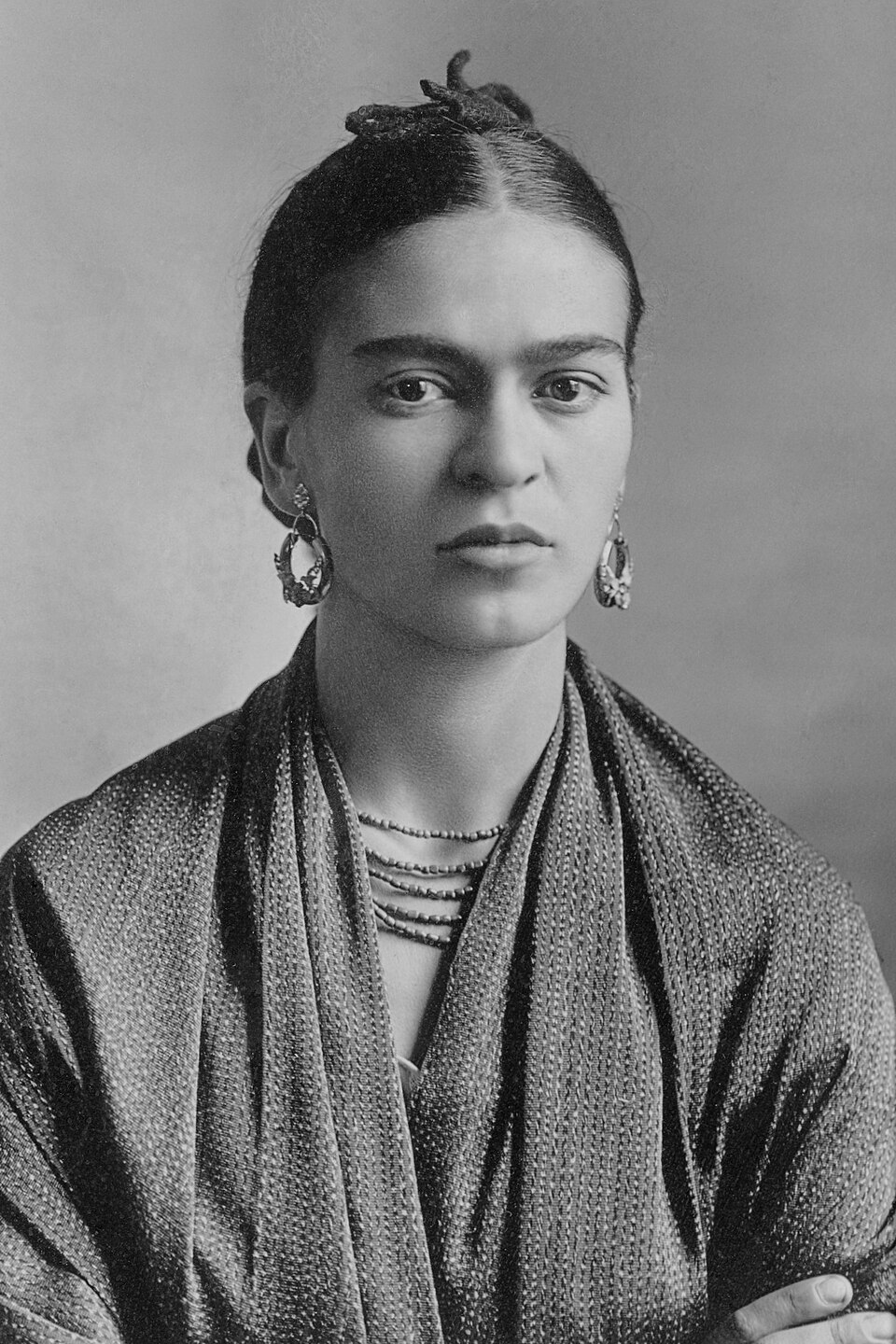
Painting Through Pain
After her bus accident, Frida spent months recovering in bed while wearing a heavy body cast and back brace. Her parents set up a special easel on her bed and hung a mirror above her so she could paint, and that is when she began creating self-portraits. Over her lifetime, Frida made about 200 paintings, and 55 of them were self-portraits that showed her feelings, her pain, and her pride in being Mexican. She used bright colors, animals, plants, and symbols from Mexican folk art to tell her story. Frida once said that she painted herself because she was the subject she knew best.
Mexican Pride and Culture
Frida Kahlo was deeply proud of her Mexican heritage, and she showed it in everything she did. She wore traditional Tehuana dresses, which are colorful outfits from the Tehuantepec region of southern Mexico, as a way to celebrate her culture and identity. Her paintings often included Mexican plants, animals, and symbols from ancient Aztec and folk traditions. Frida married the famous Mexican muralist Diego Rivera, and the two shared a love of Mexican art and politics, though their relationship was stormy and they actually married each other twice. She became the first Mexican artist to have a painting purchased by the Louvre, the world-famous museum in Paris, France.
Her Lasting Legacy
For many years after her death, Frida Kahlo’s art was not as well known as it is today, but starting in the 1970s and 1980s, people rediscovered her work and recognized her genius. Her childhood home in Coyoacan, known as the Blue House, is now a museum that attracts thousands of visitors every year. Frida has become a symbol of strength and creativity, inspiring people around the world who face challenges in their own lives. Her face appears on everything from stamps to murals to t-shirts, making her one of the most recognizable artists in history. Frida showed the world that art can come from the hardest moments in life and turn pain into something beautiful.
 OtterKnow Kids Encyclopedia