Growing Up and Getting Started
Theodor loved to draw even as a child, often doodling strange, fantastical creatures in his notebooks. He attended Dartmouth College, where he wrote for the school’s humor magazine, and later studied at Oxford University in England. After returning to the United States, he worked as a cartoonist and advertising artist for many years. He drew advertisements for a bug spray company and created cartoons for magazines and newspapers. These early jobs helped him sharpen the quirky, exaggerated style that would later make his children’s books so recognizable.
A Rough Road to Success
When Theodor wrote his first children’s book, And to Think That I Saw It on Mulberry Street, publishers were not interested at all. He was rejected by 27 different publishers before Vanguard Press finally agreed to print it in 1937. That long string of rejections could have made him give up, but he kept believing in his work. The book was a success, and it opened the door for dozens more stories. His determination is a powerful reminder that even the most talented people sometimes have to try again and again before they succeed.
The Cat in the Hat and Beyond
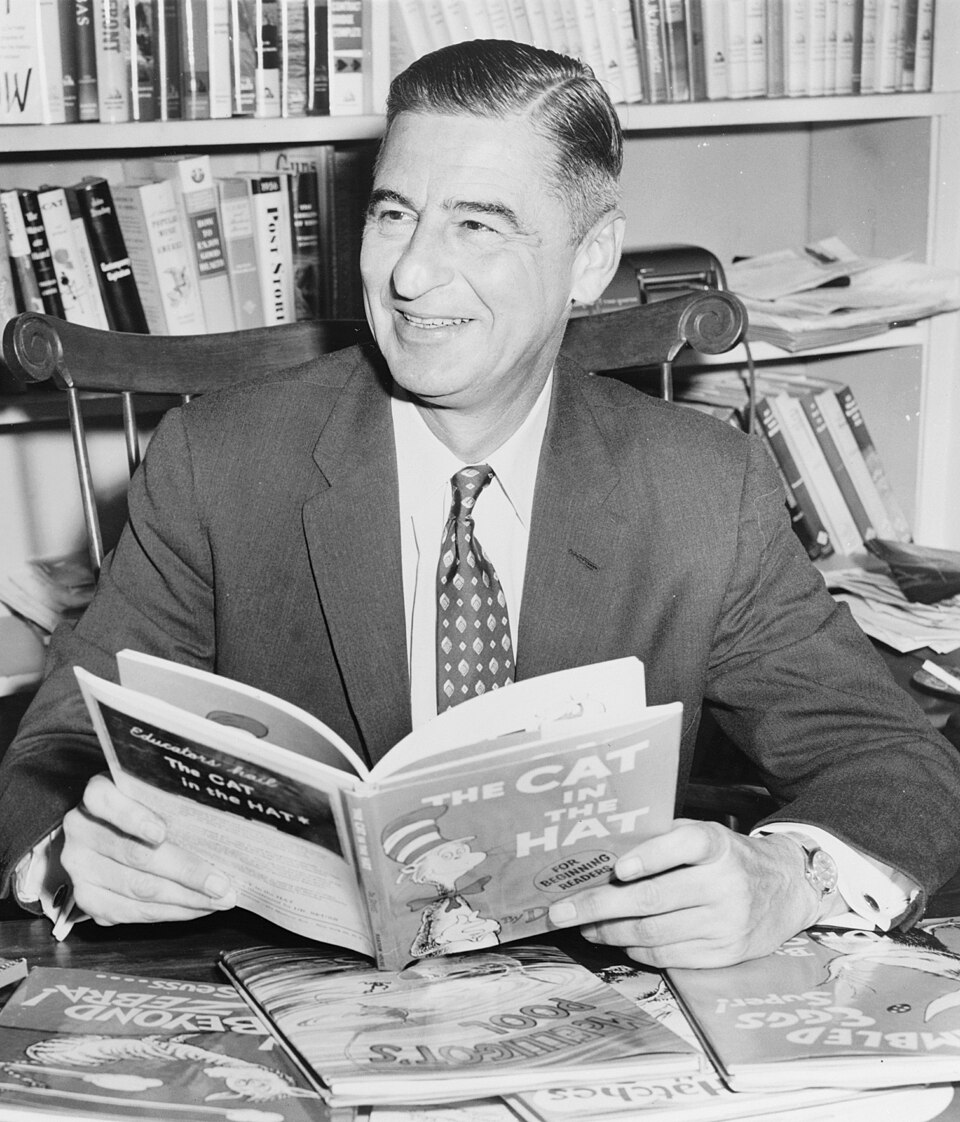
In the 1950s, many people worried that children’s reading books were too boring to hold kids’ attention. A publisher challenged Theodor to write an entertaining book using only 236 different words from a list that first graders should know. The result was The Cat in the Hat, published in 1957, which changed children’s literature forever by proving that learning to read could be wildly fun. He followed it up with Green Eggs and Ham in 1960, written with just 50 different words on a bet from his publisher. These books showed that creativity can thrive even within strict limits.
More Than Just Silly Stories
While many of Dr. Seuss’s books seem lighthearted, several of them carry important messages about the world. The Lorax, published in 1971, tells the story of a ruined landscape and warns readers about the dangers of pollution and greed, making it one of the earliest environmental stories for children. During World War II, before he became a children’s author, Theodor drew hundreds of political cartoons speaking out against fascism and racism. He received a Pulitzer Prize in 1984 for his special contribution to children’s literature. His work proved that books for young people can be funny and meaningful at the same time.
His Lasting Impact
Dr. Seuss’s books have been translated into more than 20 languages and have sold hundreds of millions of copies worldwide. His birthday, March 2, is celebrated across the United States as Read Across America Day, encouraging children everywhere to pick up a book. Characters like the Grinch, the Cat in the Hat, and Horton the Elephant are known by people of all ages. Theodor Seuss Geisel showed the world that imagination, persistence, and a love of language can create stories that last forever.
 OtterKnow Kids Encyclopedia