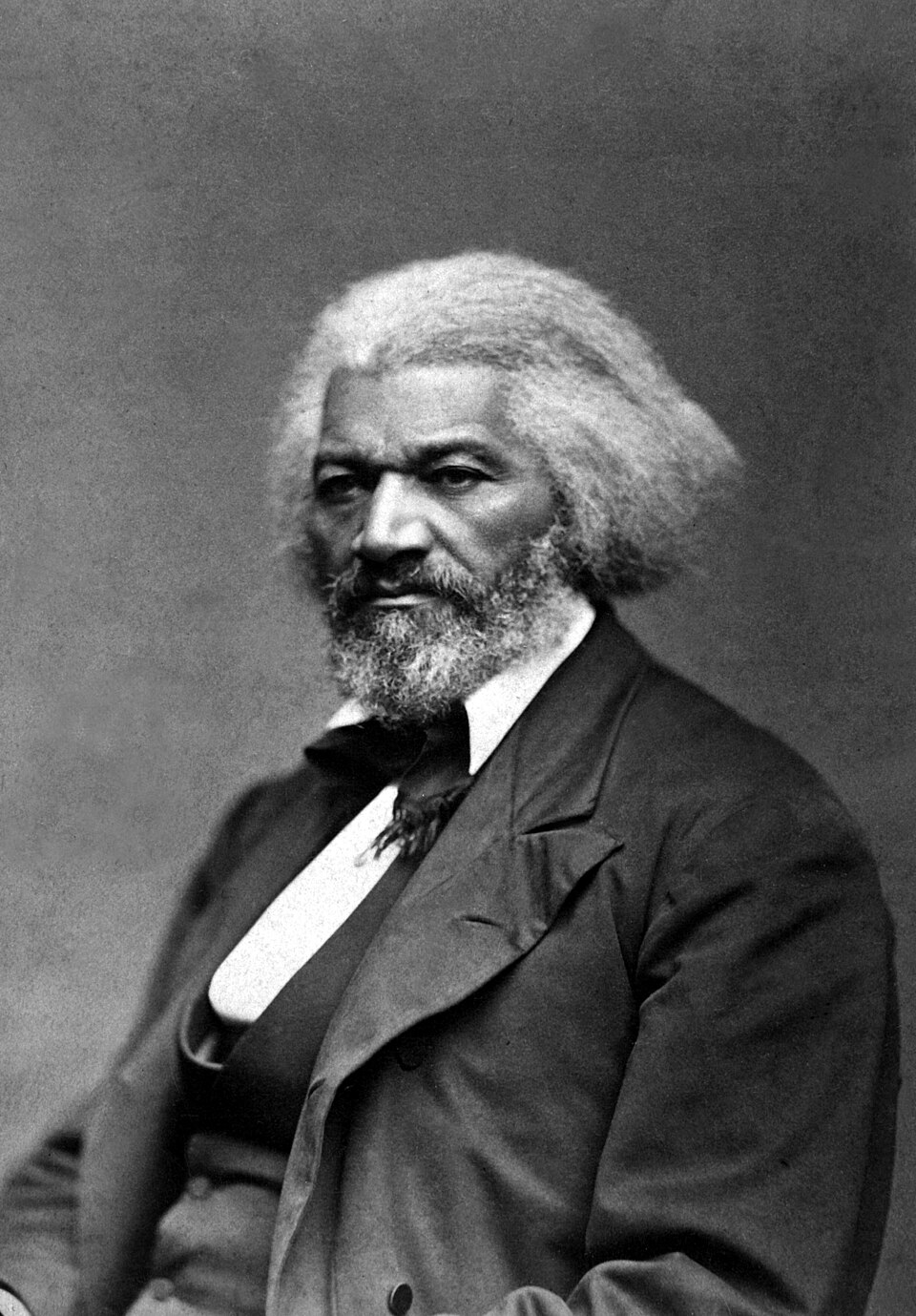
Early Life
Frederick was born Frederick Augustus Washington Bailey on a plantation in Talbot County, Maryland. Like many enslaved children, he was separated from his mother at a very young age and raised by his grandmother. When he was about eight years old, he was sent to Baltimore to work for a family called the Aulds. There, Sophia Auld began teaching him the alphabet, but her husband stopped her because it was against the law to teach enslaved people to read. Frederick refused to give up and secretly taught himself to read by trading bread with white children in the neighborhood in exchange for reading lessons.
Fight Against Slavery
In 1838, at about age twenty, Frederick disguised himself as a free Black sailor and escaped to New York City, where he married Anna Murray and changed his last name to Douglass. He soon began speaking at meetings of abolitionists, people who wanted to end slavery, and audiences were amazed by his powerful voice and sharp mind. In 1845 he published his autobiography, Narrative of the Life of Frederick Douglass, which became a bestseller and showed the world the true horrors of slavery. He also started his own antislavery newspaper called The North Star, which he used to spread ideas about freedom and justice. During the Civil War, Douglass advised President Abraham Lincoln and helped recruit Black soldiers for the Union Army, including his own two sons.
Legacy
After the Civil War, Douglass continued to fight for the rights of formerly enslaved people, women, and immigrants. He served as a United States Marshal, and later as the U.S. ambassador to Haiti, becoming one of the highest-ranking Black officials in the country at that time. Douglass gave thousands of speeches during his lifetime and wrote three autobiographies that are still read and studied today. He passed away in 1895, but his words and example continue to inspire people who stand up against injustice everywhere.
 OtterKnow Kids Encyclopedia