The Staff and Clefs
Music is written on a set of five horizontal lines called the staff, and the spaces between the lines also represent notes. A symbol called a clef appears at the beginning of the staff to tell you which notes the lines and spaces represent. The treble clef, which looks like a fancy letter G, is used for higher-pitched instruments and voices, while the bass clef, shaped like a backward C with two dots, is used for lower-pitched sounds. A handy way to remember the notes on the lines of the treble clef is the phrase “Every Good Boy Does Fine,” and the spaces spell out the word FACE.
Notes and Their Values
The seven natural notes in Western music are named A, B, C, D, E, F, and G, and then the pattern repeats. Each note on the staff can be drawn in different shapes to show how long it should last — a whole note gets four beats, a half note gets two, a quarter note gets one, and an eighth note gets half a beat. Sharps and flats are symbols that raise or lower a note by a small amount called a half step, and they are placed right before the note on the staff. These symbols give musicians access to all the pitches between the natural notes, creating the full range of sounds needed for any piece of music.
Time Signatures and Rhythm
At the beginning of a piece of music, right after the clef, you will find two numbers stacked on top of each other called the time signature. The top number tells you how many beats are in each measure, and the bottom number tells you which type of note gets one beat. The most common time signature is 4/4, meaning four beats per measure with a quarter note getting one beat, while 3/4 time creates the flowing feel of a waltz. Bar lines divide the staff into equal sections called measures, helping musicians keep track of where they are in the music.
Beyond Written Notes
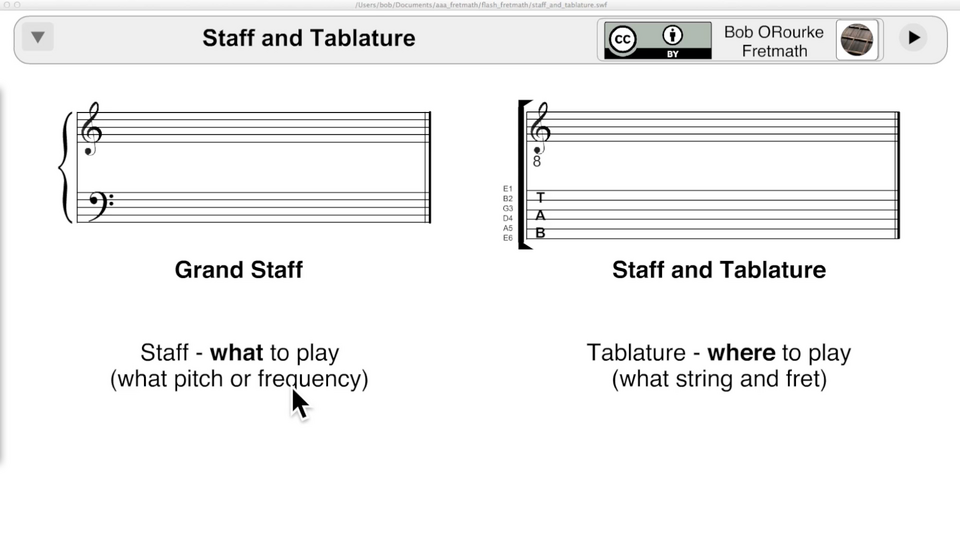
While Western music notation is the most widely used system in the world today, not all musical traditions rely on written music. Jazz musicians often learn songs by ear and improvise their own versions, creating new melodies on the spot. Indian classical music uses a system of ragas and talas passed down through oral tradition from teacher to student. Some musicians use alternative notation systems like guitar tablature, which shows exactly where to place your fingers on the strings. Whether you learn to read standard notation or play by ear, understanding how music is organized will help you grow as a musician.
 OtterKnow Kids Encyclopedia