A History Stretching Back Thousands of Years
Weaving is far older than most people realize. The oldest known fragment of woven fabric was found in a cave in the Republic of Georgia and dates back roughly 27,000 years. It was made from wild flax fibers that had been twisted into thread and then interlaced. By about 6000 BC, people across the ancient world were weaving linen from flax and wool from sheep. Ancient Egyptians became especially skilled weavers, producing linen cloth so fine that it was nearly transparent. In South America, the Inca and earlier Andean cultures created some of the most technically complex textiles ever made, using hundreds of different weaving techniques to produce fabrics with intricate patterns and vibrant colors.
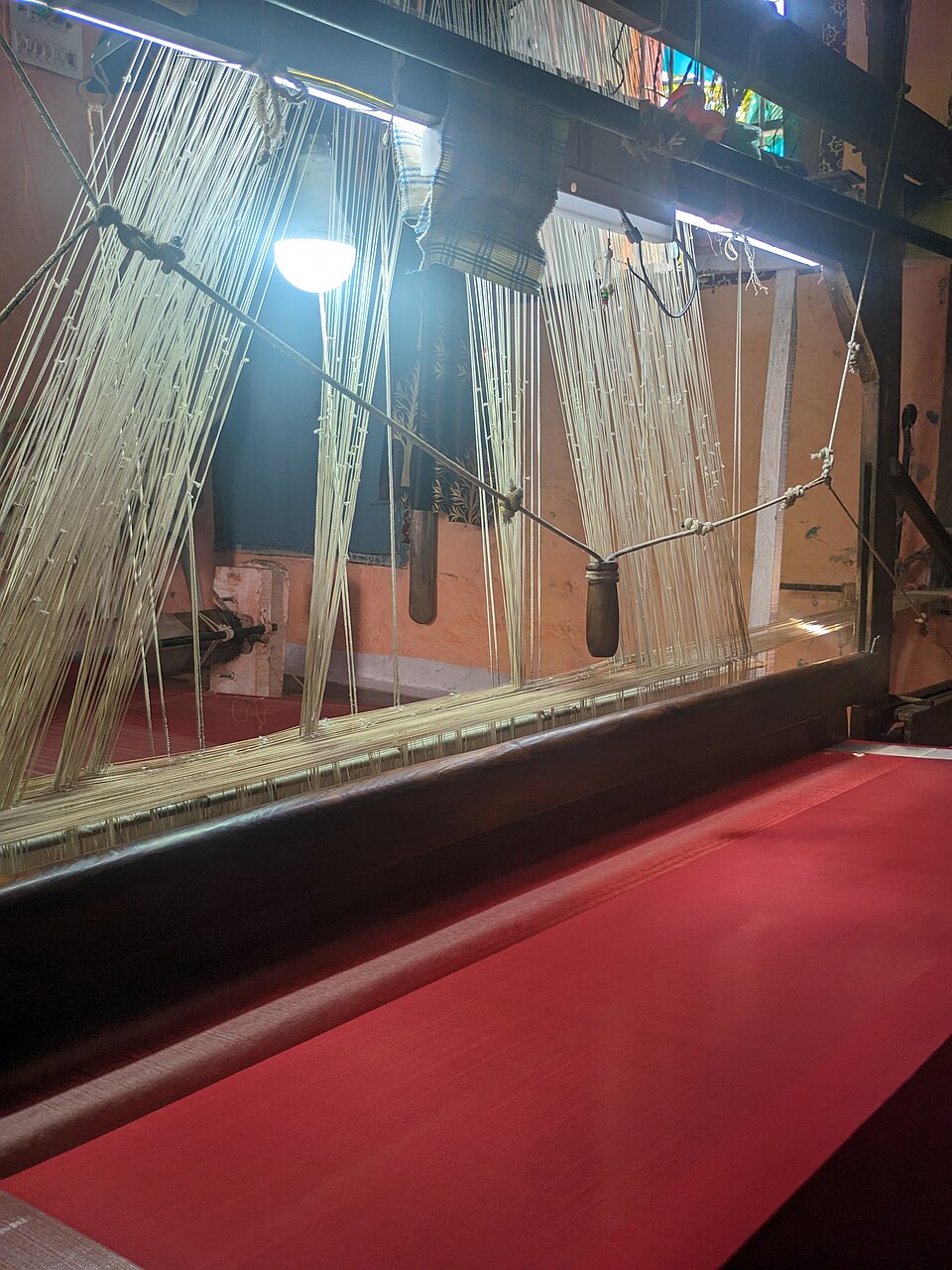
A loom is the frame or device that holds the warp threads under tension so the weaver can pass the weft through them. The simplest type is the backstrap loom, where one end of the warp is tied to a tree or post and the other end is attached to a belt around the weaver’s waist. The weaver leans back to create tension and uses their body as part of the loom. Backstrap looms have been used for thousands of years in Central America, Southeast Asia, and the Andes, and they are still used by artisans today. Larger floor looms use a wooden frame with foot pedals called treadles that lift different sets of warp threads, allowing the weaver to work faster. The flying shuttle, invented in 1733 by John Kay, made it possible for a single weaver to create much wider fabric than before.
Warp and Weft: How Fabric Takes Shape
Understanding warp and weft is the key to understanding all weaving. The warp threads run lengthwise on the loom and stay in place throughout the weaving process. They must be strong because they are held under constant tension. The weft thread is carried horizontally across the warp, going over some warp threads and under others. The pattern in which the weft crosses the warp determines the type of weave. In a plain weave, the simplest pattern, the weft goes over one warp thread and under the next, alternating on each row. A twill weave shifts the pattern by one thread on each row, creating diagonal lines. A satin weave has the weft floating over several warp threads before going under one, giving the fabric a smooth, shiny surface.
Types of Weaving
There are many different types of weaving beyond cloth. Tapestry weaving uses colored weft threads that do not go all the way across the fabric but instead fill in specific areas to create pictures and designs, almost like painting with thread. The famous Bayeux Tapestry, which tells the story of the Norman conquest of England in 1066, is actually an embroidery but was inspired by the tapestry tradition. Basket weaving uses stiff materials like reeds, grasses, willow branches, or bamboo strips instead of soft thread. Baskets have been woven by cultures on every continent for carrying food, storing goods, and even cooking. Bead weaving uses tiny beads strung on threads and woven together on small looms to make jewelry and decorative items.
Cultural Traditions Around the World
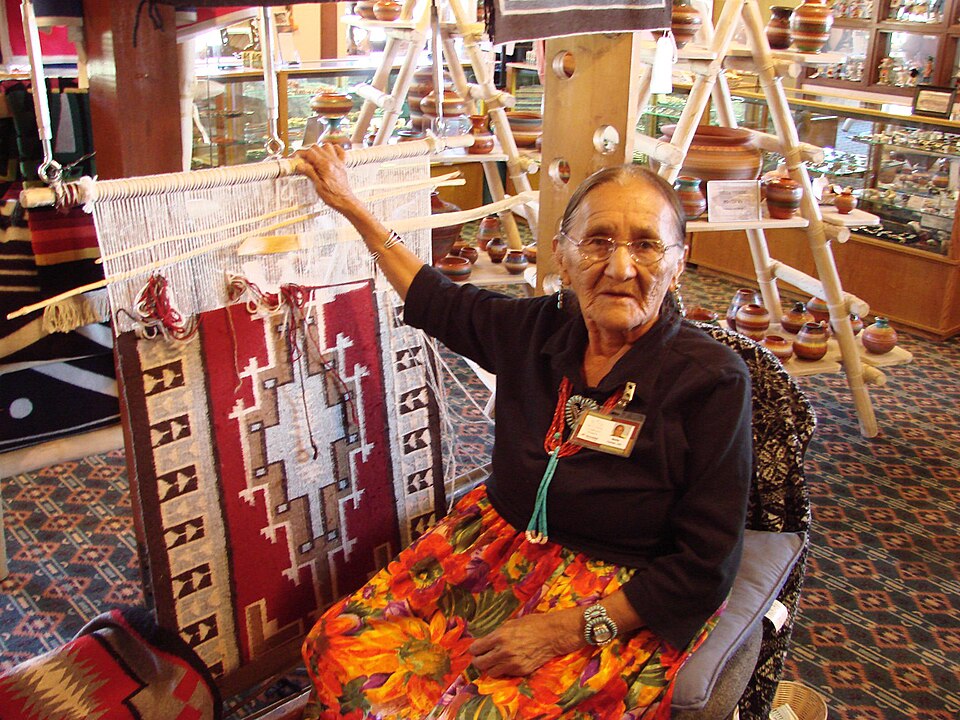
Weaving holds deep cultural meaning in many societies. The Navajo people of the American Southwest have a weaving tradition that stretches back centuries. Navajo weavers create rugs and blankets with bold geometric patterns using wool from their own sheep, and the craft is traditionally passed down from mother to daughter. According to Navajo tradition, the spirit Spider Woman taught the people how to weave. In West Africa, kente cloth is a handwoven silk and cotton fabric made by the Akan people of Ghana. Kente is woven on narrow strip looms, and the strips are then sewn together to make larger cloths. Each pattern and color combination has a specific name and symbolic meaning. In Peru, communities in the Andes continue ancient weaving traditions that date back thousands of years, creating textiles with patterns that tell stories about their history and beliefs.
The Industrial Revolution and Modern Weaving
The Industrial Revolution transformed weaving from a handcraft performed in homes to a mechanized process carried out in factories. In 1785, Edmund Cartwright patented the power loom, which used water power and later steam power to operate the weaving mechanism automatically. This invention dramatically increased the speed of fabric production. By the early 1800s, the Jacquard loom, invented by Joseph Marie Jacquard in France, used a system of punched cards to control which warp threads were raised, allowing complex patterns to be woven automatically. The punched card system of the Jacquard loom is often considered an early ancestor of computer programming. Today, modern industrial looms can weave fabric at tremendous speeds, producing the vast quantities of textile needed for clothing, furniture, and other goods around the world.
Try It Yourself
Getting started with weaving does not require expensive equipment. A simple cardboard loom is easy to make: cut a piece of sturdy cardboard into a rectangle, make small notches along the top and bottom edges, and wind yarn through the notches to create your warp. Then use a large blunt needle or even your fingers to weave the weft thread over and under the warp threads. Experiment with different colors to create stripes or patterns. Potholder looms, which use stretchy loops on a small metal frame, are another popular way for beginners to try weaving. As you get more comfortable, you can try a rigid heddle loom, which makes the process faster by lifting alternate warp threads with a single motion.
 OtterKnow Kids Encyclopedia