What They Look Like
A jellyfish’s body is shaped like a soft, rounded bell or umbrella, and it is almost completely transparent. Hanging beneath the bell are tentacles that can be short and stubby or stretch out for incredible lengths, with the lion’s mane jellyfish trailing tentacles that can reach over 30 meters (100 feet) long. Many jellyfish are clear or pale white, but others come in stunning colors like deep blue, bright pink, vivid orange, or glowing purple. Some species are bioluminescent, meaning they can produce their own light, which creates an eerie glow in the dark ocean depths. The bell pulses rhythmically to push the jellyfish through the water, but jellyfish are weak swimmers and mostly drift wherever ocean currents carry them.
No Brain, No Heart, No Problem
One of the most astonishing things about jellyfish is what they do not have. They have no brain, no heart, no blood, and no bones, yet they have survived in the oceans for hundreds of millions of years. Instead of a brain, jellyfish have a simple network of nerve cells spread throughout their body that allows them to sense light, detect chemicals in the water, and respond to touch. Instead of a heart pumping blood, nutrients from digested food simply spread through their thin body walls by diffusion. Their bodies are supported entirely by water pressure, so a jellyfish stranded on a beach quickly collapses into a flat, formless puddle. This incredibly simple body plan has proven to be one of the most successful designs in the history of life on Earth.
Stinging Cells
Jellyfish defend themselves and catch their food using specialized cells called cnidocytes, which are found all along their tentacles. Each cnidocyte contains a tiny, coiled, harpoon-like structure called a nematocyst that fires when triggered by contact. When a fish or shrimp brushes against a tentacle, thousands of nematocysts fire in less than a millisecond, injecting venom into the prey and holding it in place. Most jellyfish stings feel like a mild irritation to humans, but some species are far more dangerous. The box jellyfish, found in the waters around Australia and Southeast Asia, is considered one of the most venomous animals on the planet, and its sting can be fatal to humans within minutes. Even a dead jellyfish washed up on the beach can still sting, because the cnidocytes continue to fire after the animal dies.
Where They Live
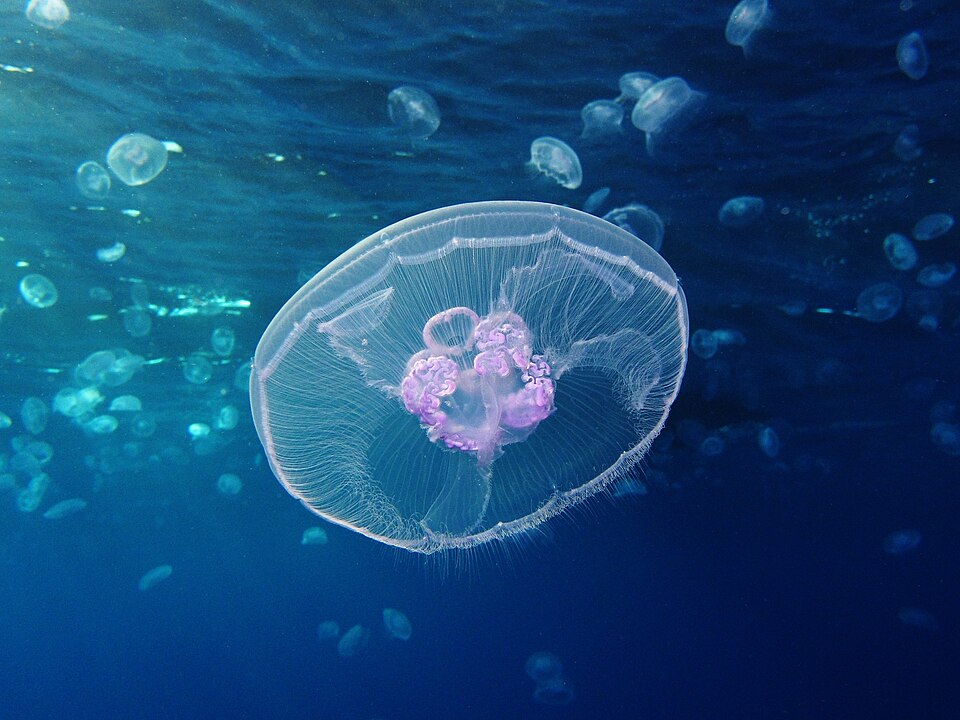
Jellyfish are found in every ocean on Earth, from the warm shallows of tropical coral reefs to the freezing waters beneath Arctic ice. Some species live near the surface, where sunlight filters through the water, while others drift in the pitch-black depths thousands of meters below. A few species have even adapted to life in freshwater lakes and rivers. Jellyfish share their ocean habitat with animals like dolphins, sea turtles, and sharks, some of which are important jellyfish predators. The golden jellyfish of Palau’s Jellyfish Lake migrate back and forth across the lake each day, following the path of the sun so that the tiny algae living inside their bodies can photosynthesize.
What They Eat
Jellyfish are carnivores that feed on plankton, small fish, fish eggs, and even other jellyfish. They do not actively chase their prey the way a shark or dolphin does. Instead, they drift through the water with their tentacles spread out like a net, stinging and trapping anything that bumps into them. Once prey is captured, the tentacles bring it up to the jellyfish’s mouth, which is located on the underside of the bell. Jellyfish have only one opening that serves as both a mouth and a waste exit, so food goes in and waste comes out through the same hole. Some larger species, like the lion’s mane jellyfish, can consume dozens of small fish and other jellyfish in a single day.
Blooms
Sometimes jellyfish gather in enormous groups called blooms that can contain millions of individuals and stretch across many kilometers of ocean. Blooms often form when conditions are just right, with plenty of food, warm water temperatures, and favorable currents that push the jellyfish together. In recent decades, scientists have noticed that jellyfish blooms seem to be getting larger and more frequent in many parts of the world. Some researchers believe this is connected to overfishing, since removing fish from the ocean means less competition for the plankton that jellyfish eat. Massive blooms can cause serious problems for humans, clogging the cooling water intakes of power plants, breaking fishing nets, and stinging swimmers at popular beaches.
The Immortal Jellyfish
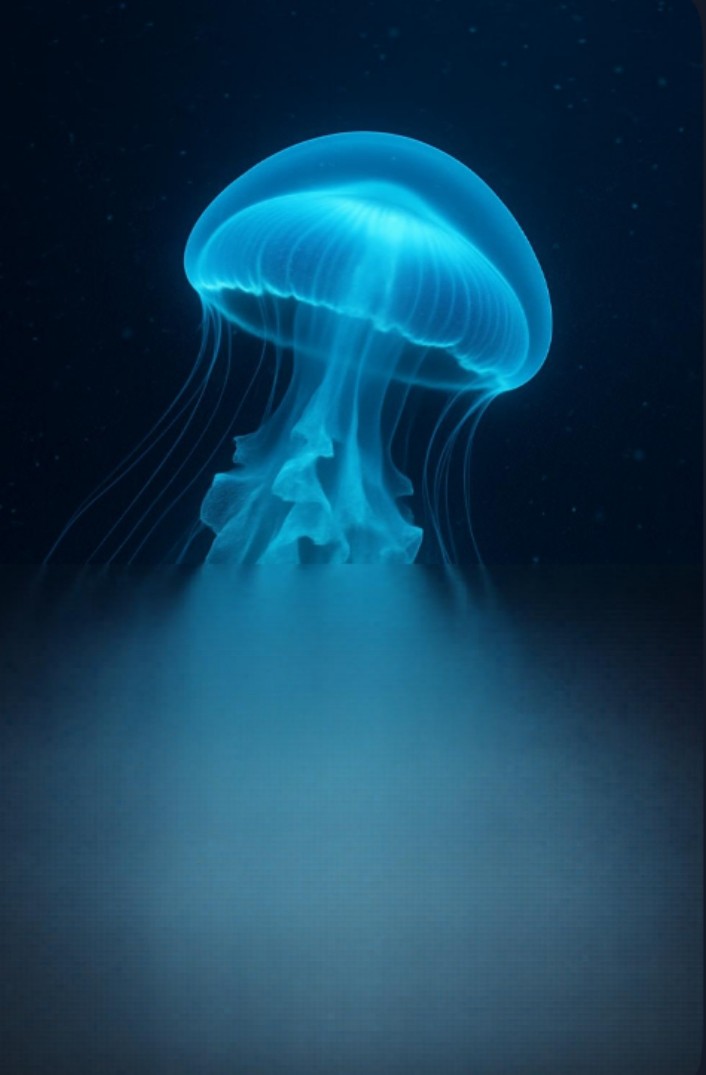
Among the thousands of jellyfish species, one tiny creature has earned the nickname “the immortal jellyfish.” Turritopsis dohrnii, a jellyfish smaller than a fingernail, has an extraordinary ability that no other animal is known to possess. When it is injured, sick, or simply old, it can reverse its life cycle and transform back into a polyp, the juvenile form from which jellyfish grow. From this polyp stage, it can grow into an adult jellyfish all over again, essentially restarting its life. Scientists believe this process can repeat indefinitely, which is why they call it biologically immortal. Researchers around the world are studying Turritopsis dohrnii to understand how its cells can reprogram themselves, hoping this knowledge might someday help in the fight against aging and disease in humans.
Jellyfish in Science and Research
Jellyfish have contributed to some of the most important scientific discoveries of the past century. In the 1960s, a scientist named Osamu Shimomura discovered a glowing protein inside the crystal jellyfish called green fluorescent protein, or GFP. This protein revolutionized biology because scientists could attach it to other proteins and watch them glow under ultraviolet light, making it possible to observe living cells and track diseases in ways that had never been possible before. Shimomura and two other researchers won the Nobel Prize in Chemistry in 2008 for this work. Beyond GFP, researchers are studying jellyfish collagen for use in medical bandages and joint repair, and they are examining jellyfish venom for potential new medicines. These ancient, brainless drifters have turned out to be surprisingly valuable to modern science.
 OtterKnow Kids Encyclopedia