What They Look Like
Clownfish are relatively small, typically growing to between 7 and 13 centimeters (3 to 5 inches) in length depending on the species. Their colors range from bright orange and reddish-brown to yellow, maroon, and even black, and most species have bold white bands or stripes across their bodies. Females are usually larger than males, sometimes nearly twice as long, because the dominant female in a group grows the most. Clownfish have a rounded body shape and a thick layer of mucus coating their skin, which gives them a slightly slimy appearance up close. Their dorsal fins have a distinctive notch that helps scientists tell them apart from other small reef fish.
The Sea Anemone Partnership
The relationship between clownfish and sea anemones is one of the best examples of mutualism in the animal kingdom, meaning both partners benefit. Sea anemones are soft-bodied animals with tentacles armed with stinging cells called nematocysts, powerful enough to paralyze small fish and shrimp. Clownfish live safely within these tentacles, gaining protection from predators like larger fish and sharks that would otherwise eat them. In return, clownfish help the anemone by chasing away polyp-eating butterflyfish, dropping bits of food that the anemone absorbs, and even improving water circulation around the anemone as they swim. Each clownfish species tends to prefer certain anemone species, and only about 10 of the more than 1,000 sea anemone species worldwide host clownfish.
Immunity to Venom
One of the most remarkable things about clownfish is how they survive among tentacles that would sting and kill most other fish. Scientists have discovered that clownfish produce a special mucus coating on their skin that is chemically different from the mucus of other reef fish. This coating lacks the substances that normally trigger an anemone’s stinging cells to fire, so the anemone essentially does not recognize the clownfish as prey. When a clownfish first encounters a new anemone, it performs a careful acclimation dance, gently brushing against the tentacles over several hours to build up its protective layer. Some researchers believe the mucus may also contain chemicals the clownfish picks up from the anemone itself, further disguising the fish from its host’s defenses.
Sequential Hermaphroditism
Clownfish have one of the most unusual reproductive systems in the animal kingdom. All clownfish are born male, and they live in strict social groups within a single anemone, led by one large, dominant female. The second-largest fish in the group is the breeding male, and the rest are smaller, non-breeding males arranged in a pecking order by size. If the dominant female dies or is removed, something extraordinary happens: the breeding male transforms into a female, changing both its behavior and its body to take on the role of the group’s new leader. This process, called sequential hermaphroditism, is permanent and cannot be reversed, which means a clownfish that becomes female will remain female for the rest of its life.
Where They Live
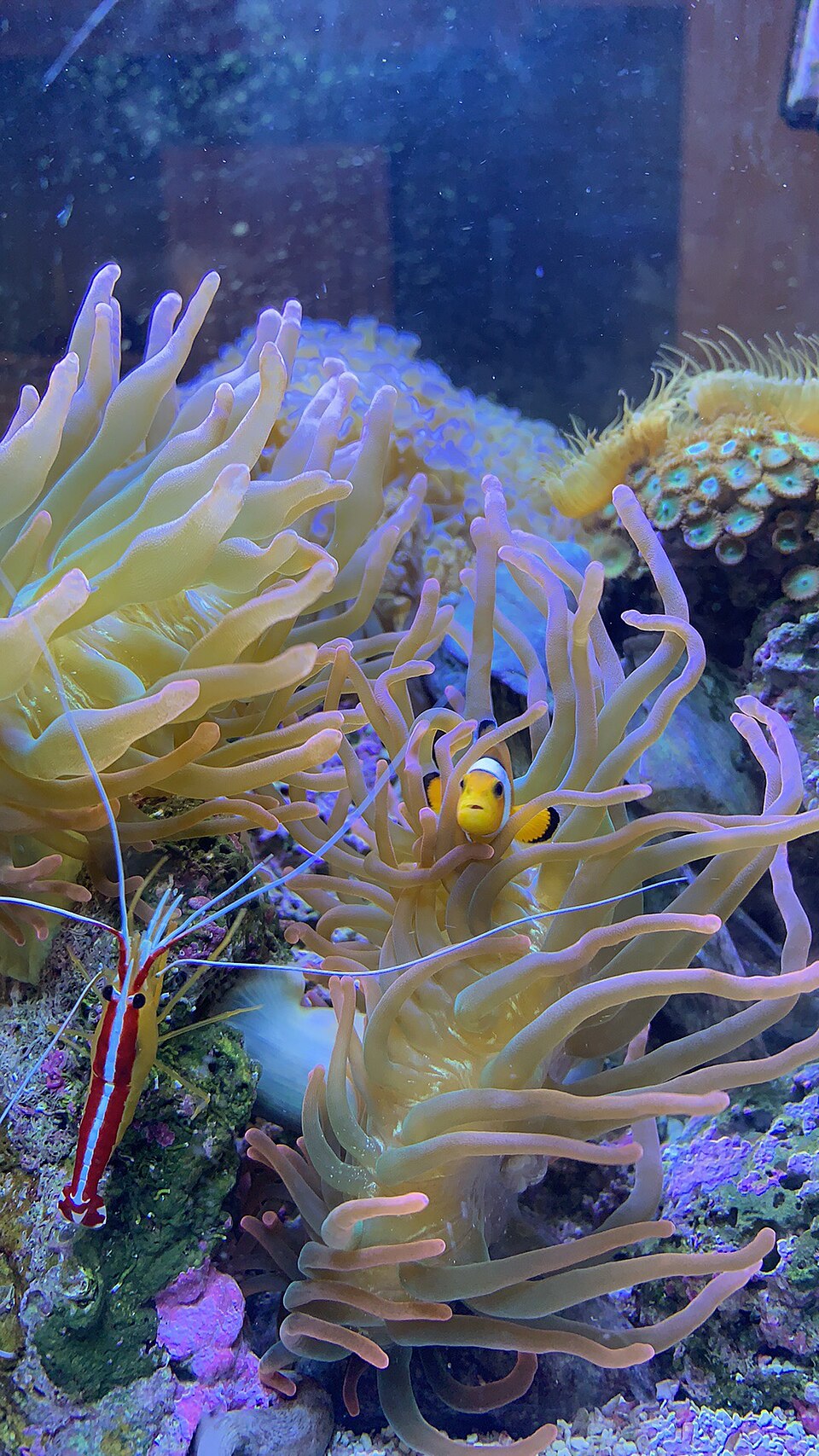
Clownfish are found exclusively in the warm tropical and subtropical waters of the Indo-Pacific region, stretching from the Red Sea and the eastern coast of Africa across to Southeast Asia, northern Australia, and the islands of Melanesia and Micronesia. They do not live in the Atlantic Ocean, the Caribbean, or the eastern Pacific. Their habitat is always a coral reef or rocky reef where host anemones grow, typically in shallow water no deeper than about 15 meters (50 feet) where sunlight reaches the ocean floor. Clownfish rarely venture more than a few meters from their home anemone, making them one of the most site-faithful fish on the reef. They share their reef neighborhoods with many other creatures, including sea turtles, starfish, and countless species of coral.
Threats to Their Habitat
Coral reefs around the world are under serious pressure from climate change, and clownfish are directly affected. Rising ocean temperatures cause coral bleaching, which kills the coral structures that anemones and clownfish depend on for shelter and food. Ocean acidification, caused by seawater absorbing excess carbon dioxide from the atmosphere, weakens coral skeletons and makes it harder for reefs to recover. Pollution, coastal development, and destructive fishing practices also damage the reef ecosystems where clownfish live. Although clownfish are not currently classified as endangered, scientists have warned that some populations are declining and that continued reef destruction could put certain species at risk in the coming decades.
Clownfish and Pop Culture
The 2003 animated film Finding Nemo turned the clownfish into one of the most famous fish on the planet and sparked a worldwide surge in demand for clownfish as aquarium pets. In the years following the film’s release, researchers documented significant increases in the collection of wild clownfish from reefs in Southeast Asia and the Pacific Islands to supply the pet trade. This increased harvesting put pressure on some local populations, particularly in the Philippines and Indonesia where collection methods sometimes involved cyanide that damaged surrounding reefs. On the positive side, the film also raised public awareness about coral reef conservation and inspired many marine biologists who grew up watching the movie. Today, most clownfish sold in pet stores are captive-bred rather than wild-caught, which has helped reduce the impact on wild populations, though the broader threats of climate change and habitat loss remain.
 OtterKnow Kids Encyclopedia