What They Look Like
Sheep are stocky, medium-sized mammals with rounded bodies, short tails, and cloven hooves, meaning each hoof is split into two toes. Most breeds are covered in a thick, curly coat of wool, though a few hair sheep breeds, like the Dorper and the Katahdin, grow coarser hair similar to a goat’s. Adult ewes (females) typically weigh between 45 and 100 kilograms (about 100 to 220 pounds), while rams (males) are usually larger and heavier. Many ram breeds grow impressive curved horns that spiral outward from the sides of the head, though some breeds are naturally hornless, a trait called “polled.” One of their most distinctive features is their rectangular pupils, which are shared by goats and give the eye a wide, horizontal appearance that helps them see danger coming from many directions.
Wool
Wool is one of the most remarkable natural fibers on the planet, and sheep are its primary source. Unlike the hair of most animals, sheep wool grows continuously and must be sheared, usually once a year in the spring, or the fleece will keep getting heavier and can cause the animal to overheat. A single sheep can produce anywhere from 2 to 13 kilograms (about 5 to 30 pounds) of wool per year, depending on the breed. The Merino, originally from Spain, is considered the gold standard for fine wool because its fibers are incredibly soft and tightly crimped, trapping tiny pockets of air that provide excellent insulation. Wool also has a surprising natural property: it is flame-resistant, meaning it does not catch fire easily and tends to smolder and self-extinguish rather than bursting into flames, which is why it is often used in firefighter uniforms and airplane seat covers.
A Good Memory and Social Intelligence
Sheep are far more intelligent than the stereotype of a mindless follower would suggest. Research has shown that sheep can recognize and remember up to 50 individual sheep faces and can recall them even after being separated for two years. They can also learn to recognize the faces of familiar humans and distinguish between a smiling and a frowning expression. Sheep form close bonds within their flocks, often walking, grazing, and resting near the same companions day after day. When a sheep is isolated from its flock, its heart rate and stress hormones rise sharply, showing just how important their social connections are to their well-being.
Vision and Senses
Sheep have remarkable eyesight that is specially adapted for life as a grazing prey animal. Their eyes are positioned on the sides of their head, giving them an extraordinarily wide field of vision that spans between 270 and 320 degrees, nearly a full circle, without even turning their head. Those unusual rectangular pupils are not just for show: they allow sheep to see a wide, panoramic strip of the horizon, making it much harder for a predator to sneak up from the side or behind. Sheep also have excellent hearing and can rotate their ears independently to pinpoint the direction of a sound. Their sense of smell is strong too, and ewes rely on scent to identify their own lambs among a large flock within hours of birth.
Grazing
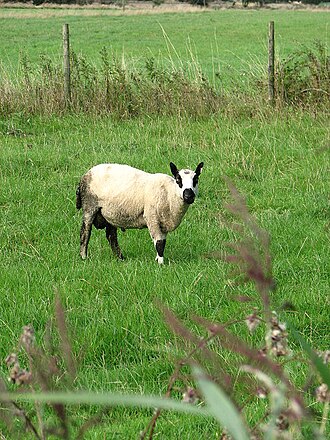
As ruminants, sheep have a specialized digestive system with a four-chambered stomach that allows them to break down tough grasses and plants that many other animals cannot digest. After cropping grass with their lower front teeth and a hard upper palate (sheep do not have upper front teeth), they swallow the food into the rumen, where billions of microorganisms begin fermenting it. Later, the sheep bring the partially digested food, called cud, back up to their mouth and chew it again, a process known as “chewing the cud” or rumination. Sheep spend roughly eight hours a day grazing and another eight hours chewing cud, meaning they devote the majority of their waking life to eating and digesting. Because they graze so close to the ground, sheep are sometimes used as natural lawn mowers, and some airports and solar farms employ flocks to keep grass short without gasoline-powered equipment.
Lambs and Family
Baby sheep, called lambs, are usually born in the spring after a gestation period of about five months. Most ewes give birth to one or two lambs at a time, though some breeds occasionally produce triplets. Within minutes of being born, a lamb will struggle to its feet and begin nursing, and within a day it can walk and even run alongside its mother. Ewes are attentive mothers that communicate with their lambs through a series of low bleats, and both mother and lamb quickly learn to recognize each other’s voices and scent in a crowded flock. Lambs are naturally playful and curious, often racing around in groups, leaping over rocks, and play-fighting with one another, behaviors that help them build strength and learn the social rules of flock life.
Sheep Around the World
Sheep have been shaped by geography and human needs into an astonishing variety of breeds suited to nearly every environment on Earth. In Australia, which has roughly 70 million sheep, the Merino dominates the wool industry and thrives on vast, sun-baked stations across the Outback. The hardy Scottish Blackface roams the windswept highlands of Scotland, while the fat-tailed Awassi, one of the oldest breeds in existence, has been raised in the deserts of the Middle East for thousands of years. In New Zealand, there are about five sheep for every person, and the country is one of the world’s top exporters of lamb and wool. From mountain pastures in the Himalayas to rolling green fields in England, sheep continue to play a vital role in feeding and clothing people around the globe.
 OtterKnow Kids Encyclopedia