What They Look Like
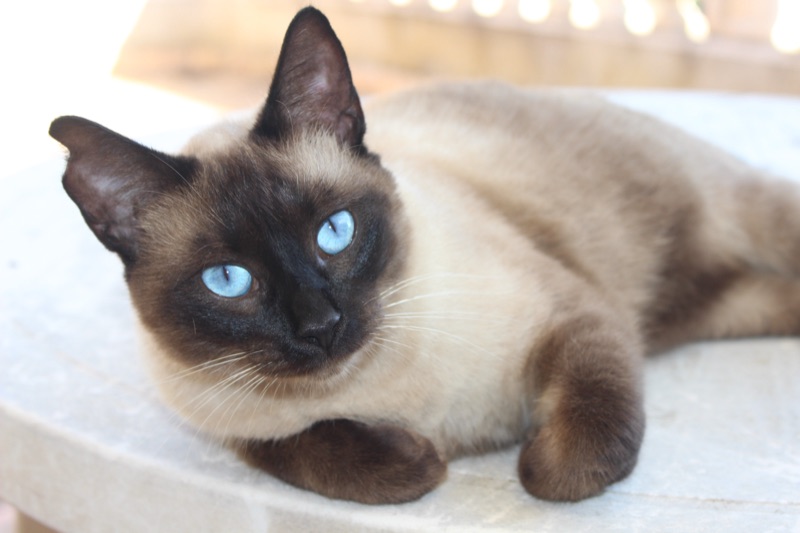
Siamese cats have long, elegant bodies with slim legs, a wedge-shaped head, and large, pointed ears that give them a sleek and athletic appearance. They typically weigh between 2.5 and 5.5 kilograms (6 to 12 pounds), with males usually being larger than females. Their short, fine coat lies close to the body and has a smooth, glossy feel that requires very little grooming compared to longer-haired breeds like the Maine Coon. Today there are two main body types that breeders recognize: the modern or “wedge head” Siamese, which has a very angular face and extremely long, slender body, and the traditional or “apple head” Siamese, which has a rounder face and a slightly stockier build closer to the breed’s original appearance. Both types share the same beautiful coloring and bright personality that make the Siamese so beloved.
Color Points and Temperature
The most fascinating thing about a Siamese cat’s coat is how it gets its distinctive pattern, called “color points.” Siamese cats have a lighter body with darker fur on their ears, face, paws, and tail, which are known as the “points.” This pattern is caused by a temperature-sensitive gene that controls how pigment develops in the fur. The gene only activates in cooler parts of the body, so the extremities, which are farther from the warm core, develop darker color while the warmer torso stays pale. This is why Siamese kittens are born almost completely white or cream colored, since they were kept warm all over inside their mother, and their points gradually darken over the first few weeks of life. The four classic color-point varieties are seal point (dark brown), chocolate point (lighter brown), blue point (grayish-blue), and lilac point (pale pinkish-gray).
The Blue Eyes
Every Siamese cat has vivid blue eyes, and this is one of the few cat breeds where blue eyes are the standard for all individuals regardless of coat color. The blue color comes from the same temperature-sensitive gene that creates their color points. This gene reduces the amount of melanin pigment in the iris, and without enough melanin to produce green, gold, or copper tones, the eye appears blue because of the way light scatters through the iris, similar to how the sky looks blue. Siamese cats are sometimes born with slightly crossed eyes, a trait that was very common in the breed historically. While crossed eyes do not usually affect a Siamese cat’s vision or quality of life, modern breeders have largely reduced this trait through careful selective breeding over many generations.
History and Origins
The Siamese cat’s history stretches back hundreds of years to the royal courts of Siam, where these cats were considered sacred and were kept by kings, monks, and nobility. Some of the earliest written records of Siamese cats appear in a collection of ancient Thai manuscripts called the Tamra Maew, or “Cat Book Poems,” which scholars believe dates back to the 1300s or 1400s. The breed first appeared in Europe in the 1870s and 1880s, when British diplomats brought Siamese cats home from Bangkok as gifts. One of the most famous early Siamese cats in the West was a pair named Pho and Mia, given to the British consul-general by the King of Siam in 1884. The breed quickly captured the public’s imagination, and by the early 1900s Siamese cats were being shown at cat shows and bred across both Europe and the United States.
Personality
Siamese cats are often called the most “talkative” of all cat breeds, and anyone who has spent time with one will understand why. They produce a wide range of loud, distinctive vocalizations, from raspy meows to long, insistent yowls, and they use these sounds to express everything from hunger to boredom to affection. Siamese cats are extraordinarily social and do not do well when left alone for long periods, which is why many owners choose to keep two Siamese cats so they can keep each other company. They are highly intelligent and can learn to play fetch, open doors, and even walk on a leash with patient training. Their curiosity and energy mean they love interactive toys, puzzle feeders, and games that challenge their minds. While their demanding nature is not for everyone, people who love Siamese cats say the constant companionship and entertainment more than make up for the noise.
Siamese Cats as Pets
Because of their social nature, Siamese cats do best in homes where someone is around for much of the day or where they have another pet companion. They are wonderful family cats and tend to bond especially closely with one particular person, following that person around the house and even sleeping next to them at night. Siamese cats are generally good with children who know how to handle animals respectfully, and they can get along well with dogs and other cats when properly introduced. Their short coat is easy to care for and only needs brushing about once a week to remove loose hair and keep it shiny. Unlike some more independent breeds, Siamese cats actively seek out human interaction and will invent ways to get your attention if they feel ignored, from knocking items off tables to sitting directly on whatever you are trying to read.
Health and Care
Siamese cats are generally a healthy and long-lived breed, with many individuals living 15 to 20 years when given proper care. However, like other purebred cats, they can be prone to certain inherited conditions. Some Siamese cats develop progressive retinal atrophy, a condition that gradually reduces their eyesight, and others may be at higher risk for respiratory issues like asthma. Heart conditions, including hypertrophic cardiomyopathy, have also been seen in the breed. Responsible breeders screen their cats for known genetic problems to help produce healthier kittens. Keeping a Siamese cat at a healthy weight is important because their slender frames are not built to carry extra pounds, and obesity can lead to joint problems and diabetes. Regular veterinary checkups, a balanced diet, plenty of exercise, and lots of affection will help a Siamese cat live a long, happy, and very vocal life.
 OtterKnow Kids Encyclopedia