What They Look Like
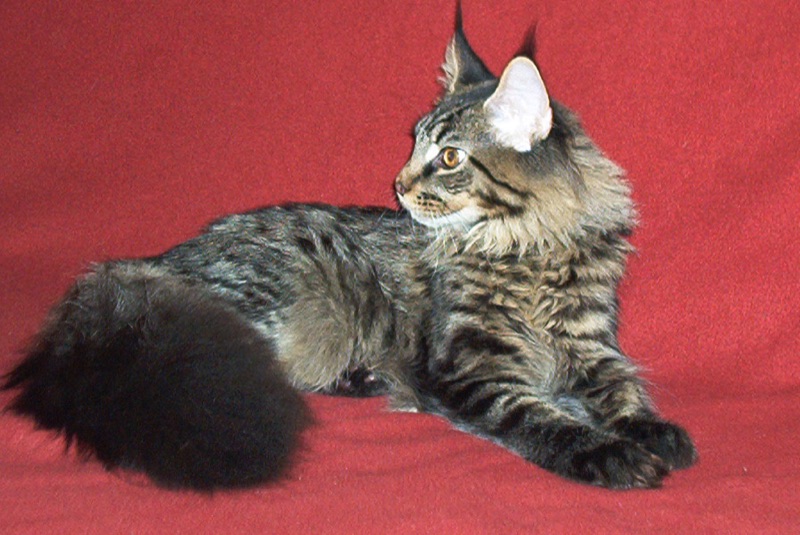
Maine Coons are impressively large cats that can weigh between 5 and 11 kilograms (12 to 25 pounds), with some males growing even heavier. From nose to tail tip, they can measure over a meter (about 40 inches) long, making them noticeably bigger than most house cats. Their heads are broad with high cheekbones, and their large, expressive eyes can be green, gold, or copper. One of their most striking features is their tall, pointed ears topped with tufts of fur that look a bit like the ears of a lynx. Maine Coons come in almost every color and pattern, including brown tabby, black, white, red, and calico, though the classic brown tabby pattern is the most common and well known.
Built for Cold Weather
Everything about the Maine Coon’s body is designed for surviving harsh New England winters. Their thick, shaggy coat is actually made up of three layers: a dense undercoat close to the skin, a middle layer for insulation, and a longer, water-resistant outer layer that keeps snow and rain from soaking through. The fur on their stomachs and sides is longer than on their backs, which helps keep them warm when they sit or walk on snow. Their large, wide paws act like natural snowshoes, spreading their weight across soft surfaces, and thick tufts of fur grow between their toes to protect their paw pads from ice. Their famously long, bushy tails can be wrapped around their faces and bodies like a furry scarf when they curl up in the cold.
Origin and History
Nobody knows exactly how the Maine Coon breed developed, but there are many colorful stories. One old legend claims that Maine Coons are a cross between a domestic cat and a raccoon, which is how they got their name. While this story is fun, it is biologically impossible because cats and raccoons are far too different to produce offspring together. A more likely explanation is that long-haired cats arrived in New England on ships from Europe, possibly brought by sailors or settlers, and adapted over many generations to the cold climate. Maine Coons were popular show cats in the late 1800s, and a brown tabby female named Cosey won the very first major cat show held at Madison Square Garden in New York City in 1895. The breed’s popularity faded for a while after Persian cats and Siamese cats arrived from overseas, but dedicated breeders revived interest in the Maine Coon during the 1960s and 1970s.
Personality
Maine Coons are known for being unusually friendly, social, and affectionate compared to many other cat breeds. They tend to follow their owners from room to room, wanting to be involved in whatever is happening, though they are not usually demanding lap cats. Instead, they prefer to sit nearby or lean against the people they love. One of their most charming qualities is their voice. Rather than meowing loudly like some breeds, Maine Coons often communicate with soft chirps, trills, and chattering sounds that almost sound like they are trying to hold a conversation. They are also remarkably playful well into adulthood, happily chasing toys, playing fetch, and even learning simple tricks, which is another reason people compare them to dogs.
Maine Coons and Water
Unlike most domestic cats, Maine Coons seem to genuinely enjoy water. Many owners report that their Maine Coons like to dip their paws into water bowls, play in dripping faucets, or even join them near the bathtub or shower. Some will splash in puddles or try to “scoop” water with their large paws. Scientists think this unusual behavior may be connected to the breed’s water-resistant coat, which keeps them comfortable even when wet. Their ancestors likely spent time around the harbors, rivers, and snowy landscapes of coastal Maine, so a comfort with water may have helped them survive. This fascination with water is one of the many traits that sets Maine Coons apart from other popular house cats.
Maine Coons as Pets
Maine Coons make wonderful family pets because of their patient, easygoing nature. They generally get along well with children, other cats, and even dogs, making them a great choice for busy households. Because they are intelligent and curious, they benefit from interactive toys, puzzle feeders, and climbing structures that keep their minds and bodies active. Maine Coons are slow to mature compared to other breeds and may not reach their full size until they are three to five years old. While they enjoy attention, they are not as clingy as some breeds and are usually content to entertain themselves when their owners are busy. Their thick coats require regular brushing, ideally two to three times per week, to prevent tangles and mats from forming.
Health and Care
Maine Coons are generally healthy cats with a lifespan of around 12 to 15 years. Like all purebred animals, they can be prone to certain inherited health conditions. The most notable is hypertrophic cardiomyopathy, a heart disease that causes the heart muscle to thicken over time. Responsible breeders screen their cats for this condition to reduce the risk. Maine Coons can also develop hip dysplasia, a joint problem more commonly associated with large dog breeds, and spinal muscular atrophy, a genetic condition that affects muscle development. Regular veterinary checkups, a nutritious diet, and plenty of exercise help Maine Coons live long, happy lives. With their playful spirits, gentle personalities, and impressive size, Maine Coons have earned their place as one of the most popular cat breeds in the world.
 OtterKnow Kids Encyclopedia