What They Look Like
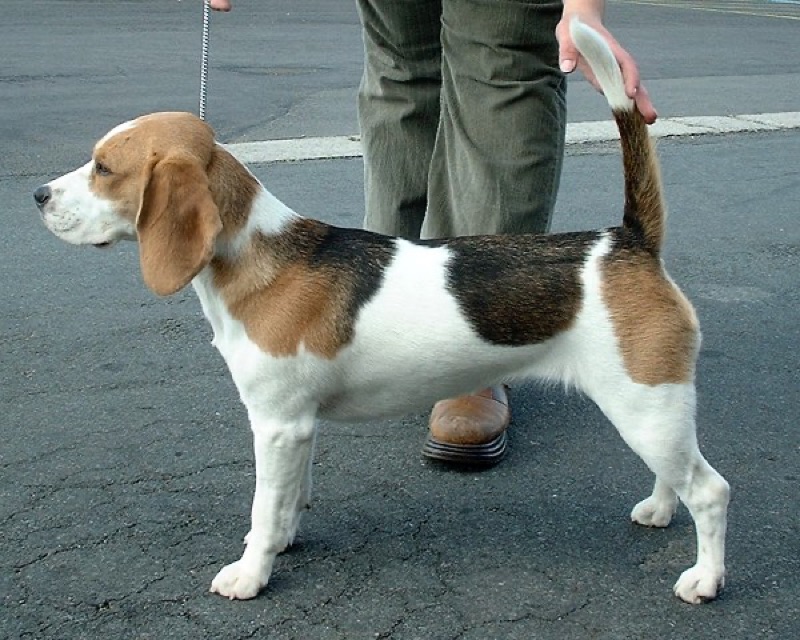
Beagles are sturdy, compact dogs that typically stand about 13 to 15 inches tall at the shoulder and weigh between 20 and 30 pounds. Their short, dense coat usually comes in a combination of white, black, and brown — a pattern often called “tricolor” — though some Beagles are red and white or lemon and white. One of their most recognizable features is their large, soft brown eyes, which give them an expression that many people describe as pleading or gentle. Their long, droopy ears hang close to their cheeks and actually serve an important purpose: when a Beagle lowers its head to sniff the ground, those ears help sweep scent particles toward its nose. A Beagle’s tail is usually tipped in white, which historically made it easier for hunters to spot the dog in tall grass.
A Powerful Nose
A Beagle’s nose is one of the most powerful in the entire dog world. While humans have about 5 million scent receptors in their noses, a Beagle has roughly 220 million — giving it a sense of smell that is thousands of times more sensitive than ours. This ability comes from the breed’s long history as a tracking dog, where following a faint trail through forests and fields was the whole point of the job. Beagles can detect and distinguish individual scents even when many different smells are mixed together, a skill that makes them invaluable in modern detection work. Scientists have found that a Beagle can be trained to identify specific odors with high accuracy, from food hidden in luggage to certain medical conditions in laboratory samples.
History and Origins
The Beagle’s ancestors can be traced back to ancient Greece, where small hound dogs were used for hunting rabbits and hares. By the 1300s, packs of scent hounds similar to modern Beagles were common in England, where hunters on foot used them to track small game through the countryside. Queen Elizabeth I was known to keep “Pocket Beagles” — tiny hounds small enough to fit in a saddlebag — though that miniature variety no longer exists. The modern Beagle breed was refined in England during the 1800s, and the American Kennel Club officially recognized it in 1885. Interestingly, the famous naturalist Charles Darwin sailed around the world on a ship called HMS Beagle, named after the breed — a voyage that helped him develop his groundbreaking theory of evolution.
Personality and Temperament
Beagles are known for being cheerful, curious, and incredibly social dogs that get along well with children, other pets, and even strangers. They were bred to work in packs, which means they naturally enjoy the company of others and can become lonely or anxious when left alone for long periods. One of the Beagle’s most distinctive behaviors is its voice — rather than a simple bark, Beagles produce a deep, drawn-out sound called a “bay” or “baying howl” that can carry over long distances. This loud vocalization was useful for alerting hunters to a Beagle’s location in dense woods, but it can sometimes be a challenge for owners who live in apartments or close to neighbors. Despite their noisy reputation, Beagles are gentle and affectionate dogs that form strong bonds with their families.
Working Beagles
Thanks to their keen noses and trainable nature, Beagles hold important jobs around the world. The United States Department of Agriculture uses a team of Beagles known as the “Beagle Brigade” to sniff luggage at airports, searching for illegal fruits, vegetables, and meats that could carry diseases or invasive pests into the country. These detector dogs are chosen because their small size and friendly appearance make travelers less nervous than they might be around a larger working breed like a German Shepherd. Beagles have also been widely used in scientific and medical research, which has been a source of significant controversy — many animal welfare organizations argue that using dogs in laboratories is cruel, and campaigns to rescue retired research Beagles have gained widespread public support. In the field, some Beagles still do what they were originally bred for, working as rabbit-hunting dogs in rural communities across the United States and Europe.
Beagles as Pets
Beagles make wonderful family pets, but they do come with some challenges that potential owners should understand. Their powerful nose can lead them into trouble — a Beagle that catches an interesting scent may ignore commands and follow the trail with single-minded determination, which is why a secure, fenced yard is important. They need plenty of daily exercise, at least an hour of walking or active play, to keep them healthy and prevent the boredom that can lead to destructive chewing or excessive barking. Beagles are also enthusiastic eaters who will happily devour anything they can reach, so owners need to be careful about leaving food unattended and monitoring their dog’s weight. With proper training, exercise, and companionship, a Beagle can be a loyal and entertaining family member for 10 to 15 years.
Famous Beagles
Perhaps the most famous Beagle of all time is Snoopy, the beloved cartoon dog from Charles Schulz’s comic strip Peanuts, who first appeared in 1950 and became one of the most recognizable characters in popular culture. In the real world, a Beagle named Uno made history in 2008 by becoming the first of his breed to win Best in Show at the prestigious Westminster Kennel Club Dog Show. President Lyndon B. Johnson owned two Beagles named Him and Her that lived in the White House during the 1960s, though Johnson stirred controversy when he was photographed lifting one of the dogs by its ears. The HMS Beagle, the ship that carried Charles Darwin on his famous voyage from 1831 to 1836, gave the breed a permanent connection to one of the most important scientific journeys in history. From comic strips to the White House to scientific discovery, Beagles have left their paw prints on many corners of human culture.
 OtterKnow Kids Encyclopedia