What They Look Like
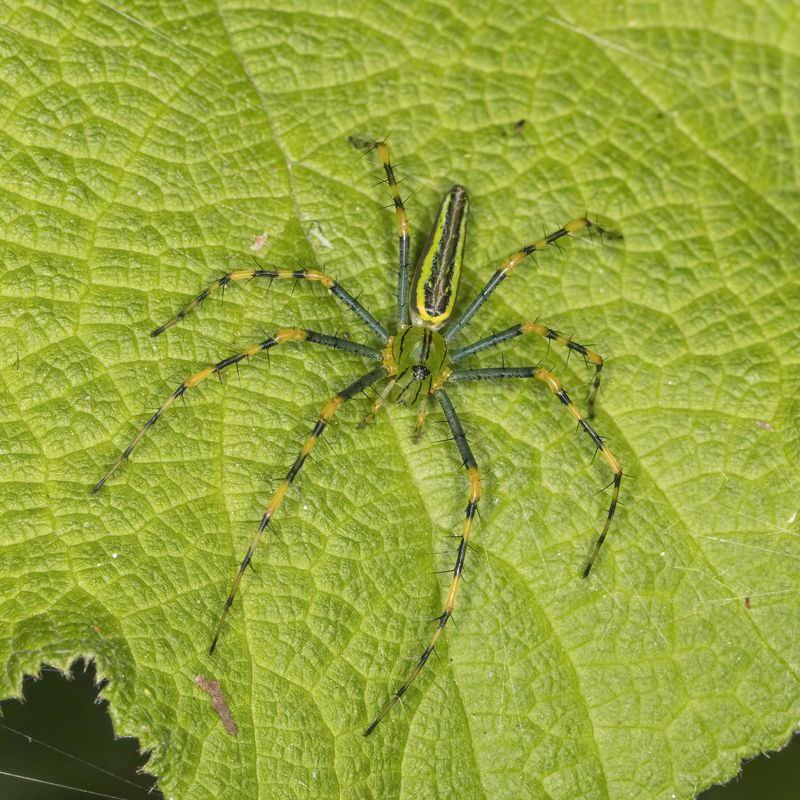
Every spider shares the same basic body plan: two main body parts and eight legs. The front section, called the cephalothorax, holds the brain, eyes, fangs, and legs, while the back section, called the abdomen, contains the silk-producing organs and digestive system. Most spiders have eight eyes, though their arrangement and size vary widely between species — some cave-dwelling spiders have lost their eyes entirely because they live in total darkness. Spiders do not have antennae or wings, which is one easy way to tell them apart from insects. Their sizes range enormously, from the Patu digua spider of Colombia, which is smaller than the head of a pin, to the goliath birdeater tarantula of South America, which can have a leg span wider than a foot-long ruler.
Silk and Webs
All spiders produce silk, and it is one of the most remarkable materials found in nature. Spider silk is a protein fiber that is stronger than steel of the same thickness yet flexible enough to stretch without breaking. A single spider can produce up to seven different types of silk, each designed for a specific purpose — sticky silk for trapping prey, strong dragline silk for building the frame of a web, and soft silk for wrapping eggs. Not all spiders build webs, though. Jumping spiders hunt by stalking and pouncing on their prey, while trapdoor spiders hide in silk-lined burrows and ambush passing insects. The classic circular web that most people picture, called an orb web, is built by orb-weaver spiders, who often rebuild their entire web each night because it gets damaged during the day.
What They Eat and Venom
Spiders are carnivores, and nearly all of them feed on insects and other small invertebrates. Almost every species of spider is venomous, using fangs called chelicerae to inject venom that paralyzes or kills their prey. However, the vast majority of spiders have venom that is completely harmless to humans — only a small handful of species, such as the black widow and the brown recluse, have bites that can cause serious medical problems. Because spiders cannot chew solid food, they use their venom and digestive juices to break down their prey’s insides into a liquid, which they then drink. Some large tarantulas are even capable of catching small frogs, lizards, and occasionally birds, though insects remain the primary diet for almost all spiders.
Where They Live
Spiders have adapted to live in nearly every habitat on Earth, from tropical rainforests and scorching deserts to high mountain peaks and the corners of human homes. Some species live underwater by trapping air bubbles in silk structures, like the diving bell spider of Europe and Asia, which spends almost its entire life beneath the surface of ponds and streams. Others thrive in extreme environments — certain spiders have been found living at elevations above 22,000 feet in the Himalayas, making them some of the highest-dwelling animals on the planet. Many spiders are specialists, adapted to one particular type of habitat, while others are generalists that can make a home almost anywhere. Young spiders sometimes travel long distances by releasing silk threads that catch the wind, a behavior called “ballooning” that can carry them hundreds of miles.
Life Cycle
Spiders begin life as eggs, which the mother wraps in a silk egg sac to protect them from predators and weather. Depending on the species, a single egg sac can contain anywhere from a few dozen to over a thousand eggs. When the spiderlings hatch, they look like miniature versions of the adults and must molt — shed their exoskeleton — several times as they grow, since their hard outer covering does not stretch. Most spiders live for one to two years, though some tarantulas can live for over 20 years in the right conditions. Parental care varies widely: some mother spiders guard their egg sacs fiercely, while others abandon them after laying and never see their young.
Spider Diversity
Spiders come in a huge variety of shapes, sizes, colors, and behaviors. Jumping spiders, the largest spider family with over 6,000 species, are known for their excellent vision, curious behavior, and ability to leap many times their own body length. Crab spiders can change color to match the flowers they sit on, ambushing pollinating insects that land nearby. The bolas spider swings a single silk thread tipped with a sticky glob to snag moths out of the air, much like a fishing line. Golden silk orb-weavers spin webs with a distinctive yellow tint that can stretch across gaps several feet wide and are strong enough to catch small birds. With so many species filling so many ecological roles, spiders are among the most diverse groups of predators on the planet.
Spiders and People
Despite their sometimes fearsome reputation, spiders are extremely beneficial to humans. Scientists estimate that the world’s spider population eats between 400 and 800 million tons of insects every year, including many crop pests and disease-carrying mosquitoes. Researchers are also studying spider silk for potential use in medicine and engineering because of its extraordinary strength and flexibility. In many cultures throughout history, spiders have appeared in myths and stories — from the West African trickster Anansi to the Greek myth of Arachne, whose name gave us the word “arachnid.” While it is natural to feel uneasy around spiders, learning about them can help replace fear with appreciation for these small but mighty creatures that share our world.
 OtterKnow Kids Encyclopedia