The Shell
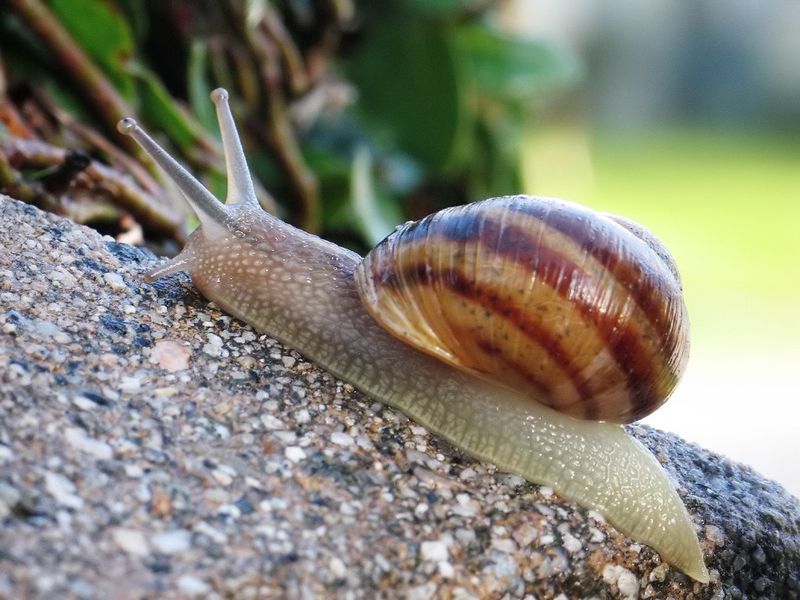
A snail’s shell is one of its most important features, serving as both a home and a suit of armor. The shell is made mostly of calcium carbonate, the same mineral found in chalk and limestone, and the snail produces it using special glands in a body part called the mantle. Unlike a hermit crab, which borrows empty shells, a snail grows its own shell from the moment it hatches. As the snail gets bigger, it adds new layers of shell material around the opening, so the shell spirals outward and grows right along with its owner. If a snail’s shell gets a small crack, the animal can often repair it by secreting fresh layers of calcium carbonate over the damaged area.
What They Look Like
Beyond the spiral shell, a snail’s soft body has several interesting parts. Most land snails have two pairs of tentacles on their head: a longer upper pair that carries the eyes at the tips and a shorter lower pair used for smelling and feeling the ground. Sea snails usually have just one pair of tentacles, with eyes located at the base rather than the tip. The broad, flat underside of a snail is called the foot, a single muscular organ that ripples in tiny waves to push the animal forward. Snails range widely in size, from species smaller than a grain of rice to the giant African land snail, which can grow up to 30 centimeters (about 12 inches) long.
The Radula
One of the most surprising things about snails is how they eat. Inside a snail’s mouth is a ribbon-like structure called a radula, which is covered in thousands of microscopic teeth. The radula works a bit like a cheese grater, scraping and shredding food into tiny pieces that the snail can swallow. As the front rows of teeth wear down from constant use, new rows grow in from the back, so the snail never runs out. Some species have more than 20,000 teeth on their radula at any given time, making them one of the toothiest creatures in the animal kingdom relative to their size.
Where They Live
Snails have adapted to a wide range of habitats across every continent except Antarctica. Land snails prefer moist environments like gardens, forests, and wetlands, where they hide under leaves, rocks, or logs during the heat of the day. Freshwater snails are found in ponds, streams, and lakes all over the world, often clinging to underwater plants or rocks. Marine snails, also called sea snails, live in every ocean, from shallow tide pools to the deep sea floor. Some snail species have even adapted to harsh conditions like deserts, where they seal the opening of their shell with a layer of dried mucus and wait underground for rain.
What They Eat
Most land snails are herbivores, munching on leaves, stems, flowers, and decaying plant matter they find on the ground. Gardeners sometimes consider them pests because they can chew through vegetable seedlings and flower petals overnight. Freshwater snails often feed on algae, scraping it off rocks and the walls of aquariums with their radulas. In the ocean, different species have wildly different diets: some graze on seaweed, others feed on sponges, and a few predatory cone snails actually hunt fish and worms using a venomous harpoon-like tooth. Snails play an important role in their ecosystems by breaking down dead plant material and recycling nutrients back into the soil.
Moving on Slime
Snails are famous for being slow, but the way they move is actually a small engineering marvel. The snail’s foot produces a layer of mucus, commonly called slime, that creates a slippery surface for the animal to glide over. This mucus is so effective that a snail can crawl across the edge of a razor blade without cutting itself. The slime also helps snails climb vertical surfaces and even travel upside down, because it acts like a weak glue that grips and releases with each ripple of the foot. A garden snail typically moves at a top speed of about 50 meters per hour, which means it would take nearly a full day to travel just one kilometer.
Surviving Tough Conditions
Snails have developed clever strategies for coping with weather that would be dangerous for their soft bodies. In cold climates, many land snails enter a deep sleep called hibernation during winter, tucking into their shells and sealing the opening with a plug of dried mucus called an epiphragm. In hot, dry climates, snails do something similar called estivation, burrowing into the ground or attaching to a shady surface and going dormant until the rains return. Some desert snails have been known to survive in estivation for several years, waking up only when moisture finally arrives. These survival tactics help explain why snails are found in so many different environments around the world.
Snails in Nature
Snails may be small and slow, but they are a vital part of food webs and ecosystems everywhere. They are an important food source for many animals, including birds, frogs, beetles, hedgehogs, and certain species of snakes. By feeding on decaying leaves and other organic matter, snails help speed up decomposition and return valuable nutrients to the soil. Their shells also contribute calcium to the environment when they break down, which benefits other organisms that need this mineral. In some cultures, snails have been eaten by humans for thousands of years, and today the French dish escargot remains popular around the world, usually made from a species of European land snail raised on special farms.
 OtterKnow Kids Encyclopedia