What They Look Like
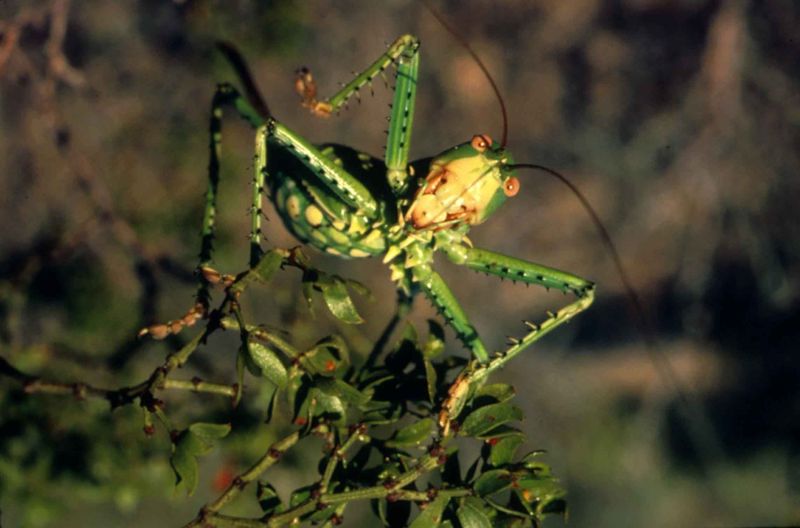
A grasshopper’s body is divided into three main parts: the head, the thorax, and the abdomen. On the head sit two large compound eyes that can detect movement in nearly every direction, along with two antennae that help the insect smell, touch, and sense its surroundings. The thorax is the middle section where all six legs and the wings attach. A grasshopper’s most striking feature is its oversized hind legs, which are packed with powerful muscles designed for jumping. Most species are green or brown, providing excellent camouflage among plants and soil, though some tropical grasshoppers display bright warning colors to signal that they taste bad to predators.
Jumping and Flying
Grasshoppers are legendary jumpers, capable of launching themselves up to 20 times their own body length in a single leap. To put that in perspective, if a human could jump the same way, they would clear an entire basketball court in one bound. This power comes from their large hind legs, which work like a catapult — the grasshopper bends its legs, locks them with a special joint, stores elastic energy, and then releases it all at once. Many grasshoppers also have two pairs of wings: tough, narrow forewings that act as protective covers and delicate, fan-shaped hindwings used for flight. Some species can fly several miles at a time, and migratory grasshoppers have been recorded traveling hundreds of miles with the help of wind currents.
Chirping
On warm summer days, you might hear a buzzing or chirping sound coming from a grassy field — that is likely a grasshopper making music. Grasshoppers produce sound through a process called stridulation, which involves rubbing a row of tiny pegs on their hind legs against the hard edges of their forewings, much like dragging a fingernail along the teeth of a comb. Each species has its own unique song, and it is usually the males that chirp to attract females or warn rival males to stay away. Some grasshoppers also make noise by snapping their hindwings during flight, creating a crackling sound known as crepitation. Temperature affects how fast a grasshopper chirps — the warmer the air, the quicker the song, because the insect’s muscles move faster in the heat.
Where They Live
Grasshoppers are found in an impressive range of habitats, from tropical rainforests and dry deserts to high mountain meadows and suburban lawns. They are most abundant in open grasslands and savannas, where their preferred food — grasses and other low-growing plants — is plentiful. Different species have adapted to very different environments: some thrive in the hot, sandy soils of the Sahara, while others live among mosses in cool, damp forests. Grasshoppers are cold-blooded, so they depend on sunlight to warm their bodies and become active, which is why you tend to see them basking in sunny spots during the morning. In colder climates, most grasshoppers survive winter not as adults but as eggs buried in the soil, waiting to hatch when spring temperatures rise.
What They Eat
Grasshoppers are herbivores, and most species feed on grasses, leaves, and stems, though some will also eat flowers and seeds. A single grasshopper can eat about half its body weight in plant material every day, which does not sound like much until you consider that a large swarm can number in the billions. They use their strong mandibles, or jaw-like mouthparts, to clip and chew plant tissue efficiently. Some grasshoppers are generalists that will munch on almost any green plant they find, while others are specialists that feed on only one or two plant species. Farmers have long considered grasshoppers pests because large populations can damage crops like wheat, corn, and alfalfa, sometimes causing significant economic losses.
Locusts and Swarms
One of the strangest things about grasshoppers is that certain species can transform into locusts under the right conditions. When populations grow very dense due to plentiful rain and food, some grasshoppers undergo dramatic physical and behavioral changes — their color shifts, their bodies become more streamlined, and they begin to gather in enormous swarms. Scientists call this the “gregarious phase,” in contrast to the solitary phase when the same species lives and feeds alone. A single locust swarm can contain billions of individuals, cover hundreds of square miles, and consume enough crops in a day to feed tens of thousands of people. Desert locusts in Africa and the Middle East are among the most destructive, and swarms have been recorded throughout human history, including in ancient texts.
Grasshoppers in Ecosystems
Despite their reputation as crop pests, grasshoppers are a crucial part of healthy ecosystems. As herbivores, they help recycle nutrients by breaking down plant material and returning it to the soil through their droppings, which enriches the earth for new growth. They are also an important food source for a wide variety of animals, including birds, lizards, frogs, spiders, and small mammals like mice. In many cultures around the world, people eat grasshoppers too — they are high in protein and have been part of human diets for thousands of years. By connecting plants to the animals that eat them, grasshoppers serve as a key link in food webs, helping energy flow from producers to consumers across ecosystems.
Life Cycle
Grasshoppers go through a type of development called incomplete metamorphosis, which means they do not have a pupal stage like butterflies do. A female grasshopper lays clusters of eggs in the soil, often wrapping them in a foamy substance that hardens into a protective pod. When the eggs hatch in spring, tiny nymphs emerge that look like miniature versions of the adults but without fully developed wings. As the nymphs grow, they shed their exoskeleton in a process called molting, typically going through five or six molts over the course of several weeks. By the final molt, the grasshopper has full wings and is ready to reproduce, completing a life cycle that usually spans just a few months.
 OtterKnow Kids Encyclopedia