What They Look Like
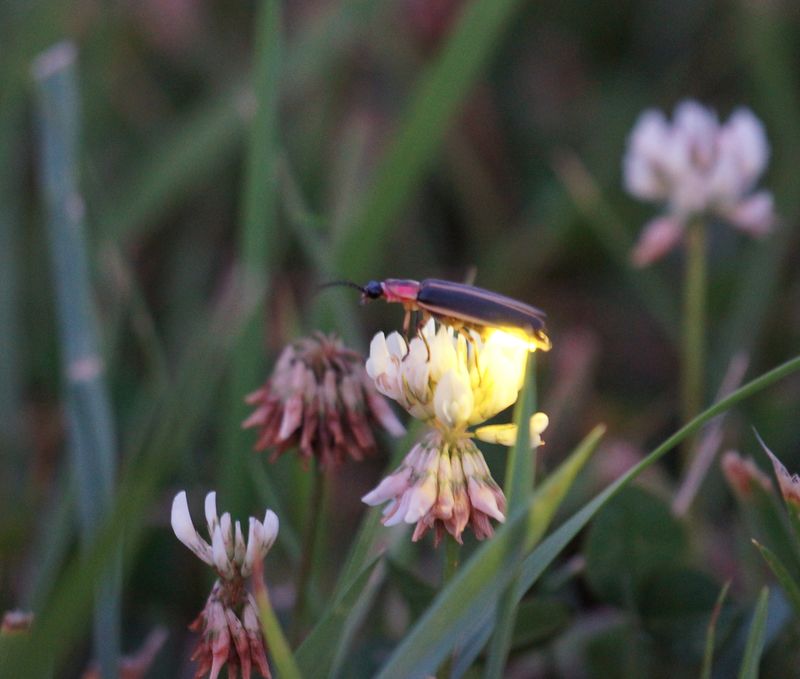
Fireflies are small, soft-bodied beetles that usually measure between half an inch and one inch long. They have a flattened, oval-shaped body with a large shield-like plate called a pronotum that covers their head like a hood. Most fireflies are dark brown or black with red, orange, or yellow markings along the edges of their body. Like all beetles, they have two pairs of wings — a hard outer pair called elytra that protects the delicate flying wings underneath. The most distinctive feature of a firefly is its light organ, located on the underside of the last few segments of its abdomen, which often looks pale yellow or greenish even when it is not glowing.
How They Glow
The light a firefly produces is one of the most efficient lights in the entire natural world. Inside the firefly’s light organ, a chemical called luciferin combines with an enzyme called luciferase in the presence of oxygen, and this reaction produces light with almost no wasted heat. In fact, nearly 100 percent of the energy from this chemical reaction is released as light, which is why scientists call it “cold light.” A regular light bulb, by comparison, wastes about 90 percent of its energy as heat. Fireflies can control exactly when their light turns on and off by regulating the flow of oxygen to their light organs, giving them precise control over their flashing.
Flash Patterns
Every species of firefly has its own unique flash pattern, almost like a secret code. Male fireflies fly through the air flashing a specific sequence — some flash twice in a row, others make a long sweeping glow, and still others produce rapid bursts of light. Female fireflies sit in the grass or on low branches and watch the sky, responding with their own answering flash when they spot a male of the same species. This back-and-forth conversation of light helps fireflies find mates of the right species in a dark landscape full of blinking signals. Some fireflies in Southeast Asia are famous for synchronizing their flashes, with thousands of males blinking in perfect unison along riverbanks — a spectacular sight that draws visitors from around the world.
Where They Live
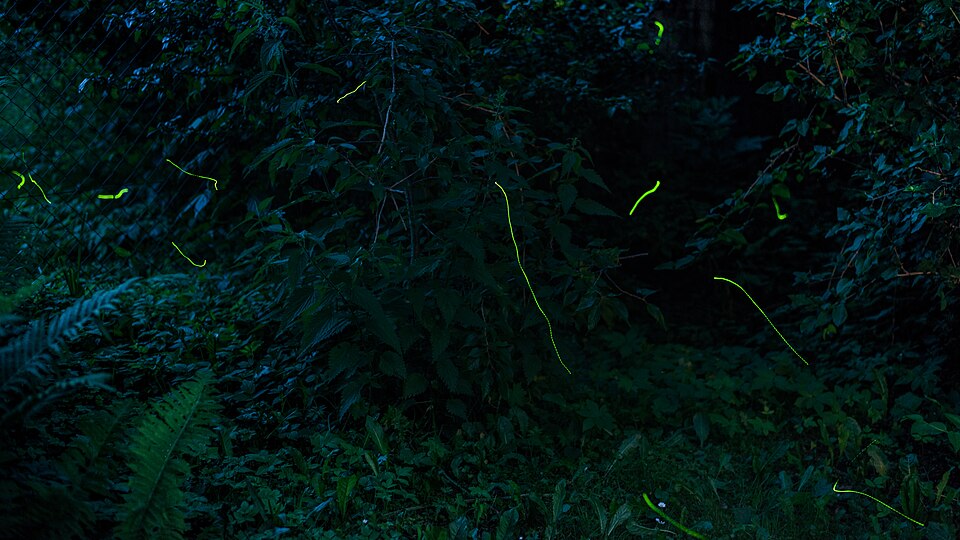
Fireflies are found on every continent except Antarctica, but they are most diverse and abundant in warm, humid tropical and subtropical regions. They thrive in habitats with plenty of moisture, such as forests, meadows, marshes, and areas near streams and ponds. In the United States, fireflies are especially common east of the Rocky Mountains, where summer humidity provides the damp conditions they prefer. During the day, fireflies hide in tall grass, leaf litter, and under bark, coming out only after sunset to begin their nightly light displays. Some species prefer open fields, while others are found deep in forests, and a few even live in dry environments like deserts, though these species often do not produce light as adults.
Life Cycle
Fireflies go through complete metamorphosis, which means they pass through four life stages: egg, larva, pupa, and adult. A female firefly lays her tiny eggs in moist soil or moss, and after a few weeks the eggs hatch into larvae that look like small, flattened worms with six legs. Firefly larvae are sometimes called glowworms because they can produce light too, even at this early stage of life. The larval stage lasts for one to two years, during which the larvae live underground or in leaf litter, growing and molting several times before forming a pupa. The adult firefly that emerges from the pupa lives for only about two to four weeks — just long enough to find a mate and lay eggs for the next generation.
What They Eat
Firefly larvae are fierce predators that hunt soft-bodied prey such as snails, slugs, and earthworms in the soil and leaf litter. When a larva finds a snail, it injects its prey with a numbing substance that paralyzes it and begins to digest it from the outside before consuming the meal. This predatory behavior makes firefly larvae helpful to gardeners because they naturally control populations of slugs and snails that damage plants. Adult fireflies have very different diets depending on the species — some feed on nectar and pollen, while others do not eat at all during their short adult lives. There are even some sneaky species of fireflies, like those in the genus Photuris, whose females mimic the flash patterns of other species to lure in males and eat them.
Fireflies and People
Fireflies hold a special place in cultures around the world and have inspired stories, poems, and artwork for centuries. In Japan, firefly viewing, known as hotarugari, has been a beloved summer tradition since ancient times, with festivals held each year to celebrate the glowing insects along rivers and streams. Unfortunately, firefly populations are declining in many parts of the world due to habitat loss, light pollution, and pesticide use. Artificial lights from buildings, streetlights, and cars can interfere with firefly flash patterns, making it harder for them to find mates. Scientists and conservation groups are working to protect firefly habitats and encouraging people to reduce outdoor lighting during peak firefly season to help these beloved beetles continue lighting up summer nights.
Fireflies and Science
The chemicals that make fireflies glow have turned out to be incredibly useful in scientific research and medicine. Scientists have used luciferase, the enzyme from firefly light organs, to develop tools for tracking diseases, testing new drugs, and even detecting contamination in food and water. By attaching luciferase to cells in a laboratory, researchers can make those cells glow, allowing them to watch biological processes happen in real time under a microscope. The gene that produces luciferase has been inserted into other organisms, including plants and bacteria, to create living things that glow for research purposes. Firefly-inspired technology has also led to advances in designing more efficient lights and solar panels, proving that studying nature can lead to innovations that benefit people everywhere.
 OtterKnow Kids Encyclopedia