What They Look Like
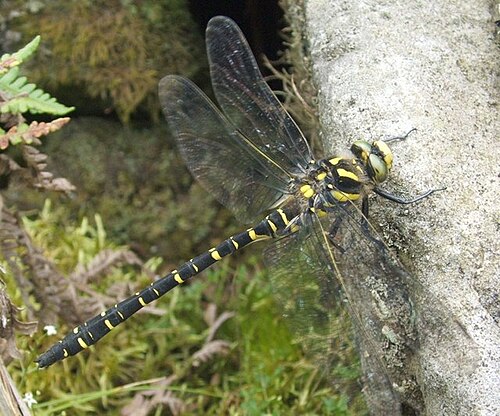
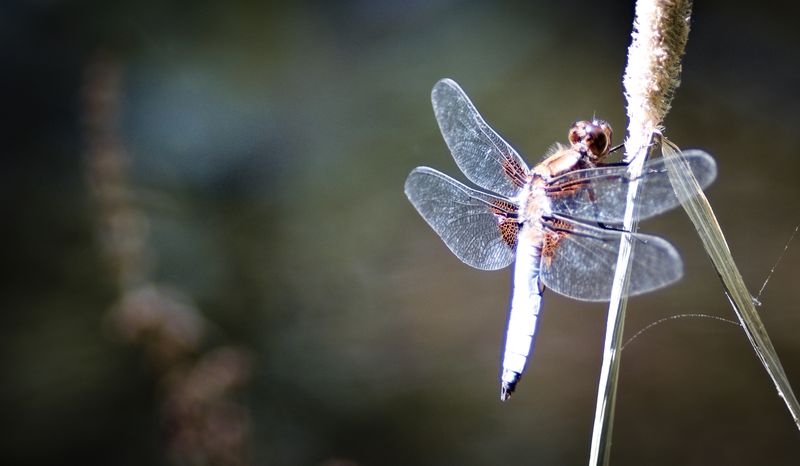
A dragonfly’s body is built for speed and precision. It has a long, slender abdomen, a broad thorax packed with flight muscles, and two pairs of transparent wings that can span up to five inches in some species. Their bodies come in dazzling colors — electric blues, vivid greens, fiery reds, and metallic golds — that shimmer and shift in the sunlight. Unlike many other insects, dragonflies hold their wings straight out to the sides when they rest, rather than folding them against their bodies. Six strong legs sit near the front of their body, forming a basket shape that is perfect for snatching prey right out of the air.
Flight
Dragonflies are among the most skilled fliers in the entire animal kingdom. Each of their four wings can move independently, allowing them to hover in place, fly backward, make sharp turns, and even fly upside down. They can reach speeds of up to 35 miles per hour, making them one of the fastest insects alive. This agility comes from their ability to twist each wing at a slightly different angle during every stroke, giving them control that no helicopter or drone can match. Scientists and engineers have studied dragonfly flight for years, hoping to design better flying machines inspired by their wing mechanics.
Compound Eyes
One of the dragonfly’s most impressive features is its enormous compound eyes. Each eye is made up of nearly 30,000 tiny lenses called ommatidia, and together, the two eyes cover almost the entire surface of the dragonfly’s head. This gives the dragonfly nearly 360-degree vision, meaning it can see in almost every direction at once without turning its head. Dragonflies can also detect ultraviolet light and polarized light, which are invisible to human eyes, helping them spot the glint of prey wings against the sky. Their sharp eyesight is one of the main reasons they are such deadly hunters.
Ancient Predators
Dragonflies belong to one of the oldest groups of flying insects on the planet. Fossils show that their ancestors were darting through ancient forests during the Carboniferous period, roughly 300 million years ago — about 70 million years before the first dinosaurs appeared. Some of these prehistoric dragonflies were enormous, with wingspans stretching over two feet wide, making them the largest insects that ever lived. Scientists believe they grew so large because the atmosphere contained more oxygen at that time, which allowed insects to reach much bigger sizes. Today’s dragonflies are smaller, but they have kept the same basic body plan that made their ancestors such successful predators for hundreds of millions of years.
Life Cycle — From Water to Air
A dragonfly’s life begins underwater. A female lays her eggs in or near freshwater, and when the eggs hatch, the young dragonflies — called nymphs — live beneath the surface for months or even several years, depending on the species. Nymphs are fierce underwater hunters with a secret weapon: a hinged lower jaw that can shoot forward in milliseconds to grab tadpoles, small fish, and other aquatic insects. When a nymph is finally ready to transform, it crawls out of the water, splits open its outer skin, and slowly pulls itself free as a winged adult in a process that takes several hours. Most adult dragonflies live for only a few weeks to a few months, which means a dragonfly actually spends the majority of its life underwater.
What They Eat
Dragonflies are carnivores and are considered some of the most effective hunters in the natural world, with a success rate of roughly 95 percent — far higher than lions, sharks, or eagles. They catch their prey mid-flight, using their basket-shaped legs to scoop up mosquitoes, gnats, flies, moths, and even other smaller dragonflies. Rather than chasing prey from behind, dragonflies use a hunting strategy called interception: they predict where their target will be and fly to that spot to grab it. Their brains can calculate the speed and direction of moving prey in fractions of a second, adjusting their own flight path to make the capture. This ability to predict and intercept makes them more like guided missiles than simple bug-catchers.
Dragonflies and Ecosystems
Dragonflies play an important role in keeping ecosystems healthy and balanced. By eating huge numbers of mosquitoes and other biting insects, they provide natural pest control that benefits both people and other animals. Because dragonflies need clean, unpolluted freshwater to lay their eggs and raise their nymphs, scientists often use them as indicator species — their presence in an area is a sign that the water quality is good. Dragonflies also serve as food for birds, frogs, fish, and spiders, connecting them to many parts of the food web. Protecting wetlands and freshwater habitats is one of the best ways to help dragonflies keep doing what they have done for the last 300 million years.
 OtterKnow Kids Encyclopedia