What They Look Like
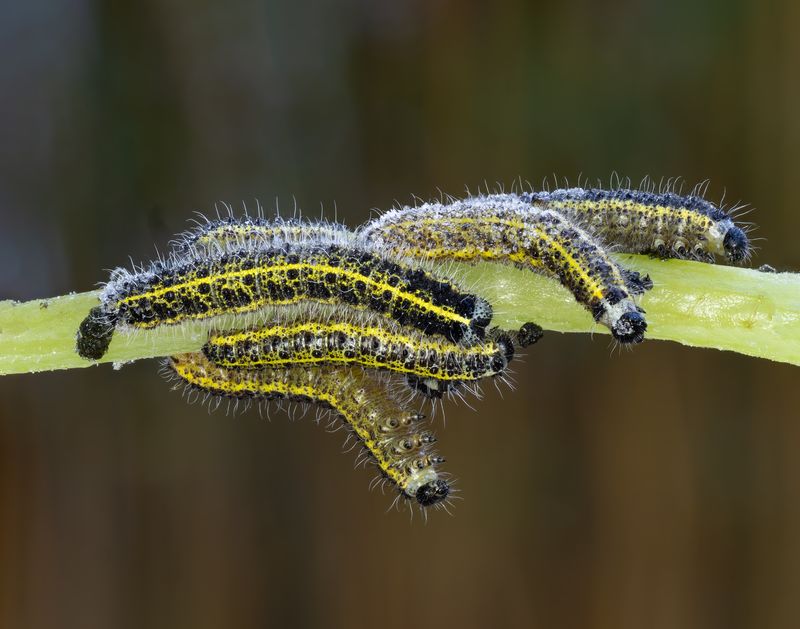
Caterpillars have long, soft, segmented bodies that are very different from the hard exoskeletons of adult beetles or ants. A typical caterpillar has a head capsule with tiny simple eyes called ocelli, short antennae, and powerful jaws built for chewing leaves. Behind the head are thirteen body segments — the first three each carry a pair of true legs with tiny claws, while several of the rear segments have fleshy, stubby prolegs tipped with miniature hooks called crochets that grip surfaces as the caterpillar moves. Some caterpillars are smooth and green, blending perfectly with the leaves they feed on, while others are covered in bristly hairs, bold stripes, or eye-catching spots. The woolly bear caterpillar, for example, is famous for its thick bands of black and reddish-brown fur, while the caterpillar of the spicebush swallowtail has enormous fake eyespots that make it look like a tiny snake.
Eating and Growing
Caterpillars are essentially eating machines. From the moment they hatch out of their tiny eggs, they begin chewing through leaves at an astonishing rate, and many species start by eating the eggshell they just emerged from. A monarch caterpillar, for instance, can increase its body weight by about 2,000 times in just two weeks — imagine if a newborn baby grew to the size of a school bus in the same amount of time. Because a caterpillar’s skin does not stretch, it must molt, or shed its outer layer, several times as it grows. Each stage between molts is called an instar, and most caterpillars pass through five instars before they are ready to pupate. During the final instar, a large caterpillar may devour an entire leaf in just a few minutes.
Defenses
Being soft, slow, and full of nutrients makes caterpillars a tempting meal for birds, wasps, spiders, and other predators, so they have evolved an impressive arsenal of defenses. Many species rely on camouflage, matching the color and texture of leaves, twigs, or bark so perfectly that predators walk right past them. Others take the opposite approach and advertise their danger with bright warning colors — the monarch caterpillar’s bold yellow, black, and white stripes signal that its body is loaded with toxic chemicals absorbed from milkweed plants. Some caterpillars are covered in stinging spines or irritating hairs that cause painful rashes if touched, like the saddleback caterpillar with its venomous spines. The caterpillar of the tiger swallowtail even has a special organ behind its head called an osmeterium, which it can inflate to look like a snake’s forked tongue while releasing a foul smell to scare away attackers.
Spinning Silk
Nearly all caterpillars produce silk from a structure called a spinneret located just below their mouths. Silk serves many purposes throughout a caterpillar’s life — it provides a safety line that catches them if they fall from a branch, helps them grip slippery surfaces, and allows some species to build shelters by rolling or tying leaves together. Tent caterpillars use their silk to construct large, web-like communal nests in the forks of tree branches, where dozens of siblings live and feed together. Moth caterpillars spin silk cocoons around themselves before pupating, creating a protective case for their transformation. The silk produced by the domesticated silkworm moth is so strong and fine that humans have been harvesting it for thousands of years to weave into fabric, making it one of the most valued natural fibers in history.
Inside the Chrysalis
When a caterpillar has finished growing, it enters the most dramatic phase of its life — the pupal stage. Butterfly caterpillars form a hard outer casing called a chrysalis, while moth caterpillars usually spin a silk cocoon first and then form a pupa inside it. What happens next is extraordinary: inside the protective shell, the caterpillar’s body largely breaks down into a thick, rich soup of cells. Special clusters of cells called imaginal discs, which have been waiting inside the caterpillar since it hatched, begin using that material to build entirely new structures — wings, compound eyes, long antennae, and a coiled proboscis for sipping nectar. This process, known as complete metamorphosis, typically takes about ten to fourteen days for many butterfly species, though some moth pupae spend an entire winter underground before emerging.
When the transformation is complete, the adult butterfly or moth pushes its way out of the chrysalis or cocoon. At first, its wings are crumpled and wet, and the insect must pump fluid through the wing veins to expand them to full size. It then rests for an hour or more while the wings dry and harden in the air. Once airborne, the adult looks nothing like the crawling caterpillar it once was — it has large compound eyes with thousands of lenses, a long coiled tongue instead of chewing jaws, and two pairs of broad, colorful wings covered in thousands of tiny scales. The adult’s job is no longer to eat and grow but to find a mate and lay eggs, starting the cycle all over again. Some species, like the painted lady butterfly, migrate thousands of miles to lay their eggs in the right habitat, ensuring the next generation of caterpillars will have plenty of food.
Caterpillars and Plants
Caterpillars and plants have been locked in an evolutionary arms race for millions of years. Many plants produce bitter chemicals, sticky sap, or tough waxy coatings on their leaves to discourage caterpillars from eating them. In response, certain caterpillar species have evolved the ability to tolerate or even store those plant toxins in their own bodies, turning a plant’s defense into a weapon against their own predators. Monarch caterpillars are a famous example — they feed exclusively on milkweed, absorbing chemicals called cardenolides that make them poisonous to birds. This tight relationship means that many caterpillar species can only survive on one or a few specific host plants, which is why protecting native plant habitats is so important for keeping caterpillar and butterfly populations healthy. Gardeners and conservation groups often plant native species like milkweed, parsley, and violets specifically to support caterpillars and the pollinators they become.
 OtterKnow Kids Encyclopedia